
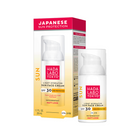


Best overall for hydration with SPF 50: Hada Labo Tokyo Face Sun Cream SPF 50 50ml. Best for a lightweight SPF 30 texture: Face Sun Cream SPF 30. This 2026 shortlist compares two hydrating facial sunscreens, with one essential condition for sensitive skin: check the complete formula against your known triggers before choosing.
- The best spf moisturizer for sensitive skin combines suitable UV protection, hydration, and a formula you tolerate.
- Hada Labo Tokyo Face Sun Cream SPF 50 pairs Super Hyaluronic Acid with SPF 50 protection.
- Face Sun Cream SPF 30 offers a lightweight, fast-absorbing option with Super Hyaluronic Acid.
- Neither an SPF number nor hyaluronic acid establishes that a sunscreen suits every sensitive complexion.
Why this matters
Sensitive skin needs more than a reassuring product name. A sunscreen has to protect your skin and feel comfortable enough that you apply it properly, rather than reducing the amount to avoid stinging or heaviness.
Hydration and sun protection also do different jobs. Hyaluronic acid helps attract and retain moisture; sunscreen filters provide UV protection. A hydrating formula brings those functions together, but hydration does not replace adequate sunscreen application.
For your 2026 routine, start with protection, then consider texture and tolerance. Hada Labo Tokyo Face Sun Cream SPF 50 is the first option to consider for people seeking hydration and SPF 50 in one facial sunscreen. That is a product-fit recommendation, not a guarantee for eczema, rosacea, or allergy-prone skin.
What makes the best SPF moisturizer for sensitive skin?
Use these criteria before comparing textures or adding another step to your routine:
- Protection labeling: Look for broad-spectrum UVA and UVB protection and SPF 30 or higher. Read the package rather than inferring UVA coverage from the SPF number alone.
- Personal ingredient tolerance: Compare the complete ingredient list with products that have previously caused burning, itching, or a rash. Fragrance-free formulas are a useful starting point for sensitive skin.
- Hydration: Humectants such as hyaluronic acid help maintain moisture. Dry skin also needs enough overall moisturization to stay comfortable.
- Application comfort: Choose a texture you can spread evenly without prolonged rubbing. A finish you dislike is a practical problem if it makes you underapply.
- Exposure needs: For swimming or sweating, check the specific water-resistance directions. Everyday facial sunscreen and activity-specific protection are not interchangeable without checking the label.
- Routine compatibility: Your sunscreen should work over your usual moisturizer without persistent pilling. Keep the layers simple while assessing a new formula.
These criteria matter more than whether the front label says moisturizer, sun cream, or daily defense. For sensitive skin, the complete formula and your response decide suitability.
Best hydrating facial sunscreens at a glance
This 2026 comparison covers two options with explicit descriptions of both hydration and facial sun protection. The ranking separates their use cases; it does not establish a universal winner for every sensitive-skin condition.
| Item | Best for | Standout feature | Key limitation |
|---|---|---|---|
| Face Sun Cream SPF 50, 50ml | Hydration with SPF 50 in one facial product | Super Hyaluronic Acid alongside SPF 50 protection | Hydrating ingredients do not establish individual sensitivity tolerance |
| Hada Labo Tokyo Face Sun Cream SPF 30 50ml | A lightweight, fast-absorbing facial SPF | Super Hyaluronic Acid in a formula described as lightweight | SPF 30 is a lower labeled protection factor than SPF 50; a lighter texture does not mean less irritation |
Neither option earns a sensitive-skin recommendation from its SPF number alone. Before committing, check the current package for ingredients, UVA protection, application instructions, and any water-resistance claim.
1. Face Sun Cream SPF 50: best hydrating SPF for a higher SPF factor
Face Sun Cream SPF 50 combines Super Hyaluronic Acid with SPF 50 sun protection in a 50ml facial product. Its description emphasizes intense hydration, making it the first option here for a routine focused on moisture and a higher labeled SPF.
The important distinction is between hydration and tolerance. Hyaluronic acid supports hydration, but your skin encounters the entire sunscreen formula—not just its highlighted ingredient.
Face Sun Cream SPF 50 pros:
- Combines a hydrating ingredient with facial sun protection.
- Provides SPF 50 rather than the SPF 30 of the second option.
- Offers a single facial product to assess before deciding whether you need separate moisturizer underneath.
Face Sun Cream SPF 50 cons:
- Super Hyaluronic Acid does not establish that the complete formula is fragrance-free or suitable for your allergies.
- SPF 50 does not remove the need for adequate application and reapplication.
- Dry skin still needs a separate moisturizer if this sunscreen alone leaves it tight.
Best for: Someone who wants hydration with SPF 50 and is prepared to check ingredient compatibility before regular use.
For your 2026 shortlist, this is the default to assess first—not a reason to ignore previous sunscreen reactions. If you have a diagnosed contact allergy, compare the ingredient list with your clinician's avoidance instructions before testing.
Verdict: Buy only after checking the full formula against your known triggers; choose this option first when SPF 50 is your priority.
2. Face Sun Cream SPF 30: best hydrating SPF for a lightweight texture
Face Sun Cream SPF 30 is described as lightweight and fast-absorbing, with Super Hyaluronic Acid for hydration. Its 50ml format is intended for facial use, and its main distinction in this shortlist is the stated texture.
That makes it relevant if your biggest application problem is a heavy-feeling routine. It does not make SPF 30 inherently gentler than SPF 50: the full formulation, not the protection factor, determines how your skin responds.
Face Sun Cream SPF 30 pros:
- Has an explicitly described lightweight, fast-absorbing texture.
- Combines Super Hyaluronic Acid with facial sunscreen protection.
- Meets the SPF 30 threshold in the American Academy of Dermatology's general sunscreen-selection guidance, provided other required label features also match.
Face Sun Cream SPF 30 cons:
- Has a lower labeled SPF than the first option.
- A fast-absorbing finish does not guarantee comfort around sensitive eyes.
- Its hydrating ingredient does not establish suitability for eczema or rosacea.
Best for: Someone prioritizing a lightweight facial sunscreen texture who checks broad-spectrum labeling and tolerates the complete formula.
Do not choose this option simply because a previous SPF 50 stung. A lower SPF number does not identify or remove the ingredient responsible for that reaction.
Verdict: Buy for its stated lightweight texture after a tolerance check; skip it if your reason is the assumption that SPF 30 must be gentler.
Compare the two facial formulas
The Hada Labo Tokyo hydrating facial sunscreens below are the two products ranked above. Choose by protection needs and texture, then confirm that the current ingredient list suits your skin.


How we ranked these SPF moisturizers
The ranking follows the criteria above: labeled protection, explicit hydration benefits, stated texture, and the checks needed for sensitive skin. SPF 50 takes the default position for its higher protection factor; SPF 30 receives a distinct texture-focused recommendation because its description specifically states lightweight and fast-absorbing.
This is a label-and-description comparison, not a clinical tolerance ranking. Neither product is presented as allergy-proof, dermatologist-tested, fragrance-free, mineral-only, or suitable for a diagnosed condition without an explicit supporting claim.
For a useful 2026 buying decision, keep two questions separate: does the product offer the protection and hydration you want, and does your skin tolerate its complete formula? A positive answer to the first does not settle the second.
Apply hydrating SPF without complicating your routine
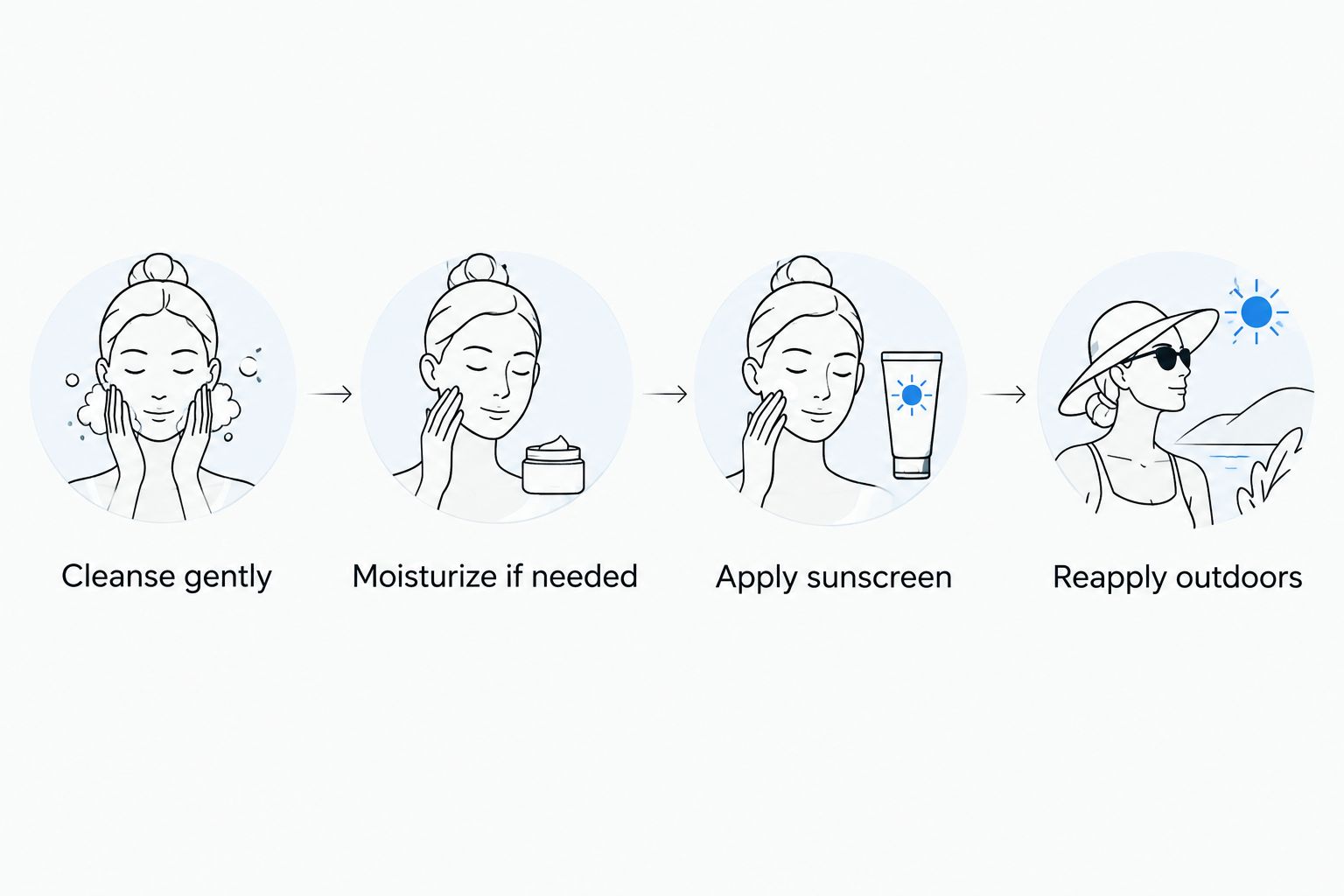
A simple morning sequence makes it easier to identify what works. Keep your familiar products steady while introducing a new sunscreen instead of changing cleanser, serum, moisturizer, and SPF together.
Cleanse gently
Use a cleansing approach your skin already tolerates. Avoid scrubbing or adding an exfoliating step just to make sunscreen feel smoother; irritated skin needs less friction, not a more elaborate preparation ritual.
Moisturize if needed
Apply your usual moisturizer if your skin needs it. If the hydrating sunscreen leaves your skin comfortable on its own, a separate morning moisturizer is not automatically necessary.
Apply sunscreen
Apply sunscreen evenly as the final skincare step before makeup, following the package directions. Do not mix it with moisturizer or serum in your palm: mixing changes the application and makes an even protective film harder to control.
Reapply outdoors
Reapply during outdoor exposure and after activities specified on the label. Makeup and a comfortable finish do not cancel the need to maintain your protection.
For general use, the American Academy of Dermatology recommends broad-spectrum, water-resistant sunscreen with SPF 30 or higher, applied 15 minutes before going outdoors and reapplied approximately every 2 hours outdoors, including after swimming or sweating. Follow your product's directions as well; a general recommendation does not establish either product's water resistance.
Sensitive skin: the checks that change your decision
Read beyond the highlighted ingredient. Hyaluronic acid is relevant to hydration, but preservatives, fragrance ingredients, UV filters, and other components also belong in your compatibility check. Avoid treating one familiar ingredient as approval of the whole formula.
Do not judge mineral versus non-mineral by assumptions. The American Academy of Dermatology advises people whose sunscreen burns or stings to consider formulas containing only zinc oxide and titanium dioxide and to avoid fragrance. That guidance does not identify the filters in either product above; read the ingredient list.
Separate facial comfort from eye comfort. A sunscreen that feels fine on your cheeks can still irritate the eye area. Follow the package's eye-contact precautions, and do not continue using a product that repeatedly causes symptoms.
Introduce one change at a time. A small-area trial helps you check tolerance before broader use, but it does not rule out allergy. For persistent reactions or suspected sunscreen allergy, ask a dermatologist about appropriate evaluation rather than repeatedly testing new formulas on inflamed skin.
Which SPF moisturizer should you choose?
Start with Face Sun Cream SPF 50 if you want hydration and the higher SPF factor in this shortlist. Choose Face Sun Cream SPF 30 when its stated lightweight, fast-absorbing texture is your deciding requirement and the complete formula suits your skin.
For either choice, confirm broad-spectrum labeling, review ingredients, and follow application instructions. If your skin is actively inflamed or has reacted to several sunscreens, get individualized advice before another trial.
The best 2026 routine is not the one with the most layers. It is the one that provides suitable protection without making comfortable, consistent application difficult.
FAQ
What's the best SPF moisturizer for sensitive skin?
The best SPF moisturizer for sensitive skin provides broad-spectrum SPF 30 or higher, enough hydration, and a complete formula your skin tolerates. In this shortlist, Face Sun Cream SPF 50 is the first option to assess for hydration with SPF 50, not a universal sensitive-skin guarantee.
Is SPF 50 better than SPF 30 for sensitive skin?
SPF 50 has a higher labeled protection factor, but it is not inherently better tolerated by sensitive skin. Choose the protection you need and assess the complete formula separately.
Can hyaluronic acid make sunscreen suitable for sensitive skin?
Hyaluronic acid supports hydration but does not establish that a sunscreen suits sensitive skin. Check the full ingredient list, particularly if you have known allergies or previous sunscreen reactions.
Do I need moisturizer under a hydrating sunscreen?
You need a separate moisturizer only if your skin needs additional moisturization. Keep the products in separate layers and apply sunscreen last in your skincare routine.
How often should I reapply an SPF moisturizer outdoors?
Reapply sunscreen approximately every 2 hours outdoors and after swimming or sweating, following the package directions. A moisturizer format does not remove the need for reapplication.
Can I mix SPF moisturizer with serum?
Do not mix sunscreen with serum before application. Apply them separately so you can spread the sunscreen evenly according to its directions.
What should I do if sunscreen stings my face?
Stop using a sunscreen that causes irritation and seek medical advice for persistent or significant symptoms. A dermatologist can help distinguish irritation from allergy and advise on suitable alternatives.
One last thing
SPF numbers do not add together. Layering SPF 30 beneath SPF 50 does not create SPF 80, and mixing the two is not a shortcut to stronger protection. Choose one sunscreen you tolerate, apply it correctly, and support it with shade, clothing, and a hat.


