


Best for a targeted uneven-tone routine: Hada Labo Tokyo Brightening Booster Serum, which combines vitamin C with tranexamic acid. Best for a direct vitamin C formula: an L-ascorbic acid serum; best for a water-soluble derivative: an ascorbyl glucoside serum; best for an oil-based routine: a tetrahexyldecyl ascorbate serum. This 2026 guide explains the differences so you can choose by formula, not by promises.
- Hada Labo Tokyo Brightening Booster Serum is the targeted combination pick for uneven-looking skin tone.
- The best vitamin c serum for brightening depends on formulation, skin tolerance, and consistent sunscreen use.
- L-ascorbic acid is direct vitamin C; derivatives are different ingredients, not interchangeable concentrations.
- Hyaluronic acid supports hydration; it does not replace vitamin C or sunscreen.
Why this matters
Dullness and uneven pigmentation are not the same concern. Dehydrated skin can look less radiant, while lingering blemish marks and sun-related discoloration involve pigment. A serum chosen for one job does not automatically solve the other.
Vitamin C supports a brightening routine, but the finished formula matters. Its chemical form, packaging, supporting ingredients, and tolerability all affect whether a product belongs on your shelf. A higher percentage alone does not establish a better serum.
Hada Labo Tokyo Brightening Booster Serum is best for shoppers seeking vitamin C and tranexamic acid in one uneven-tone serum. That is a specific formula match—not a claim that it outperforms every vitamin C product.
What makes the best vitamin C serum for brightening?
Use these criteria to assess a vitamin C serum in 2026 before comparing bottle size or ingredient percentages:
- A named vitamin C form: Look for an identifiable ingredient such as ascorbic acid, ascorbyl glucoside, or tetrahexyldecyl ascorbate. A vitamin C headline is not enough.
- A relevant formula: Choose according to your concern. Uneven tone, dryness, and a preference for an oil-based texture call for different decisions.
- Skin tolerance: Persistent burning, redness, or peeling is a reason to stop, not proof that brightening is working.
- Protective packaging: Light, air, and heat affect vitamin C stability. Follow the product’s storage instructions and close the container after use.
- A workable routine: A serum needs to fit alongside your moisturizer and sunscreen without making your routine uncomfortable.
Do not compare percentages across different vitamin C forms as though they measure the same thing. A derivative and L-ascorbic acid differ chemically; the number on the label does not erase that difference.
Best vitamin C options at a glance
The first entry is a named product. The remaining entries are formula categories, allowing you to compare ingredient approaches without treating unverified products as tested winners.
| Ranked option | Best for | Standout feature | Key limitation |
|---|---|---|---|
| Brightening Booster Serum | A targeted combination for uneven-looking tone | Vitamin C with tranexamic acid | The product name does not establish vitamin C form or concentration |
| L-ascorbic acid serum | Shoppers who want direct vitamin C | Uses vitamin C in its active form | Stability and irritation require attention |
| Ascorbyl glucoside serum | Shoppers choosing a water-soluble derivative | A glucose-linked vitamin C derivative | Not equivalent to the same percentage of L-ascorbic acid |
| Tetrahexyldecyl ascorbate serum | Shoppers who prefer oil-based formulas | An oil-soluble vitamin C derivative | The overall texture depends on the complete formula |
1. Brightening Booster Serum: best for a targeted combination
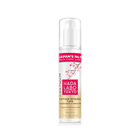
The Hada Labo Tokyo Booster Serum for Even Skin Tone with Tranexamic Acid and Vitamin C comes in a 30ml bottle. Its stated combination makes it the most direct match here for someone who wants both ingredients in a single facial serum.
Choose this option because the ingredient pairing matches your goal—not because the word booster establishes potency. Check the current ingredient list and directions before adding it to an existing active-ingredient routine.
Brightening Booster Serum pros:
- Combines vitamin C and tranexamic acid in one product.
- Has an explicitly stated uneven-skin-tone focus.
- Offers a single-serum option for shoppers seeking that pairing.
Brightening Booster Serum cons:
- Its name does not identify the vitamin C form or concentration.
- The ingredient pairing alone cannot establish individual results or suitability for reactive skin.
Best for: You want a targeted combination serum rather than choosing separate vitamin C and tranexamic acid products.
Verdict: Buy for the stated ingredient combination; do not choose it on an assumed strength.
2. L-ascorbic acid serum: best for direct vitamin C
L-ascorbic acid is the active form of vitamin C used in topical skincare. It has an established research base for antioxidant activity and applications in photoaging and pigmentation, although an ingredient’s research does not prove that every finished serum performs equally.
This is the clearest ingredient-led choice if you specifically want direct vitamin C. Pay attention to the complete formulation and packaging rather than treating concentration as the only meaningful detail.
L-ascorbic acid serum pros:
- Uses vitamin C directly rather than a derivative.
- Has an established topical-skincare research base.
- Makes the vitamin C form straightforward to identify on an ingredient list.
L-ascorbic acid serum cons:
- Is susceptible to oxidation, making formulation and storage important.
- Acidic formulas can irritate sensitive or already-irritated skin.
Best for: You prioritize direct vitamin C and are willing to assess storage requirements and skin tolerance carefully.
Do not assume tingling means better results. A serum that repeatedly leaves your skin sore is a poor routine choice, regardless of its concentration or reputation.
Verdict: Buy if you want direct vitamin C; skip formulas your skin does not tolerate.
3. Ascorbyl glucoside serum: best for a water-soluble derivative
Ascorbyl glucoside is a water-soluble vitamin C derivative linked to glucose. It differs from L-ascorbic acid in structure and requires conversion to deliver active vitamin C.
Choose this category when you specifically prefer a derivative-based formula. Do not assume that the ingredient name guarantees a lightweight texture, a fragrance-free formula, or suitability for sensitive skin; those depend on the rest of the product.
Ascorbyl glucoside serum pros:
- Provides a clearly identifiable alternative to direct ascorbic acid.
- Is water-soluble, making it suitable for water-based formulations.
- Lets you select a derivative deliberately rather than relying on a generic vitamin C claim.
Ascorbyl glucoside serum cons:
- Its percentage cannot be read as an equivalent L-ascorbic acid percentage.
- Being a derivative does not guarantee that the finished serum is non-irritating.
Best for: You want a water-soluble derivative and will judge the whole formula alongside the vitamin C ingredient.
The useful question is whether the product suits your routine—not whether every derivative is better or worse than every direct vitamin C serum. Those blanket rankings ignore formulation.
Verdict: Buy for a deliberate derivative choice; skip percentage-based comparisons with L-ascorbic acid.
4. Tetrahexyldecyl ascorbate serum: best for oil-based routines
Tetrahexyldecyl ascorbate is an oil-soluble vitamin C derivative used in skincare. It is a relevant option when you prefer an oil-based serum format rather than a watery treatment.
Read the full formula before deciding. An oil-soluble active does not tell you whether the finished product feels rich, absorbs quickly, contains fragrance, or works comfortably beneath your sunscreen.
Tetrahexyldecyl ascorbate serum pros:
- Offers a vitamin C derivative suited to oil-based formulations.
- Provides a distinct option for shoppers who prefer an oil-serum format.
- Has a specific ingredient name you can check rather than a vague vitamin C label.
Tetrahexyldecyl ascorbate serum cons:
- Oil solubility alone does not establish better brightening results.
- The complete formula determines skin feel and suitability, including for blemish-prone skin.
Best for: You already prefer oil-based skincare and want a vitamin C derivative within that format.
Verdict: Buy for the formula format; skip claims that oil solubility automatically means better performance.
How these options were ranked
This 2026 shortlist ranks by distinct buying needs: a targeted ingredient combination, direct vitamin C, a water-soluble derivative, and an oil-soluble derivative. It does not present laboratory testing, a clinical head-to-head comparison, or a universal performance score.
The criteria remain the same across entries: identifiable ingredients, relevance to the concern, skin tolerance, stability considerations, and routine fit. The first pick answers a specific combination-product need; the other entries help you identify which vitamin C approach to investigate.
How to build a brightening routine without overloading your skin
Keep your 2026 routine simple enough to identify what helps and what irritates. Follow each product’s directions, introduce one new treatment at a time, and avoid starting several unfamiliar active formulas together.
Cleanse
Start with a cleanser that leaves your skin comfortable. Follow the vitamin C serum’s application instructions, including any directions about applying to dry skin.
Apply serum
Use the amount directed on the label. More product does not establish faster brightening, and extra layers make it harder to identify the source of irritation.
Moisturize
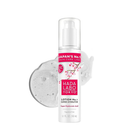
Support skin comfort with a suitable moisturizer. If dehydration is a separate concern, the Concentrated Water Serum Lock-in-Moist contains three types of hyaluronic acid and serves a hydration role—not a vitamin C replacement.
Protect
Finish your daytime routine with broad-spectrum sunscreen rated SPF 30 or higher. Reapply at least every 2 hours while outdoors, and after swimming or sweating, following the sunscreen label.
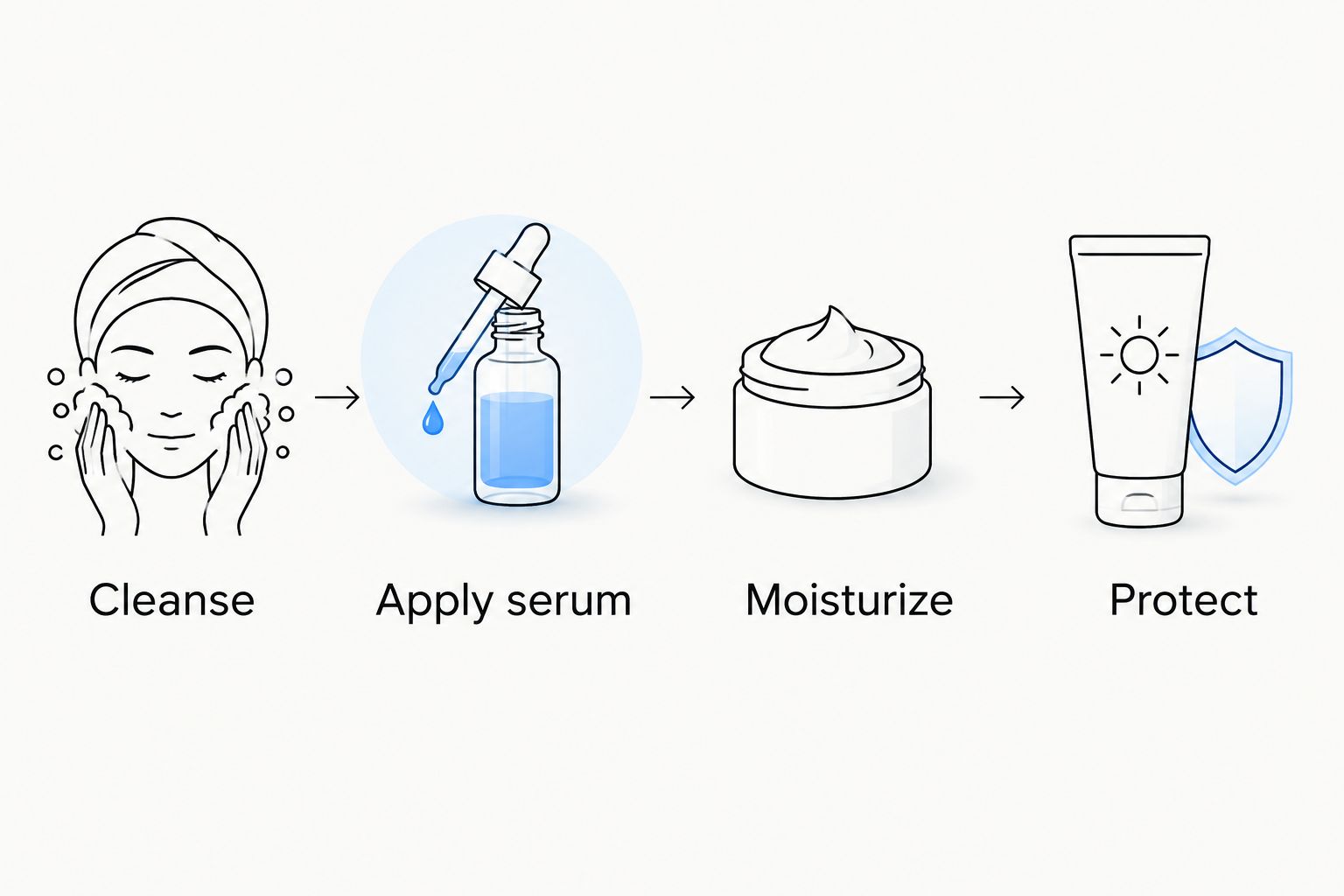
Vitamin C does not replace sunscreen. If uneven pigmentation is your main concern, treating serum and sun protection as separate jobs keeps your routine focused.
Mistakes that make choosing harder
Choosing only by percentage. Concentration is one detail within a formula, not a universal ranking system. Compare the vitamin C form before comparing the number.
Confusing hydration with pigment correction. Hydrated skin can look smoother and more radiant. That does not mean a hydrating serum has removed pigmentation.
Accepting irritation as progress. Stop using a product that causes persistent burning, swelling, or a rash. Seek professional advice for severe or continuing reactions.
Ignoring changes in the product. Follow storage and expiry instructions. If appearance, smell, or texture changes unexpectedly, check the manufacturer’s guidance rather than assuming the formula remains suitable.
Expecting every dark mark to behave alike. Post-blemish marks, melasma, and other discoloration have different causes. A new, changing, bleeding, or otherwise concerning spot needs medical assessment rather than another brightening product.
Which vitamin C serum should you choose?
For a targeted combination, choose Hada Labo Tokyo Brightening Booster Serum because it explicitly pairs vitamin C with tranexamic acid. For direct vitamin C, investigate an L-ascorbic acid formula. Choose a derivative when its formulation suits your preferences—not because all derivatives are automatically gentler or more effective.
The best vitamin C serum for brightening in 2026 is a product with a clear ingredient identity that fits your skin and routine. If you remain undecided, start with the concern you want to address and eliminate formulas that do not meet it. Do not buy several competing serums to solve the same problem.
FAQ
What's the best vitamin C serum for brightening in 2026?
Hada Labo Tokyo Brightening Booster Serum is the targeted combination pick here because it pairs vitamin C with tranexamic acid for an uneven-tone routine. Choose an L-ascorbic acid serum instead if your priority is direct vitamin C rather than that ingredient pairing.
Is L-ascorbic acid better than a vitamin C derivative?
L-ascorbic acid is direct vitamin C, but that does not make every L-ascorbic acid serum better than every derivative formula. Formulation, stability, and skin tolerance matter, and percentages across different forms are not equivalent.
Can I use vitamin C and hyaluronic acid together?
Yes, vitamin C and hyaluronic acid can be included in the same skincare routine. Vitamin C serves a different purpose from hyaluronic acid, which supports hydration; follow the directions for each finished product.
Should I use vitamin C serum in the morning or at night?
Follow your serum's directions; vitamin C can be used in a morning or evening routine. If you use it in the morning, finish with sunscreen rather than treating vitamin C as sun protection.
Does a higher vitamin C percentage mean better brightening?
No, a higher percentage does not automatically mean better brightening. The vitamin C form, complete formulation, stability, and your ability to tolerate the product all matter.
Can sensitive skin use vitamin C serum?
Sensitive skin requires an individual formula choice rather than a blanket yes or no. Introduce the product cautiously according to its directions, and stop if it causes persistent irritation; a derivative label does not guarantee tolerance.
How long does vitamin C take to brighten skin?
There is no single timeline that applies to every vitamin C serum or type of discoloration. Follow the product's directions and assess changes consistently without repeatedly adding new treatments; seek advice for persistent or concerning pigmentation.
One last thing
A brightening serum and a hydrating serum can both make skin look more radiant without doing the same job. Before buying, decide whether you want to address uneven-looking tone, dehydration, or both. That distinction is more useful than adding another bottle labelled glow.


