


University students’ oil cleansing is a makeup-removal step aimed at keeping evening skincare practical, not a requirement for every wash. This 2026 guide explains when cleansing oil earns a place in your routine, how to rinse it properly, and when a single gentle cleanser is enough.
- Hada labo cleansing oil for university students fits makeup-removal evenings, not every cleansing routine.
- Hada Labo Tokyo cleansing oil is best for students seeking a dedicated makeup-removal step.
- Double cleansing means using an oil cleanser followed by a water-based cleanser; add it only when needed.
- Keep cleansing gentle, follow the product label, and moisturize afterward rather than chasing a squeaky-clean finish.
Why oil cleansing matters for university students
Your cleansing routine needs to fit the evening you actually have. If you wear makeup to lectures, sunscreen outdoors, or both, choose a removal method that handles those layers without repeated scrubbing. If your existing cleanser removes everything comfortably, an extra bottle is not automatically an improvement.
Hada Labo Tokyo cleansing oil is best for university students seeking a dedicated makeup-removal step. That is a narrower role than treating breakouts, replacing moisturizer, or correcting the effects of missed sleep. Keep those expectations separate.
For your 2026 routine, judge cleansing by removal and comfort rather than the number of steps. The cleansing oil to double-cleanse workflow explains how an oil cleanser fits before a water-based wash.
Shared bathrooms and changing schedules call for a routine you can set out, finish, and pack away. You do not need facial brushes, a steamer, or an elaborate shelf of products to start.
Build a student-friendly cleansing routine
1. Check what you need to remove
Start with your current cleanser and an honest check of what remains afterward. Look at the hairline, sides of the nose, and jaw, where makeup is easy to miss. Do not add an oil cleanser simply because a routine video includes one.
An oil cleanser is useful when your usual wash leaves makeup behind or removal involves repeated rubbing. On lighter evenings, a single suitable cleanser is the simpler option. Your 2026 routine can change with what you wear; consistency does not mean repeating unnecessary steps.
Think about comfort as well as visible removal. Tightness or stinging after washing is a reason to review your technique and products, not a signal to scrub harder.
- Note whether you wore makeup, sunscreen, or neither.
- Check whether your existing cleanser removes visible makeup.
- Read the removal instructions on long-wear cosmetics.
- Keep a comfortable single cleanse when it does the job.
2. Prepare your shared-bathroom setup
Use what you already own before buying accessories. Clean hands, access to water, and a clean personal towel are enough equipment for an ordinary cleansing routine. Keep your products together so you do not have to search for them halfway through washing.
A small wash bag or washable tray helps you carry essentials between your room and the bathroom. Store bottles according to their labels and close them after use. Do not leave open containers where shower water can enter them.
If you plan to cleanse after an evening out, put the essentials where you will find them before leaving. That removes a practical obstacle without adding another skincare step.
- Gather your cleanser and moisturizer before starting.
- Keep a clean towel for your own face.
- Tie hair away from your forehead and jaw.
- Close containers before returning them to storage.
3. Choose a dedicated makeup remover when needed
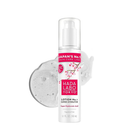
First, check whether your current makeup remover works without uncomfortable rubbing. You do not need to replace a product that already suits you. If you want an oil-format remover, Hada Labo Tokyo Cleansing Oil Make-up Removing 195ml is a dedicated option to consider.
The Cleansing Oil Make-up Removing 195ml belongs at the removal stage, not in place of leave-on hydration. Its purpose in this routine is straightforward: help you remove makeup before deciding whether another cleanse is necessary.
Choose by purpose, not by the word oil alone. A facial oil intended to stay on the skin is not interchangeable with a rinse-off cleansing oil. Likewise, a makeup remover is not an acne treatment.
Check the current packaging for application instructions, ingredients, and eye-area precautions. Follow those directions rather than assuming every cleansing oil works identically.
- Choose a product explicitly intended for cleansing or makeup removal.
- Check the ingredient list against known personal sensitivities.
- Follow the label’s directions for wet or dry application.
- Check eye-area instructions before removing eye makeup.
4. Apply gently, add water, and rinse thoroughly
Follow your cleanser’s own instructions first. Many rinse-off cleansing oils are worked over dry skin before water is added, but the label decides the method for your bottle. Use fingertips rather than a rough cloth or cleansing brush.
Work gently over the areas carrying makeup. Do not turn cleansing into a prolonged massage in an attempt to extract pores or remove every visible filament. More friction is not a better removal method.
For a rinse-off oil that directs you to add water, spread that water through the product before rinsing. Pay attention to the hairline and jaw. Keep cleanser out of your eyes unless the product expressly permits use in that area.
The sequence below is a technique reminder, not a substitute for the packaging instructions.
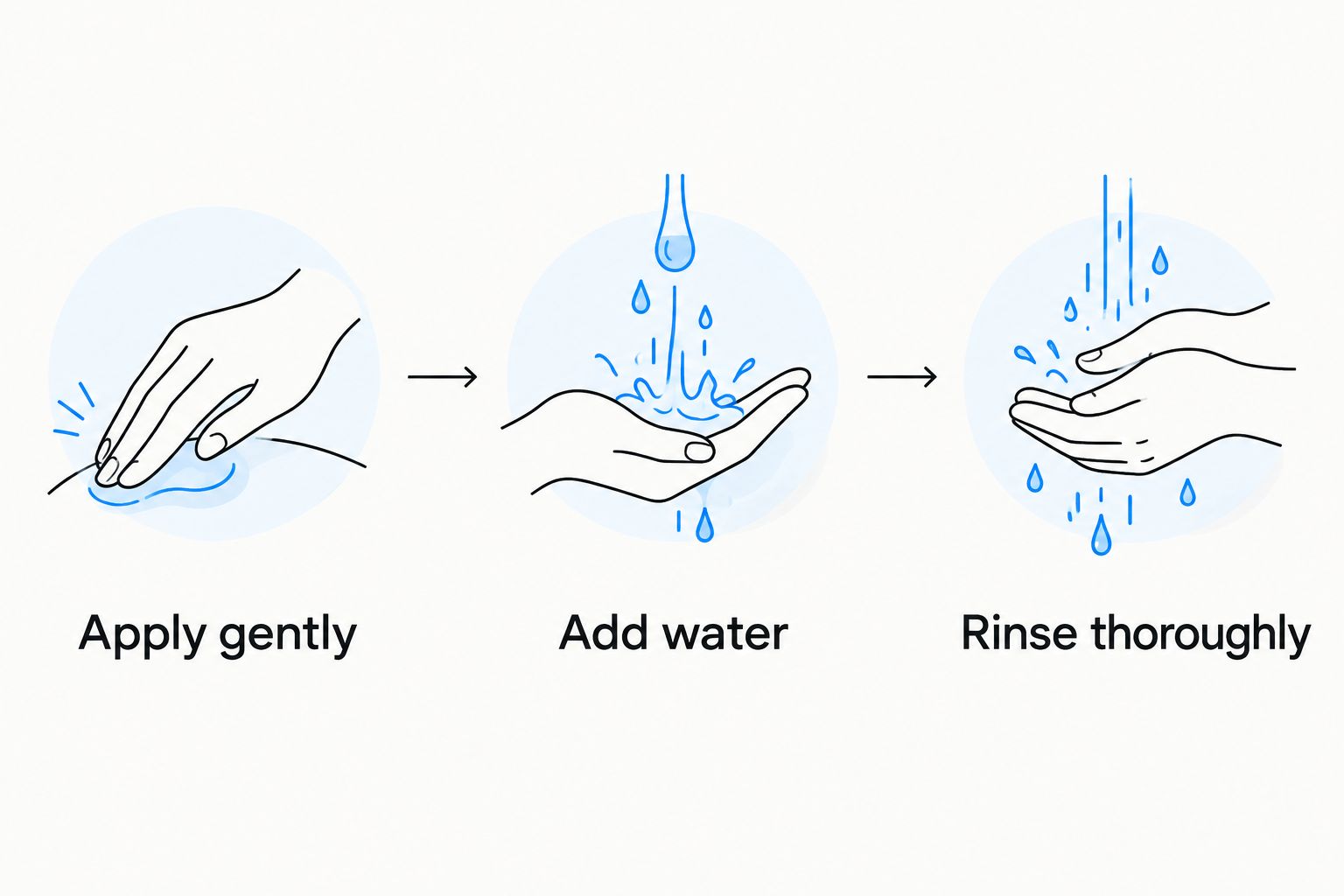
A comfortable finish matters more than a dramatic lather or a fixed massage time. If makeup remains, review the product’s removal directions rather than increasing pressure.
- Apply gently: spread the cleanser with clean fingertips.
- Add water: follow the label’s rinsing or emulsifying directions.
- Rinse thoroughly: include the hairline, nose, and jaw.
- Stop using the product if it causes irritation.
5. Add a second cleanser only when it serves a purpose
Assess the first cleanse before automatically repeating it. Double cleansing means following an oil-based cleanser with a water-based cleanser. It is a method for removing layers, not a rule that every student must follow morning and night.
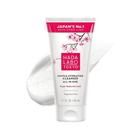
Hada Labo Tokyo Gentle Hydrating Cleanser 150ml is a gel-cream cleansing option for this stage. The Gentle Hydrating Cleanser 150ml has a different role from the oil-format makeup remover: it provides the water-based wash in a double cleanse.
The advantage is a separate wash after makeup removal. The limitation is another cleansing step, which is unnecessary when a single suitable cleanser already leaves your skin clean and comfortable. Avoid chasing a tight, squeaky finish.
- Use a second cleanser when the first product’s directions call for it.
- Choose a gentle water-based formula for the second wash.
- Rinse with lukewarm rather than hot water.
- Reassess the routine if washing leaves tightness or stinging.
6. Finish with hydration and review your routine
Use your existing moisturizer after cleansing if it suits your skin. A hydrating lotion or serum is optional; neither is a reason to leave makeup behind or skip moisturizer when you need it. Start with the basics before adding more layers.
For your 2026 term-time routine, separate evening removal from morning protection. Cleanse as needed, moisturize for comfort, and use an appropriate sunscreen during the day according to its label. A cleansing oil does not provide sun protection.
Introduce changes separately so you can identify what agrees with your skin. If persistent irritation or acne is the problem, seek advice from a pharmacist or dermatologist rather than repeatedly changing cleansing products.
- Apply a moisturizer that already suits your skin.
- Add optional hydration only for a clear reason.
- Keep daytime sunscreen separate from evening cleansing.
- Record discomfort when you introduce a new product.
- Seek professional advice for persistent skin problems.
Compare cleansing options for university life
The best option is the least complicated method that removes what you wear comfortably. Bottle volume helps identify the products below; it does not establish how long they will last. Your usage and the label’s directions determine that.
| Option | Best for | Main advantage | Key limitation |
|---|---|---|---|
| Cleansing oil, 195 ml | Students seeking a dedicated makeup-removal step | Adds an oil-format removal stage | Requires proper rinsing; another wash depends on the directions and your needs |
| Gentle hydrating cleanser, 150 ml | Students whose usual layers come off with a single wash | Keeps cleansing straightforward | A single wash is not enough if visible makeup remains |
| Micellar makeup remover, 400 ml | Students who prefer applying remover with a pad | Offers a different makeup-removal format | Pad use introduces friction; follow the label’s rinsing instructions |
A larger bottle is not proof of better suitability. Choose the format you can use correctly, and avoid keeping several overlapping removers simply because each promises a different experience.
Products for the oil-and-water cleansing method
Hada Labo Tokyo offers both the oil-format makeup remover and the gel-cream cleanser discussed above. Best for: students who have a clear reason to separate makeup removal from washing. The limitation is equally clear: buying both is unnecessary if your current single cleanser already works comfortably.


Common cleansing mistakes university students make
Busy evenings call for fewer decisions, not harsher cleansing. These are practical mistakes to avoid when building your own routine, rather than reasons to buy additional products.
- Copying a flatmate’s full routine. Shared accommodation does not mean shared skin needs. Keep the steps that solve your own removal and comfort problems.
- Saving makeup removal until after settling into bed. Set out your wash bag before leaving for the evening, then cleanse before you get comfortable on your return.
- Using repeated scrubbing to compensate for the wrong remover. Check whether your cleanser is intended for the cosmetics you wear instead of increasing pressure.
- Adding double cleansing and several new treatments together. Change one part of the routine at a time so you can identify the source of discomfort.
- Leaving a rinse-off cleanser on as overnight skincare. Remove it as directed, then use a product intended to remain on the skin for hydration.
FAQ
Is Hada Labo cleansing oil a good choice for university students?
Hada Labo Tokyo cleansing oil suits students seeking a dedicated makeup-removal step. It is not essential if an existing cleanser already removes everything comfortably.
Do I need to double cleanse every night at university?
No, double cleansing is not a requirement every night. Follow your remover’s instructions and use a second cleanser when it serves a clear removal need rather than adding it automatically.
Should I apply cleansing oil to wet or dry skin?
Follow the application instructions on your cleansing oil. Many formulas start on dry skin before water is added, but that method is not universal.
Can I use cleansing oil if my skin is oily?
Oily skin alone does not determine whether a cleansing oil suits you. Choose a rinse-off facial cleanser, follow its directions, and stop using it if irritation develops.
Can cleansing oil replace my moisturizer?
No, rinse-off cleansing oil does not replace leave-on moisturizer. Rinse away the cleanser as directed and follow with a moisturizer that suits your skin.
Can I use cleansing oil around my eyes?
Use cleansing oil around the eyes only as permitted by its label. Do not assume a facial makeup remover is suitable for every eye cosmetic, and avoid getting cleanser into your eyes.
Will cleansing oil clear my student acne?
Cleansing oil is a makeup-removal product, not an acne treatment. Seek advice from a pharmacist or dermatologist for persistent acne rather than increasing cleansing frequency or pressure.
One last thing
Choose your routine before you reach the sink. Decide whether the evening calls for makeup removal, a single wash, or a double cleanse, then take only those essentials into the bathroom.
For 2026, keep one simple rule: add a step to solve a specific problem, not to complete someone else’s routine. Comfortable, thorough cleansing is the goal; a crowded wash bag is not.


