


Yes, niacinamide serum is generally suitable for sensitive skin, but the complete formula and your skin's current condition determine whether you tolerate it. Irritation is still possible, especially when you introduce several products together or apply serum to already irritated skin. This 2026 guide explains how to choose a formula, test it and recognise when to stop.
- Is niacinamide serum safe for sensitive skin? Generally yes, but no formula is irritation-proof.
- Hada Labo Tokyo offers niacinamide skincare for shoppers seeking a lightweight, soothing serum; individual tolerance still needs testing.
- Patch-test new skincare before facial use, and introduce only one new formula at a time.
- Niacinamide and hyaluronic acid can share a routine; burning is a reason to stop, not persist.
Is niacinamide serum safe for sensitive skin?
Niacinamide is generally well tolerated, but an ingredient's reputation does not guarantee that every serum containing it will suit you. Niacinamide supports the skin barrier and is used in skincare addressing uneven tone, oiliness and redness. Those benefits do not make it a treatment for every cause of sensitive skin.
Your decision should start with the whole formula, not a prominent ingredient on the front label. Fragrance, additional treatment ingredients and ingredients you have reacted to before all deserve attention. A higher concentration is not automatically a better choice for reactive skin.
Use this practical decision table before adding a serum to your 2026 routine:
| Your skin's condition | Best next step | Main limitation |
|---|---|---|
| Comfortable, intact skin with occasional sensitivity | Test the serum on a small area before facial use | A successful test cannot rule out every later reaction |
| Skin currently burning, peeling or feeling raw | Delay the new serum and simplify your routine | Adding another formula makes the cause harder to identify |
| Previous reaction to a niacinamide serum | Review the complete ingredient list and discuss recurring reactions with a dermatologist | The reaction does not identify which ingredient caused it |
| Diagnosed eczema, rosacea or contact allergy | Follow your clinician's advice before introducing treatment-focused skincare | Cosmetic descriptions do not establish suitability for a medical condition |
If your main concern is combining hydration ingredients, the guide to using niacinamide serum and hyaluronic acid serum together explains that separate question.
Why this matters
Sensitive skin needs a routine you can tolerate consistently, not a collection of ingredients you feel obliged to use. A serum that leaves your face uncomfortable is not a good fit simply because niacinamide has useful skincare properties.
Sensitivity is also a description, not a diagnosis. Dryness, an irritated barrier, rosacea and contact dermatitis can produce overlapping complaints, but they do not all need the same response. Persistent symptoms deserve assessment rather than another product experiment.
Choose comfort before complexity. If your cleanser and moisturiser already sting, introducing niacinamide is not the immediate priority; understanding and settling that irritation comes first.
Why niacinamide tolerance varies
The same ingredient can feel comfortable in one routine and irritating in another. These factors explain why a recommendation from someone with sensitive skin cannot predict your own result:
- The complete formula. You apply a finished serum, not isolated niacinamide. Check every ingredient against known personal triggers.
- Niacinamide concentration. Stronger is not automatically more effective for your needs, and concentration alone cannot establish tolerability.
- Your skin barrier. Raw, chapped or recently over-exfoliated skin is a poor starting point for a new cosmetic product.
- Other treatment products. Introducing exfoliating acids, retinoids and a new serum together makes irritation harder to trace.
- Application habits. Using more than directed or increasing frequency despite discomfort adds unnecessary exposure.
- Individual sensitivities. A fragrance-free or soothing description does not exclude an allergy or irritation from another ingredient.
For a 2026 purchase, read the current packaging and directions rather than relying on an old ingredient screenshot or somebody else's routine. Follow instructions for the exact product you have.
What should you look for on the label?
Look for a formula that fits a clear need and avoids ingredients you already know cause problems. If fragrance has triggered reactions before, a fragrance-free option is a sensible filter, but it is not a guarantee of compatibility.
Do not assume that a short ingredient list is automatically safer than a longer one. Ingredient identity matters more than list length. Likewise, a soothing claim describes a product's intended purpose; it does not prove that your skin will tolerate it.
If the concentration is not stated, do not estimate it from an ingredient's position on the label. Ask the manufacturer when that information is necessary for a clinician's recommendation or your purchasing decision.
How do you introduce niacinamide to sensitive skin?
Test first, then change as little as possible. The American Academy of Dermatology advises testing a new skincare product on a small area twice daily for 7–10 days before adding it to your routine. This is a home-use tolerance check, not the diagnostic patch testing a dermatologist performs for suspected contact allergy.
- Check your baseline. Wait until your skin feels settled rather than starting during a flare, immediately after a peel or while your face feels raw.
- Read the directions. Check the intended application area, amount and frequency. Avoid eyelids unless the product is specifically directed for that area.
- Test locally. Following American Academy of Dermatology guidance, use a small area such as the inner arm or elbow bend. Observe for redness, itching, swelling or discomfort.
- Introduce gradually. After a tolerated test, begin facial use cautiously within the product's directions. Keep your established cleanser and moisturiser unchanged.
- Monitor comfort. Stop the new serum if burning, a rash or worsening irritation develops. Do not keep increasing use to reach a supposed adjustment stage.

A small-area test reduces uncertainty, but facial skin can still react differently. Do not treat a comfortable arm test as permission to ignore discomfort on your face.
For your 2026 introduction plan, keep a simple note of the product name, application days and symptoms. That record is more useful than trying to remember which of several new products you used before a reaction.
Where does niacinamide fit in a routine?
Follow the product's directions for placement. A typical serum routine is gentle cleansing, serum, moisturiser and daytime sunscreen, with texture and manufacturer instructions determining the exact order.
Avoid mixing the serum into sunscreen. Sunscreen needs to be applied as directed, and a serum does not replace it. There is also no universal waiting time between niacinamide and moisturiser; follow any specific instructions and avoid rubbing layers aggressively.
You do not need separate morning and evening treatment routines to make niacinamide worthwhile. A manageable routine that stays comfortable is the better starting point for sensitive skin.
Which serum approach fits your main concern?
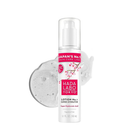
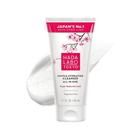
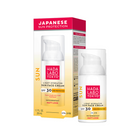
Hada Labo Tokyo niacinamide skincare is best for shoppers seeking a lightweight, soothing serum for skin prone to imperfections, redness and dehydration. That matches the Soothing Booster Serum's stated purpose, not a promise that it will suit every sensitive complexion.
The two formulas below address different priorities. Choose by your main concern rather than buying both to create a longer routine.
| Product | Best for | Supported benefit | Limitation |
|---|---|---|---|
| Hada Labo Tokyo Soothing Booster Serum with Niacinamide and Allantoin 30ml | Shoppers seeking a lightweight, soothing serum for imperfections, redness and dehydration | Contains niacinamide and allantoin; described as lightweight and soothing | Its stated purpose does not establish individual tolerance or treatment of rosacea |
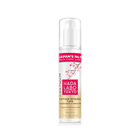
| Hada Labo Tokyo Concentrated Water Serum Lock-in-Moist 30ml | Shoppers whose main priority is hydration | Described as containing three types of hyaluronic acid | A hydration-focused description does not establish that it suits every sensitive skin type |
The Soothing Booster Serum is the relevant option when you specifically want niacinamide. The Concentrated Water Serum is an alternative approach when hydration is your main goal; it should not be treated as an equivalent niacinamide formula.
Neither product should be selected as a way to push through an active rash. Check the current full ingredient list, then test the chosen formula before facial use.


Can I use niacinamide with hyaluronic acid?
Yes, niacinamide and hyaluronic acid can be used in the same routine. The combination is not inherently unsuitable for sensitive skin, but you still need to tolerate each finished formula.
Introduce the products separately rather than starting both together. If hydration is already covered by your moisturiser, an additional hydrating serum is optional, not a requirement for using niacinamide safely.
Should niacinamide sting when I apply it?
Niacinamide does not need to sting to work. Burning, itching or persistent redness is not evidence that a serum is becoming effective.
Stop using the new product and gently rinse it off if it causes irritation. Return to previously tolerated basics rather than applying more treatment ingredients to counteract the reaction. Seek medical advice for persistent or worsening symptoms; breathing difficulty or swelling of the lips or tongue requires urgent medical help.
Can I use niacinamide if I have eczema or rosacea?
A niacinamide serum is not automatically appropriate just because eczema or rosacea makes your skin sensitive. Some people tolerate it, but your diagnosis, current symptoms and prescribed treatment should guide the decision.
Ask your dermatologist before introducing a new serum during a flare or alongside a treatment plan. Do not replace prescribed care with a cosmetic marketed for redness, soothing or barrier support.
FAQ
Is niacinamide serum safe for sensitive skin in 2026?
Niacinamide serum is generally suitable for sensitive skin, but the finished formula and your skin's condition determine tolerance. Test a new product before facial use and stop if it causes irritation.
How long should I patch-test a new niacinamide serum?
The American Academy of Dermatology recommends testing a new skincare product on a small area twice daily for 7–10 days. This home-use check does not replace dermatologist-led testing for a suspected allergy.
What's the best niacinamide percentage for sensitive skin?
There is no single niacinamide percentage that guarantees compatibility with sensitive skin. Choose by the complete formula, product directions and your previous reactions rather than assuming a stronger concentration is better.
Can I use niacinamide serum every day if my skin is sensitive?
Daily use depends on the product's directions and your tolerance. Introduce the formula cautiously and do not increase frequency while your skin feels irritated.
Can niacinamide cause skin purging?
New irritation or breakouts after introducing niacinamide should not automatically be labelled purging. Stop and reassess the formula rather than continuing through worsening symptoms.
Is hyaluronic acid better than niacinamide for sensitive skin?
Neither ingredient is universally better for sensitive skin. Hyaluronic acid focuses on hydration, while niacinamide has broader roles including barrier support; tolerance depends on the finished product.
Can I use niacinamide with retinol if my skin is sensitive?
Niacinamide and retinol can share a routine, but retinol can irritate sensitive skin. Establish tolerance separately and follow product directions or your clinician's advice rather than introducing both together.
One last thing
Your most useful test is whether ordinary skincare stays comfortable after adding the serum. If a previously tolerated cleanser or moisturiser starts to sting, do not judge the new serum only by how it feels at the moment of application.
For the rest of 2026, make additions purposeful: identify the concern, test the formula and keep what your skin tolerates. You do not need a niacinamide serum to have a good sensitive-skin routine.


