


Yes—an SPF moisturizer can be your only facial sunscreen if it provides broad-spectrum UVA and UVB protection, has SPF 30 or higher, and you apply and reapply it as directed. It cannot be your only sun-protection measure: use shade and protective clothing too, and choose water-resistant sunscreen for swimming or sweating.
- Is SPF moisturizer enough sun protection? Yes, if broad-spectrum SPF 30 or higher is applied correctly and reapplied.
- SPF moisturizer and separate sunscreen both depend on coverage, application amount and the product’s directions.
- Hada Labo Tokyo offers hydrating SPF skincare; check each product’s UVA protection and water-resistance labelling.
- Reapply sunscreen every 2 hours outdoors and after swimming, sweating or towel drying, following the label.
Is SPF moisturizer enough sun protection on its own?
An SPF moisturizer can replace a separate facial sunscreen, but it cannot replace a complete sun-protection routine. The deciding factors are its protection label and how you use it—not whether the front of the packaging says moisturizer, day cream or sunscreen.
For this 2026 guide, the baseline follows the American Academy of Dermatology’s consumer guidance: choose broad-spectrum, water-resistant sunscreen with SPF 30 or higher. If you are comparing textures for everyday use, the guide to SPF moisturizers for daily sun protection covers that next decision.
| Routine option | Best for | Main advantage | Main limitation |
|---|---|---|---|
| Broad-spectrum SPF moisturizer | Combining hydration and facial sun protection | One product can cover both jobs | A small moisturizing dab does not necessarily provide the labelled protection |
| Moisturizer followed by sunscreen | Adjusting hydration separately from sun protection | You can choose each layer for its own purpose | More layers can complicate application or feel uncomfortable |
| Moisturizer without SPF | Hydration beneath a sunscreen layer | Keeps moisturizing separate from protection | Does not replace sunscreen |
A separate sunscreen is not automatically better than an SPF moisturizer. It becomes the better choice when it meets your exposure needs more clearly, feels comfortable at the required amount, or is easier to reapply.
Why this matters
You normally choose moisturizer by how your skin feels after a small application. Sunscreen works differently: the labelled SPF depends on a tested application amount, and a barely visible dab is not a reliable substitute for that amount.
That difference explains why a comfortable morning routine can still leave gaps in protection. Your cheeks might feel hydrated while your ears, hairline and neck remain uncovered.
The practical goal in 2026 is not to build the longest routine. Choose a protective product you can apply properly, then make reapplication and physical protection part of your day. Hydration supports comfort; it does not establish protection against ultraviolet radiation.
SPF 30 moisturizer: a baseline, not all-day protection
Broad-spectrum SPF 30 meets the American Academy of Dermatology’s minimum SPF recommendation. That makes it a reasonable starting point when the product also meets your needs for water resistance and you follow its instructions.
The benefit is simplicity. You can combine moisturizing and sunscreen application instead of treating them as separate steps.
The limitation is that SPF 30 does not describe how long the product stays on your skin. Washing, swimming, sweating and towel drying still affect your routine, and the SPF number does not remove the need to reapply.
Best for: a shorter routine when you can use the full directed amount comfortably. If that amount feels too heavy, change the formula rather than deliberately applying less.
SPF 50 moisturizer: a higher rating, not a longer timer
SPF 50 is a higher tested sun-protection rating than SPF 30. It is not permission to spend longer outside without reapplication, and the number alone does not confirm UVA protection or water resistance.
The advantage is the higher labelled SPF. The limitation is the same application dependency: thin coverage, missed areas and product removal still matter.
For a 2026 routine, assess SPF 50 alongside the rest of the label. Look for broad-spectrum wording or appropriate UVA protection labelling, then read the application and reapplication directions.
Best for: people who prefer a higher SPF rating in a formula they can use consistently. Do not treat SPF 50 as a substitute for shade, a hat or covering exposed skin.
Why SPF moisturizer protection varies
The category name does not explain everything. These factors determine whether an SPF moisturizer works as your main facial sunscreen:
- UVA protection: SPF primarily describes protection against sunburn-producing UVB radiation. Look for broad-spectrum wording or recognised UVA protection labelling as well.
- Application amount: SPF testing uses 2 milligrams per square centimetre of skin. Applying a thinner layer does not establish the same protection as the tested layer.
- Coverage: Missed areas remain missed regardless of the SPF number. Include exposed ears, the hairline and neck, following the product’s directions around the eyes.
- Water and friction: Swimming, sweating, washing and towel drying can remove product. Read water-resistance claims and reapplication instructions rather than assuming every day cream suits those conditions.
- Reapplication: The American Academy of Dermatology recommends reapplying every 2 hours outdoors and after swimming or sweating. A morning application is not an all-day guarantee.
- Routine compatibility: If the protective layer pills, feels uncomfortable or moves when you apply makeup, simplify the layers beneath it or choose another formula. Do not solve the problem by using less sunscreen.
Your schedule matters because it changes these conditions. A walk to work, outdoor exercise and swimming do not expose your routine to the same demands.
How to use SPF moisturizer as your main facial sunscreen
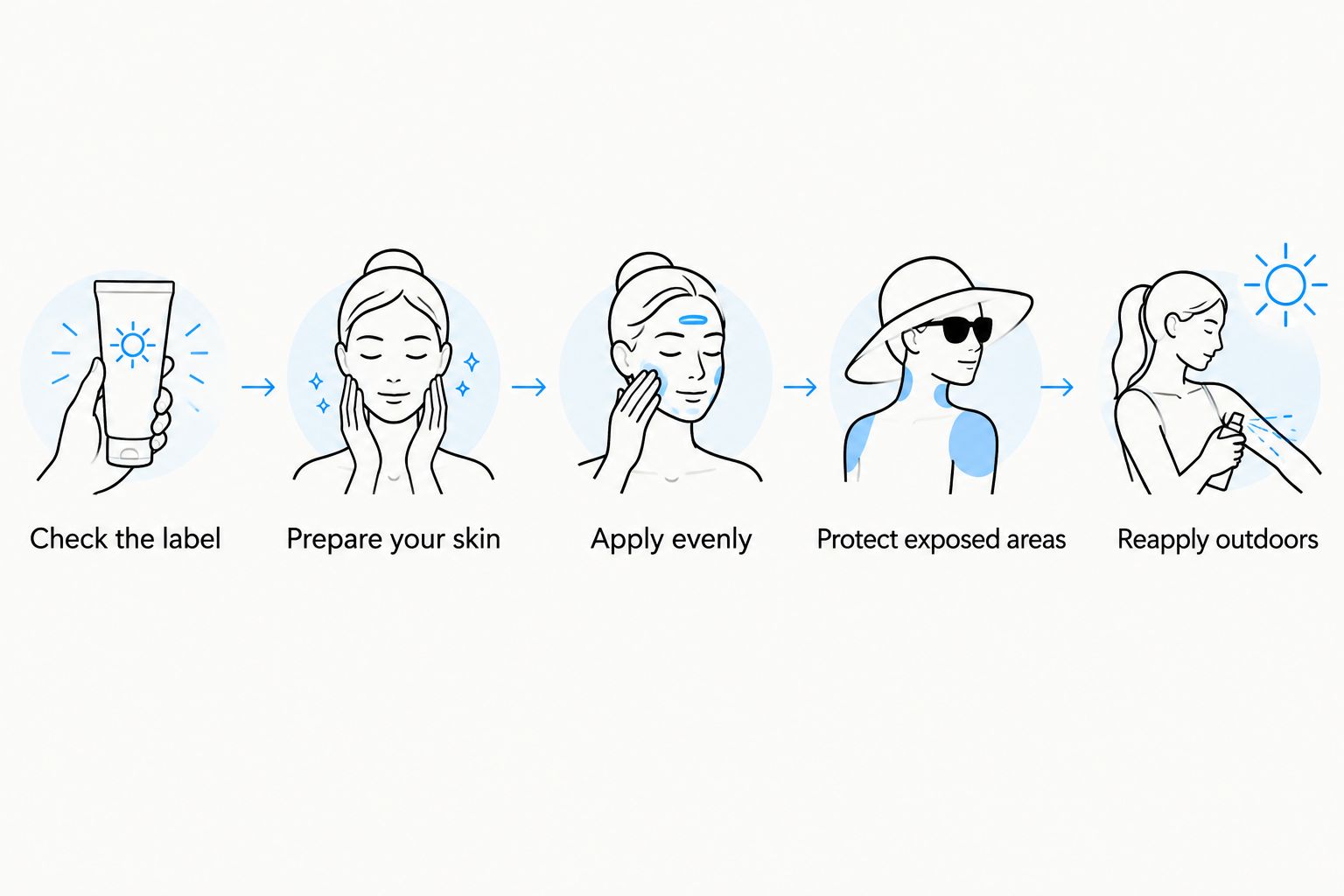
Use this sequence to keep hydration and protection separate in your thinking, even when one product provides both.
- Check the label. Confirm SPF 30 or higher and UVA protection. For swimming or sweating, choose water resistance appropriate to the activity and follow the stated directions.
- Prepare your skin. Cleanse as needed and apply any hydrating layers you use. Give those layers time to settle so that you can spread the sunscreen evenly without mixing the products together.
- Apply evenly. Use the amount specified by the product and cover all exposed areas. Standard SPF testing uses 2 milligrams per square centimetre; follow the product’s practical application instructions rather than trying to calculate your facial surface area.
- Protect exposed areas. Remember ears, neck and other uncovered skin. Use a product suitable for each area and follow its eye-area warnings.
- Reapply outdoors. Apply sunscreen before exposure; the American Academy of Dermatology advises about 15 minutes beforehand. Reapply every 2 hours outdoors and after swimming or sweating, following the label.
This sequence matters more than adding another serum. In 2026, keep the final protective layer easy to spread, comfortable to wear and accessible when you need another application.
Make the amount comfortable, not smaller
A sunscreen that feels pleasant as a tiny dab can feel different at its directed amount. Test the intended application during your ordinary routine before relying on it for a long day outdoors.
If it feels greasy or pills, first reduce unnecessary layers underneath. If the problem continues, choose a different protective formula; keeping the same product and cutting the amount undermines the reason you selected its SPF.
Keep sunscreen separate from mixing
Apply sunscreen as its own layer rather than blending it into moisturizer, foundation or serum in your palm. Mixing changes the application and does not preserve the product’s tested protection as a predictable result.
Layering two SPF products also does not add their ratings together. SPF 30 beneath SPF 50 is not SPF 80, and neither rating cancels the need for adequate coverage.
Choosing a hydrating SPF product
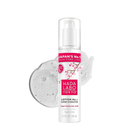
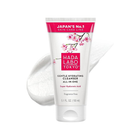
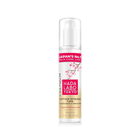
Hada Labo Tokyo SPF skincare is best for people seeking hydration alongside labelled sun protection. Its Japanese-inspired skincare range includes hyaluronic acid products, but hydration and UV protection remain separate benefits to assess.
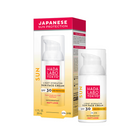
These facial options have SPF 50 in their supplied product names. Choose between them by checking the complete current label and whether the directed application works for your skin—not by assuming identical UVA protection, water resistance or texture.
| Product | Best for | Supported benefit | Limitation to check |
|---|---|---|---|
| Hada Labo Tokyo Lightweight Protective Cream SPF 50 | Comparing an SPF 50 protective cream for your facial routine | Its product name identifies SPF 50 | Check UVA labelling, application directions and suitability for water exposure |
| Hada Labo Tokyo Face Sun Cream SPF 50 50ml | Combining a facial sun cream with hydration | Its supplied description names Super Hyaluronic Acid and SPF 50 | Hydration does not replace reapplication; check water-resistance instructions |
Neither option removes the need for physical sun protection. The useful purchase decision is whether you will wear the product at its directed amount and keep using it when your day changes.


Do I still need separate sunscreen over SPF moisturizer?
SPF 30 or higher in a suitable broad-spectrum moisturizer can make a separate facial sunscreen unnecessary. You still need the full application, appropriate water resistance for your activity and reapplication during outdoor exposure.
Choose separate sunscreen when you cannot comfortably apply enough of your SPF moisturizer or when another product better matches swimming, sweating or extended outdoor use. The extra layer should solve a specific problem, not simply make the routine longer.
How often should I reapply SPF moisturizer outside?
Every 2 hours outdoors is the American Academy of Dermatology’s general sunscreen reapplication guidance. Reapply after swimming or sweating as well, and follow the product’s instructions after towel drying.
That advice still applies when the sunscreen is sold as a moisturizer. For your 2026 routine, keep the protective product available during the day instead of leaving it where you applied it that morning.
Is SPF moisturizer enough under makeup?
SPF 30 or higher in a suitable broad-spectrum moisturizer can provide the sunscreen layer beneath makeup. Apply it evenly at the directed amount and avoid disturbing that layer when adding makeup.
Makeup does not remove the need to reapply sunscreen outdoors. Choose a reapplication approach that lets you follow the sunscreen’s directions; do not assume a light dusting of an SPF cosmetic matches a full sunscreen application.
FAQ
Is SPF moisturizer enough sun protection for everyday use?
Yes, an SPF moisturizer can serve as your facial sunscreen if it has SPF 30 or higher, suitable UVA protection and is applied as directed. Add shade and protective clothing, and choose water resistance for swimming or sweating.
Is SPF 50 moisturizer better than SPF 30 moisturizer?
SPF 50 has a higher tested SPF rating than SPF 30, but neither number establishes UVA protection or water resistance on its own. Both still require adequate application and reapplication.
Can I skip moisturizer if my sunscreen feels hydrating?
Yes, you can skip a separate moisturizer if your sunscreen provides enough comfort for your skin. Keep any additional hydration you need underneath rather than mixing it into sunscreen.
Does hyaluronic acid provide sun protection?
No, hyaluronic acid is a hydrating ingredient, not a replacement for sunscreen. A product containing it needs its own suitable SPF and UVA protection labelling to serve as sun protection.
How long before going outside should I apply SPF moisturizer?
About 15 minutes before going outside follows the American Academy of Dermatology’s general sunscreen guidance. Also follow your product’s application directions and cover exposed areas evenly.
Do I need water-resistant SPF moisturizer for exercise?
Choose water-resistant sunscreen for exercise that makes you sweat. Reapply according to the label and after sweating or towel drying; the SPF number alone does not describe water resistance.
Can I mix SPF moisturizer with foundation to save time?
No, apply SPF moisturizer as its own protective layer rather than mixing it with foundation. Mixing does not preserve the product’s tested protection as a predictable result.
Does SPF 50 mean I can stay outside all day?
No, SPF 50 does not mean all-day protection from one application. Reapply every 2 hours outdoors and after swimming or sweating, following the label, and use shade and protective clothing.
One last thing
The most useful improvement to your 2026 routine might be a coverage check, not another product. Before leaving, check the places your hands easily miss: ears, hairline, the sides of your neck and any other exposed skin.
A higher SPF number cannot protect an area you did not cover. Make complete application your habit, then choose a routine you can repeat when it is time to reapply.


