
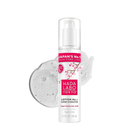
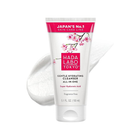
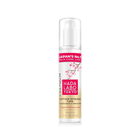


A 150 mL bottle of Hada Labo Tokyo lotion provides 150 applications if you measure 1 mL each time, or 75 days if you use that amount twice daily in 2026. That is a calculation, not a recommended dose or a guaranteed lifespan. The bottle will last longer or shorter depending on how much you use, how often you apply it and how much remains in the bottle when you stop using it.
- How long does Hada Labo lotion last? A 150 mL bottle gives 150 applications at a measured 1 mL each.
- At that measured amount twice daily, the bottle lasts 75 days; your actual usage determines the result.
- Hada Labo Tokyo's 150 mL lotions share the same volume, so choose a variant for your routine, not a longer supply.
Why this matters
A bottle size tells you how much lotion you have, not how many weeks it will last. Two people can buy the same 150 mL bottle and finish it at different times simply because they pour different amounts. If you want a useful 2026 estimate, measure your own application rather than relying on someone else's routine.
There is also a distinction between how long it takes to use the bottle and how long the product remains suitable to use. This guide calculates usage. For a product's storage instructions and period after opening, follow the information printed on its packaging; bottle volume alone cannot answer that question.
How long does a bottle of Hada Labo lotion last?
Divide the bottle's 150 mL volume by the amount you measure for one application. Divide that application count by the number of times you apply it each day. The result is your estimated number of days, assuming you use the same amount each time.
| Measured amount per application | Applications from 150 mL | Once-daily use | Twice-daily use |
|---|---|---|---|
| 0.5 mL | 300 | 300 days | 150 days |
| 1 mL | 150 | 150 days | 75 days |
The amounts in this table are examples for calculation, not instructions on how much lotion your skin needs. They also assume every millilitre in the bottle is used. If your measured amount changes from day to day, the table becomes a starting estimate rather than a finish date.
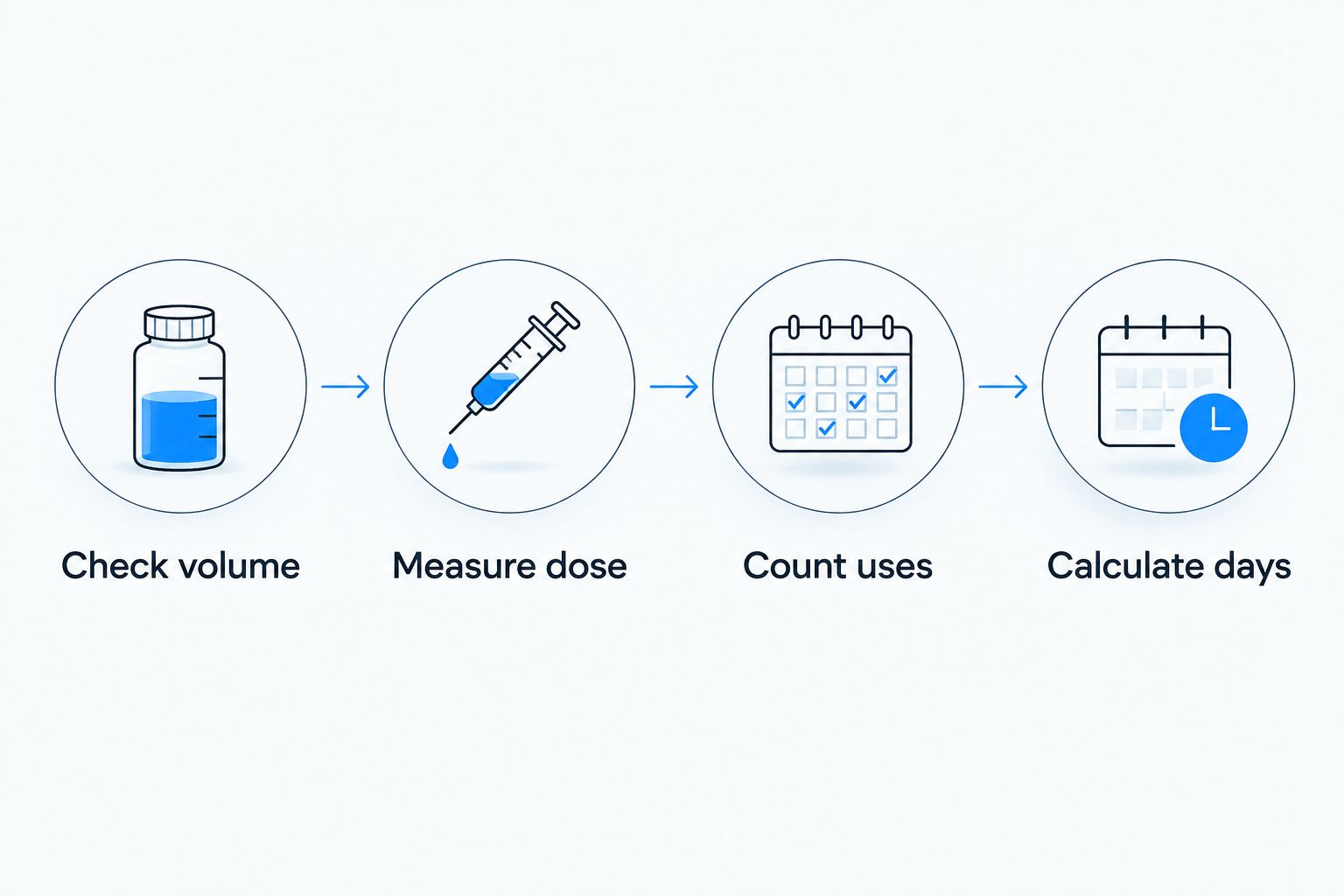
For a personalised answer, use these steps:
- Check volume. Read the volume on your bottle. The lotion variants compared below each have 150 mL in their listed product names.
- Measure dose. Measure the amount you actually apply in one normal use, using a clean measure marked in millilitres. Do not change your routine just to match the examples above.
- Count uses. Divide the bottle volume by your measured amount per application. If your application is 1 mL, 150 mL divided by 1 mL gives 150 applications.
- Calculate days. Divide the application count by your daily frequency. At two applications a day, 150 applications last 75 days.
These steps give you a 2026 planning estimate, not a promise that every drop will come out of the bottle. Recheck the calculation if you begin using the lotion on more skin or change how often you apply it.
Which 150 mL lotion are you counting?
The two lotions below have the same listed volume. At the same measured amount per application and the same daily frequency, their calculated lifespan is therefore the same. Their names point to different choices for your routine, not different quantities in the bottle.
| Lotion | Listed volume | Best for | Trade-off for this question |
|---|---|---|---|
| Lotion No.1 Super Hydrator | 150 mL | Someone seeking the standard Super Hydrator lotion | Its name does not tell you your personal application size. |
| Lotion No.1 Matt Super Hydrator | 150 mL | Someone specifically seeking the Matt variant | The same volume does not mean it will last longer in your routine. |
Hada Labo Tokyo lotion is best for shoppers building a hydrating skincare routine who will choose a variant by its intended finish, then measure their own usage. If your only question is which of these bottles contains more lotion, neither wins: both are listed at 150 mL.
Standard lotion: 150 mL
Choose the standard Super Hydrator when you want the No.1 lotion without selecting the Matt variant. A measured 1 mL application yields the same arithmetic as the table: 150 applications from a 150 mL bottle. The limitation is that this figure says nothing about how much you personally apply or how the lotion feels on your skin.
Do not treat 75 days as a product claim. It describes one specific routine: a measured 1 mL in the morning and a measured 1 mL later in the day. If you apply a different amount, put that amount into the formula instead.
Matt lotion: 150 mL
Choose the Matt Super Hydrator if you are looking for the variant identified as Matt. Its listed 150 mL volume gives it no mathematical advantage over the standard version when both are applied in equal amounts. The trade-off is the same uncertainty: a product name cannot tell you how much you will use per application.
For example, the 150-day result in the table depends on a measured 0.5 mL application twice daily. It does not establish that 0.5 mL is the right amount for you, and it does not establish how long an unopened or opened bottle remains suitable to use.
Why the number of days varies
Your application size is the main variable. The bottle's listed volume stays at 150 mL for the lotions above, but the number of applications falls as the amount used each time rises. Check these factors before putting a replacement date on your calendar:
- Amount per application: Measure your usual amount rather than borrowing an amount from an online estimate. The 0.5 mL and 1 mL examples produce different results from the same bottle.
- Daily frequency: Once-daily use divides the available applications across fewer days of use than twice-daily use. Count the routine you actually follow.
- Where you apply it: If you extend an application beyond your usual area, measure that application again. The earlier dose may no longer represent your routine.
- Changes to your routine: Adding or removing an application changes the daily total. Recalculate instead of assuming your first estimate still holds.
- Product left unused: The division assumes you use the full listed volume. Lotion you spill or cannot dispense reduces the number of applications you receive.
A simple usage note is more useful than trying to remember when a bottle felt half full. Record when you start it and whether you use it once or twice a day. If you later want to check your estimate, compare your actual routine with the measured amount you used in the calculation.
How do you calculate your own finish date in 2026?
Start with the volume printed on your bottle, not a volume remembered from another variant. Measure one application and calculate bottle volume ÷ millilitres per application ÷ applications per day. That gives a number of days; add those days to the date you start using the bottle.
Keep the calculation tied to one routine. If you use one amount in the morning and another in the evening, add those measured amounts to find your daily use, then divide the bottle volume by that total. This avoids pretending that two unequal applications are identical.
If you cannot measure an application, you cannot calculate a defensible personal duration from the bottle size alone. You can still track your start date and observe when the bottle runs out. That record will give you a more useful reference for your next bottle than a generic estimate.
Does using it twice a day mean it lasts half as long?
Yes, if each application uses the same measured amount. At 1 mL per application, a 150 mL bottle gives 150 days at once-daily use or 75 days at twice-daily use. If your morning and evening amounts differ, calculate their combined daily volume instead.
This is why frequency should be stated alongside any claim about how long a bottle lasts. The phrase lasts 75 days is incomplete without the measured 1 mL amount and twice-daily schedule that produce it.
Is the bottle's usage duration the same as its shelf life?
No. A 75-day usage estimate answers when a 150 mL bottle would run out under the stated routine; it does not establish the product's expiry or period after opening. Check the packaging for those instructions, and do not use a usage calculation in place of them.
That distinction matters even if you use lotion infrequently. A calculation can give you a large number of days when daily use is low, but it cannot tell you whether the product should remain in use throughout that period. Follow the packaging rather than extending use to finish the bottle.
FAQ
How long does Hada Labo lotion last with twice-daily use?
A 150 mL bottle lasts 75 days if you measure 1 mL per application and apply it twice daily. Measure your own amount to calculate a personal estimate.
How many uses are in a 150 mL bottle of Hada Labo lotion?
A 150 mL bottle gives 150 uses at a measured 1 mL per use. The number changes when your measured application size changes.
Will a 150 mL bottle last longer if I apply it once a day?
Yes, if you use the same amount per application. At a measured 1 mL each time, 150 mL lasts 150 days once daily or 75 days twice daily.
Do the standard and Matt lotions contain the same amount?
The listed standard No.1 Super Hydrator and No.1 Matt Super Hydrator bottles are each 150 mL. Equal measured applications therefore produce the same calculated number of uses.
Does 75 days mean the lotion expires after 75 days?
No. Seventy-five days is a usage calculation for a 150 mL bottle used at 1 mL twice daily, not an expiry period. Follow the product packaging for storage and period-after-opening information.
What if I use different amounts in the morning and evening?
Add your measured morning and evening amounts to find daily use, then divide 150 mL by that total. Do not assume both applications are equal.
Can I tell how long my lotion will last without measuring it?
You cannot calculate a personal duration from volume alone. Record your start date and routine, then use your actual finish date as a reference for the next bottle.
One last thing
Keep two questions separate in 2026: when will the bottle run out, and how long should you keep using it? Your measured daily use answers the first. The product packaging addresses the second. That distinction gives you a useful replacement estimate without turning arithmetic into an unsupported shelf-life claim.


