


Yes. Topical hyaluronic acid is generally considered a low-risk skincare ingredient during pregnancy because it acts mainly as a humectant on the skin. That answer applies to an ingredient in a lotion, serum or cream—not automatically to every ingredient in a finished product, an oral supplement or an injectable treatment.
- Is hyaluronic acid safe during pregnancy? Topical hyaluronic acid is generally considered low risk; check the full formula.
- Choose a straightforward hydrating lotion, serum or cream over a formula with pregnancy-restricted actives.
- Hada Labo Tokyo suits shoppers seeking hyaluronic-acid hydration, but no product is cleared by its name alone.
- Ask your maternity care clinician about injectable treatments, supplements or an ingredient list you cannot assess.
Is hyaluronic acid safe to use during pregnancy?
Topical hyaluronic acid is generally considered a low-risk choice during pregnancy. It holds water at the skin’s surface and helps skin feel hydrated. Pregnancy-specific studies of cosmetic formulas are limited, so the practical decision is to check the complete ingredient list rather than treat the words hyaluronic acid as a safety certificate.
If you already use a simple hyaluronic acid serum, pregnancy alone does not mean you need to stop using that ingredient. If you are choosing a new product in 2026, start with its full label. A guide to using hyaluronic acid serum every day can help with routine frequency, but pregnancy calls for a separate check of the other ingredients.
| Form | Pregnancy decision | Benefit | Limit |
|---|---|---|---|
| Topical lotion, serum or cream | Generally low risk when the full formula is suitable | Helps skin retain surface moisture | Other ingredients can change the answer |
| Oral hyaluronic acid supplement | Ask your maternity care clinician before taking it | No topical step required | A supplement is not the same exposure as skincare |
| Injectable hyaluronic acid filler | Discuss with your clinician; do not rely on topical-skincare guidance | Used for a different cosmetic purpose | Procedures have separate risks and limited pregnancy-specific safety evidence |
Best for a simple hydration routine: a topical product whose full ingredient list you have checked. Not a substitute for medical advice: an ingredient name on the front of a pack, especially if the product is a supplement or is intended for injection.
Why this matters
Pregnancy can change how your skin feels, while the products sold for hydration often contain more than one active ingredient. The question is not just whether hyaluronic acid is acceptable. It is whether the particular formula and the way you plan to use it make sense during pregnancy.
In 2026, keep the distinction clear: hyaluronic acid is a hydrating ingredient, whereas a hyaluronic acid product is a complete formula. A serum can include exfoliants or other actives alongside it. Read the ingredient list for the product in your hand, including products you have used before pregnancy.
How do you check a hyaluronic acid product during pregnancy?
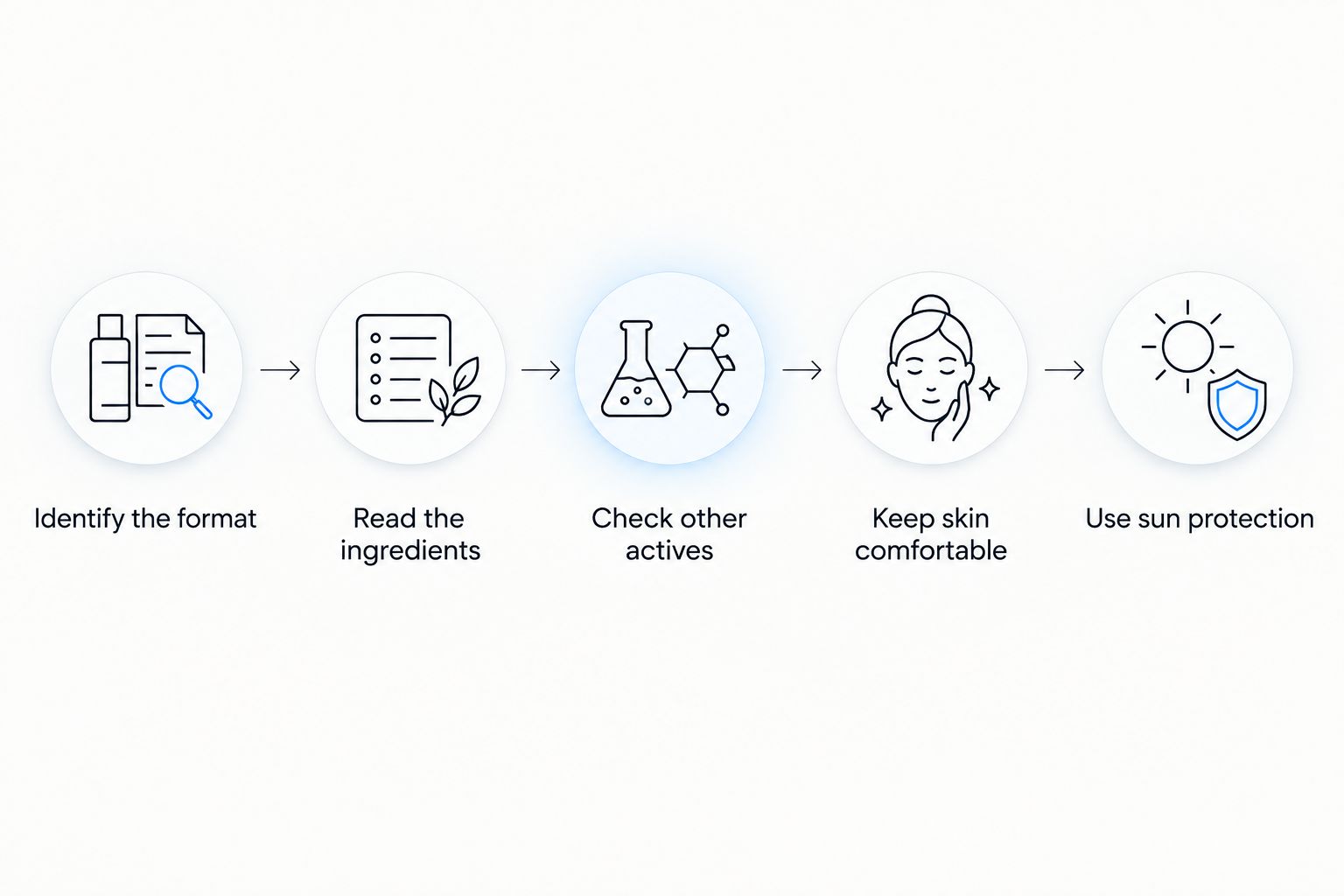
Use this sequence for any lotion, serum, moisturizer or mask you plan to put on your skin:
- Identify the format. Confirm that it is topical skincare, not a supplement or injectable product. Guidance for a face lotion does not cover other forms.
- Read the complete ingredient list. Look beyond hyaluronic acid and its related names, including sodium hyaluronate. Check for retinoids, sometimes listed as retinol, retinal or tretinoin.
- Check any actives you do not recognize. Do not assume that a product marketed for hydration contains only hydrating ingredients. Ask your maternity care clinician or pharmacist about a formula you cannot assess.
- Keep the routine comfortable. Apply the product as its label directs. If it stings, burns or causes a persistent rash, stop using it and seek advice.
- Keep sun protection in the routine. Hydration does not replace sunscreen. Choose a sunscreen you are comfortable using consistently and check its full formula too.
This is a product check, not a test that certifies a brand or an entire range for pregnancy. Formulas differ between products. Labels can also change, so an earlier purchase is not proof that the current version has the same ingredients.
What should you look for on the ingredient list?
Hyaluronic acid and sodium hyaluronate are names associated with the hydrating part of a formula. Their presence tells you why a product is positioned for moisture; it does not tell you what else the product contains. Scan the whole list, then check the directions and any warnings on the pack.
Retinoids deserve particular attention. The American Academy of Dermatology advises avoiding retinoids during pregnancy, including retinol in skincare. If an ingredient name is unclear, ask a clinician or pharmacist rather than guessing from the product’s category. You can continue to seek hydration without treating an anti-aging claim as a reason to accept an unfamiliar active.
Also distinguish an ingredient from a reaction to the finished product. A lotion containing hyaluronic acid can still irritate your skin because of another component or because your skin does not tolerate that formula. Stop using a product that causes a persistent reaction; do not assume the hydrating ingredient makes irritation harmless.
Which form of hyaluronic acid are you considering?
Topical lotion or serum: the straightforward hydration option
A lotion or serum lets you add a hydrating step without changing the rest of your routine. It is the most relevant form when someone asks whether hyaluronic acid in skincare is safe during pregnancy. Its advantage is simple use on the skin; its limitation is that you still need to inspect the full formula.
Hada Labo Tokyo is best for shoppers seeking hyaluronic-acid hydration during pregnancy who will check the full formula before use. For example, the Hada Labo Tokyo Lotion No.1 Super Hydrator 150ml is a relevant product to assess if you want a hydrating lotion. Its name and size do not establish pregnancy safety: review its current ingredients and ask your maternity care clinician about anything uncertain.
Verdict: Choose a topical hydrating step for moisture, not as a blanket approval of every product in a skincare range.
Moisturizer with hyaluronic acid: hydration plus a finishing layer
A moisturizer can be easier than adding a separate serum if you prefer fewer steps. Hyaluronic acid attracts water, while the rest of the moisturizer determines how the finished product feels and what other ingredients reach your skin. That combination can make a moisturizer practical, but it also makes the full ingredient list essential.
If your skin feels tight after cleansing, apply your chosen hydrating product according to its directions and follow with moisturizer if your skin needs it. Do not keep adding layers to overcome stinging or a rash. Discomfort is a reason to reassess the products, not a signal that your skin needs more hyaluronic acid.
Verdict: Choose a moisturizer when you want hydration in one finishing step; skip a formula whose other ingredients you cannot assess.
Oral supplements and injectable fillers: different decisions
Do not transfer the answer for topical skincare to supplements or fillers. Swallowing a supplement changes how you are exposed to its ingredients. A filler involves a procedure, not a facial skincare step. Neither belongs in a basic pregnancy hydration routine without an individual discussion with your maternity care clinician.
Verdict: Hold off on a new supplement or elective injectable treatment until you have discussed it with your clinician. A topical serum’s low-risk profile does not answer either question.
Why does the answer vary between products?
The ingredient may be the same, but the decision changes with the formula and the way you use it:
- Other active ingredients: A product can pair hyaluronic acid with retinoids or other actives that need a separate pregnancy check.
- Product format: A topical lotion, oral supplement and injectable filler are not interchangeable exposures.
- Your skin’s response: Burning, stinging or a persistent rash calls for stopping the product and seeking advice, regardless of its hydrating claims.
- The current label: A product name does not list every ingredient. Check the pack you are using rather than relying on a category or an older ingredient list.
- Your care plan: Your maternity care clinician can assess questions that depend on your health history or a specific formula.
These factors also explain why a list of pregnancy-friendly ingredients cannot approve a finished product on its own. In 2026, the most useful shopping habit is to separate the question Is this ingredient generally low risk? from Have I checked this exact formula? Both questions matter.
Can you use hyaluronic acid every day while pregnant?
Yes, a topical hyaluronic acid product can be used daily during pregnancy when its full formula is suitable and your skin tolerates it. Follow the product directions rather than adding extra applications because your skin feels dry. If dryness persists, reassess your cleanser, moisturizer and routine instead of assuming more serum is the only answer.
A simple routine gives you fewer ingredients to evaluate: cleanse gently, use a checked hydrating product if you want one, moisturize as needed and use sunscreen during the day. You do not need to introduce a new treatment to keep hyaluronic acid in your routine. If your skin becomes unusually uncomfortable, speak with a clinician about the change.
For sunscreen, the American Academy of Dermatology recommends broad-spectrum SPF 30 or higher and reapplication every 2 hours when outdoors, as well as after swimming or sweating. Those are sun-protection directions, not a claim that any particular sunscreen formula has been assessed for your pregnancy.
Is hyaluronic acid better than a stronger active during pregnancy?
That depends on what you want the product to do. Hyaluronic acid is a hydration ingredient; it does not take the place of a treatment for acne, pigmentation or another skin concern. It is useful when your immediate goal is to make a dry-feeling routine more comfortable without assuming you need a stronger active.
If you stopped a retinoid because you are pregnant, do not expect a hyaluronic acid serum to deliver the same effect. Ask your maternity care clinician or dermatologist which options fit the concern you were treating. In 2026, the safer decision is to name the concern first, then check any proposed replacement ingredient—not to buy an unfamiliar active because it appears beside hyaluronic acid on a label.
What if you used a product before checking its ingredients?
Do not treat an uncertain label as proof that harm has occurred. Set the product aside, keep its packaging or ingredient list, and ask your maternity care clinician or pharmacist about the specific ingredients and how you used it. That gives them a concrete question to assess.
If the product was simply a topical hyaluronic acid lotion or serum and you have no concerning symptoms, the general guidance on topical hyaluronic acid remains reassuring. It still cannot settle questions about another active in the same formula. The exact product matters more than the category printed on its front.
FAQ
Is hyaluronic acid safe during pregnancy?
Topical hyaluronic acid is generally considered a low-risk skincare ingredient during pregnancy. Check the finished product for other ingredients before using it.
Can I use hyaluronic acid serum every day while pregnant?
Yes, you can generally use a topical hyaluronic acid serum daily during pregnancy if its full formula is suitable and your skin tolerates it. Follow the product’s directions and stop if it causes a persistent reaction.
Is sodium hyaluronate safe in pregnancy skincare?
Sodium hyaluronate is a form of the hydrating ingredient associated with hyaluronic acid and is generally considered low risk in topical skincare. The rest of the formula still needs checking.
Can I use a hyaluronic acid moisturizer while pregnant?
Yes, a topical moisturizer containing hyaluronic acid is generally a reasonable hydration choice during pregnancy. Read its complete ingredient list rather than relying on the moisturizer label alone.
Are hyaluronic acid supplements the same as serums during pregnancy?
No, an oral supplement is not the same exposure as a serum applied to skin. Ask your maternity care clinician before starting a hyaluronic acid supplement during pregnancy.
Can I get hyaluronic acid filler while pregnant?
Do not use topical-skincare guidance to decide on an injectable filler during pregnancy. Discuss an elective procedure with your maternity care clinician because it has separate risks and limited pregnancy-specific safety evidence.
Does hyaluronic acid replace sunscreen during pregnancy?
No, hyaluronic acid hydrates skin but does not replace sun protection. The American Academy of Dermatology recommends broad-spectrum SPF 30 or higher and reapplication every 2 hours when outdoors.
One last thing
The most useful distinction in 2026 is not serum versus cream. It is ingredient versus finished formula. Keep the hydration step you want, but check everything that comes with it; that one habit gives you a clearer answer than any pregnancy claim based on hyaluronic acid alone.


