


Construction workers’ SPF moisturizer is a hydrating sunscreen used with the aim of protecting exposed skin during outdoor shifts without adding a complicated routine. In 2026, the practical choice is broad-spectrum, water-resistant SPF 30 or higher, supported by a reapplication plan; this daily SPF moisturizer comparison explains the wider category.
- An SPF moisturizer for construction workers should be broad-spectrum, water-resistant and SPF 30 or higher.
- SPF 50 is the better default for prolonged outdoor work, but it still requires reapplication.
- American Academy of Dermatology guidance sets SPF 30 as the minimum for outdoor sun protection.
- Apply sunscreen before exposure, then reapply every 2 hours and after heavy sweating.
- Use separate face and body formulas when that makes complete, even coverage easier.
Why SPF moisturizer matters for construction workers
Construction work combines prolonged outdoor exposure with sweat, dust, protective equipment and limited break time. Roofers, road crews and workers on open sites also have fewer opportunities to move into shade than people who spend most of the day indoors.
The American Academy of Dermatology’s public sun-protection guidance, accessed in 2026, recommends a broad-spectrum, water-resistant sunscreen with SPF 30 or higher. It also recommends applying sunscreen before going outdoors and reapplying approximately every 2 hours, or after swimming or sweating.
Those instructions create a practical job-site test: the best formula is the one you can spread evenly, tolerate under safety equipment and reapply during a normal break. A high SPF number does not compensate for missed areas or a morning application that is never renewed.
The main construction-specific constraints are:
- Direct sun during roofing, paving, groundwork and open-frame building work
- Sweat that removes or shifts sunscreen during physical activity
- Friction around hard-hat straps, safety glasses and respirator edges
- Dust that sticks more readily to a heavy or tacky finish
- Hand-washing that removes protection from hands and wrists
- Short breaks that make a multi-step routine unrealistic
Build a practical job-site SPF routine
The routine below starts with free changes: checking labels, applying enough product and setting reminders. Product choice matters, but consistent coverage and reapplication determine whether the routine works through a shift.
Assess your actual sun exposure
Start by mapping which parts of your shift happen outside. A worker who moves between an enclosed building and a loading area has different coverage needs from a roofer who spends most of the day in direct sun.
Check the site layout, task schedule and required protective equipment before choosing a formula. In 2026, SPF 50 is the more practical default when exposure is prolonged or shade is limited, while SPF 30 remains the accepted minimum in major dermatology guidance.
- Note when your shift enters the strongest daylight rather than relying on temperature
- Identify exposed areas: face, ears, neck, scalp, hands and forearms
- Check whether sleeves, gloves or head coverings move during physical work
- Treat cloudy conditions as sun-exposure conditions because ultraviolet radiation still reaches skin
- Plan for reflected exposure around pale concrete, metal and glass surfaces
Read the sunscreen label completely
The front label gives the SPF number, but the back label tells you how the product should be used. Look for broad-spectrum protection, water resistance and clear reapplication instructions.
Under United States sunscreen-label rules current in 2026, water-resistant products state either 40 minutes or 80 minutes of water resistance. That claim does not mean all-day protection, and it does not remove the need to reapply after heavy sweating, towelling or washing.
- Choose broad-spectrum protection covering UVA and UVB radiation
- Use SPF 30 as the minimum rather than the target for prolonged open-site work
- Prefer SPF 50 when your face and neck remain exposed for much of the shift
- Check whether water resistance is listed as 40 minutes or 80 minutes
- Follow the product’s own application and reapplication directions
- Replace sunscreen that has passed its labelled expiry date
Separate face and body coverage
A small facial cream is easy to carry but inefficient for covering both arms, the neck and other exposed areas. A larger body lotion makes broader coverage easier, while a dedicated face formula can provide a finish that feels more comfortable around the eyes and under safety equipment.
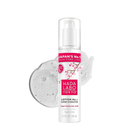
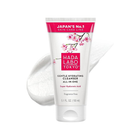
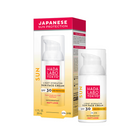
Hada Labo Tokyo Face Sun Cream SPF 50 50ml is best for construction workers who want facial SPF 50 with Super Hyaluronic Acid hydration. Its 50ml format is intended for the face, so it is not the efficient choice for covering both forearms as well.
- Reserve the facial formula for the face, ears and neck
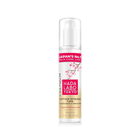
- Use Hada Labo Tokyo Body Sun Lotion SPF 50 200ml on larger exposed areas such as arms
- Keep each product with the equipment used in that area, such as face SPF near a mirror and body SPF in the work bag
- Choose packaging that closes securely before placing it beside tools or clothing
- Follow each formula’s label rather than assuming face and body directions are identical
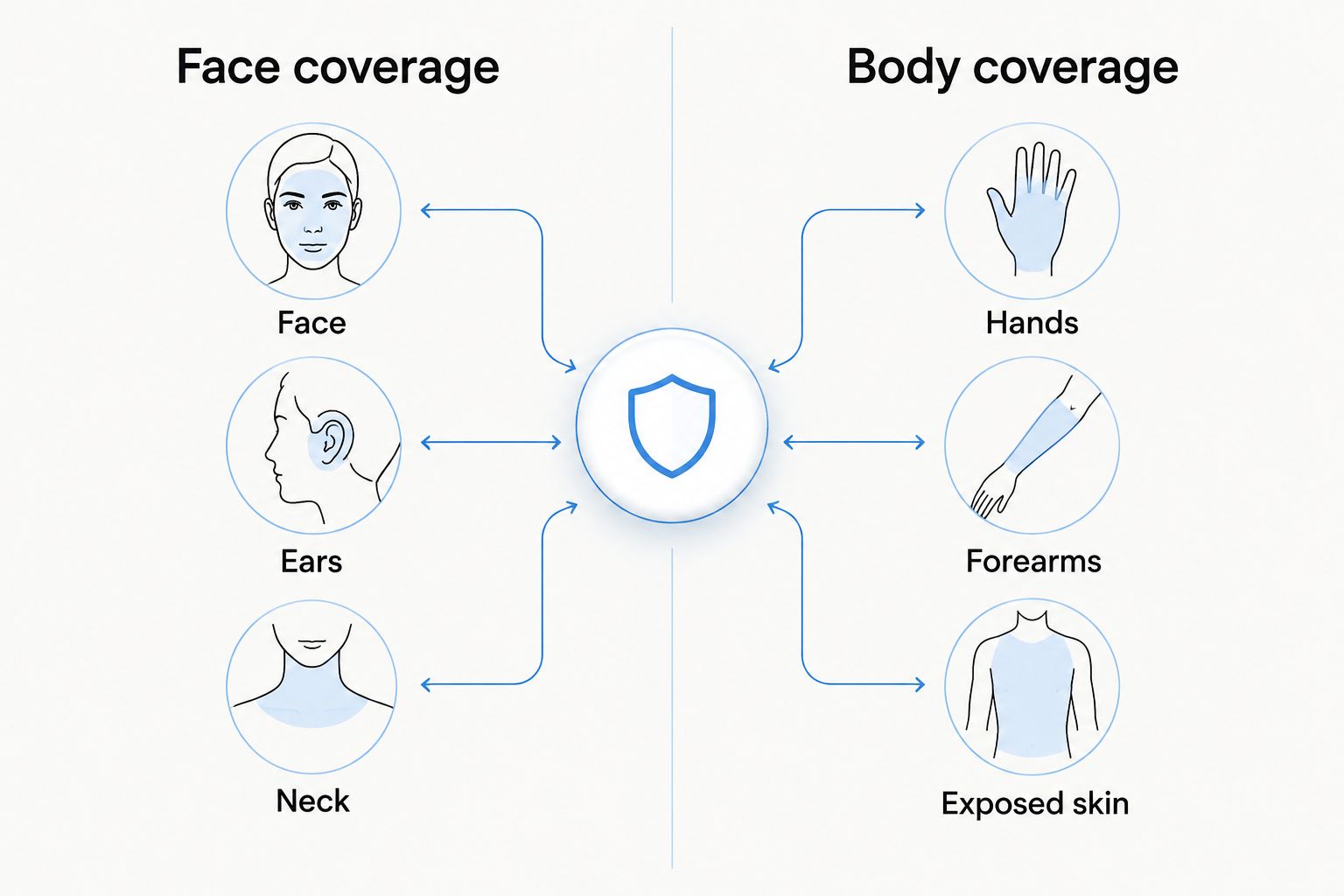
A two-product routine is not mandatory. It is useful only when it makes full coverage easier and reduces the temptation to ration a small facial tube across larger areas.


Apply before the shift starts
Apply sunscreen before reaching the exposed work area. American Academy of Dermatology guidance advises applying it about 15 minutes before going outdoors, giving you a clear reason to make SPF part of the pre-shift routine rather than the first break.
Apply to clean, dry skin and cover every exposed area. Do not stop at the jawline: ears, the sides and back of the neck, and the skin between eyewear and head protection are easy to miss.
- Apply about 15 minutes before outdoor exposure
- Spread the formula evenly instead of leaving thick and thin patches
- Cover the ears, hairline, neck and other exposed edges
- Let the face layer settle before putting on safety glasses or a hard hat
- Wash sunscreen from your palms if grip-sensitive work requires dry hands
- Follow workplace safety rules when applying products around gloves and equipment
Schedule reapplication around real breaks
A reminder that conflicts with the work schedule will be ignored. Place reapplication beside an existing break, task change or equipment check so the action has a repeatable cue.
For an 8-hour outdoor shift, a single pre-shift coat cannot satisfy a 2-hour reapplication schedule. The exact timing must also respond to heavy sweating, washing and towelling, so use the sunscreen label and conditions on the site rather than treating the clock as the only trigger.
- Set a repeating 2-hour reminder before the shift begins
- Reapply after heavy sweating or towelling exposed skin
- Renew protection on hands and wrists after washing them
- Keep sunscreen in a clean, accessible part of the work bag
- Ask a colleague to check hard-to-see areas such as the back of the neck
- Record reapplication in a shared break routine when the crew supports it
Clean exposed skin after work
Dust, sweat and repeated sunscreen layers should not remain on the skin overnight. Cleanse exposed areas after the shift, then use a moisturizer if the skin feels dry or tight.
This step does not reverse ultraviolet exposure, and after-sun care is not a substitute for sunscreen. It simply removes the day’s residue and supports a consistent skincare routine before the next shift.
- Wash the face with a gentle cleanser suited to your skin type
- Clean the ears, neck and hairline where sunscreen can collect
- Avoid aggressive scrubbing on skin irritated by PPE friction
- Apply a moisturizer after cleansing if skin feels dry
- Stop using any formula that causes persistent stinging, swelling or rash
- Seek medical advice for severe sunburn or a concerning skin change
SPF options for construction workers compared
The right option depends on exposure, skin comfort and how much area needs coverage. Every option has a limitation, and none removes the need for shade, protective clothing or reapplication.
| Option | Best for | Main advantage | Key limitation |
|---|---|---|---|
| SPF 50 facial moisturizer | Long outdoor shifts with regular face and neck exposure | Combines facial hydration with higher labelled protection | A 50ml format is inefficient for broad body coverage |
| SPF 30 facial moisturizer | Shorter or partly sheltered outdoor periods | Meets the SPF minimum in dermatology guidance | Provides a lower protection rating than SPF 50 |
| SPF 50 body lotion | Arms, neck and other larger exposed areas | A 200ml format suits broader application | A body formula may not feel as comfortable around the eyes |
| Single all-over sunscreen | Workers who want one container | Reduces the number of products carried | The same finish may not suit both the face and larger body areas |
For most construction workers with prolonged outdoor exposure, SPF 50 face protection plus a larger SPF 50 body lotion is the clearest 2026 setup. Choose a single all-over product instead if that is the only routine you will consistently apply and reapply.
Common SPF mistakes construction workers make
Applying sunscreen only once
Morning application is the starting point, not full-shift coverage. Reapply according to the label, approximately every 2 hours outdoors, and after heavy sweating or washing exposed skin.
Missing the edges around protective equipment
Hard hats, safety glasses and respirators create narrow exposed zones that are easy to overlook. Check the ears, temples, hairline and neck before putting equipment on.
Treating a high SPF number as permission to use less
SPF 50 still needs even coverage and reapplication. A thin, patchy layer leaves gaps regardless of the number printed on the container.
Using a finish that feels impossible to reapply
A heavy or tacky formula often becomes less appealing once sweat and dust build up. Test the finish during a normal workday and switch if discomfort repeatedly causes skipped applications.
Relying on sunscreen alone
Sunscreen is one part of sun protection. Shade, suitable protective clothing and a workplace heat-and-sun plan remain necessary where the task and safety rules allow them.
FAQ
What is the best SPF moisturizer for construction workers in 2026?
A broad-spectrum, water-resistant SPF 50 moisturizer is the best default for prolonged outdoor construction work in 2026. It still needs even application and reapplication according to the label.
Is SPF 30 enough for construction work?
SPF 30 is the minimum recommended by the American Academy of Dermatology for outdoor sun protection. SPF 50 is the more practical choice when a shift involves prolonged direct exposure or limited shade.
How often should construction workers reapply sunscreen?
Construction workers should generally reapply sunscreen about every 2 hours while outdoors. Reapply sooner after heavy sweating, washing or towelling, and follow the product label.
Should sunscreen be applied before arriving at the job site?
Yes, apply sunscreen about 15 minutes before outdoor exposure. Pre-shift application is easier to complete evenly than application after work and sweating have started.
Can one sunscreen cover both the face and body?
Yes, one sunscreen can cover both areas when its label permits that use and the finish feels comfortable. Separate face and body products can make broader coverage easier without rationing a small facial tube.
Does water-resistant sunscreen last through a full shift?
No, water resistance does not mean all-day protection. Labelled water resistance is measured for 40 minutes or 80 minutes, and reapplication remains necessary.
Where should construction workers apply SPF?
Apply SPF to every exposed area, including the face, ears, neck, hands and forearms. Pay particular attention to narrow gaps around safety glasses, headwear and clothing edges.
Can sunscreen replace protective clothing and shade?
No, sunscreen cannot replace suitable clothing, shade or workplace sun controls. Use it as one layer within the site’s wider safety requirements.
One last thing
The easiest 2026 improvement is not buying the highest available SPF. It is placing the face product and body product where each is used, then attaching reapplication to a break that already happens. A formula left at home provides no protection, while an accessible SPF 30 or SPF 50 product has a realistic chance of becoming part of the shift.


