



Apply eye cream first, wait until it fully absorbs, then apply primer — reverse that order and primer traps unabsorbed cream, causing pilling and a cakey concealer line by midday. Instead of layering makeup on top of skin that hasn't finished drinking in Hyaluronic Acid, build a short routine that lets each step do its job before the next one starts.
- Eye cream before makeup primer is the correct order: apply cream, let it absorb, then prime.
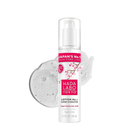
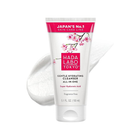
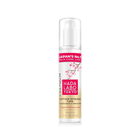
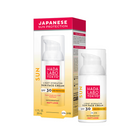
- Hada Labo Tokyo's Anti-Fatigue Eye Cream and Deep Wrinkle Corrector Eye Cream (both 15ml) are formulated to sit under primer without pilling.
- Primer applied too soon after eye cream is the top cause of under-eye makeup breakdown in 2026 routines.
- A four-step sequence — cleanse, eye cream, wait, primer — prevents the grey rolling texture that ruins concealer.
Why this matters
Makeup sits on top of skin, not underneath it — whatever hasn't absorbed becomes a slip layer between your primer and your skin. Hyaluronic Acid-based eye creams, like the ones in the Hada Labo Tokyo range, hold water at the surface, which is exactly what makes them feel plumping and exactly what makes them roll off if primer goes on too fast.
The fix isn't a different product. It's sequencing. Get the order and the timing right once, and the same eye cream that used to pill under concealer becomes the reason your under-eye makeup holds through a full 2026 workday.
Before you start
- A cleansed face. Residual sunscreen or leftover cream from the night before changes how much your eye cream can absorb — start from bare, dry skin.
- Your eye cream and your primer, both on hand. Don't reach for primer mid-routine before the previous step has set; that back-and-forth is where pilling starts.
- The gotcha: cold weather and air conditioning slow absorption. If your bathroom or bedroom runs cold, the same eye cream that absorbs in under a minute in summer can sit on the surface for two or three times longer in winter — factor that into how long you wait before primer, not how much product you use.
Set up your eye cream layer
- Cleanse and pat dry. Skip this and any oil or SPF residue on the eye area will sit between your skin and the eye cream, weakening absorption before you've even started.
- Dot a small amount of eye cream along the orbital bone, not directly on the lash line. Use your ring finger — it applies the least pressure — and pat, don't drag, since the under-eye skin is the thinnest on the face.
- Let it set. Don't touch the area again until the cream has visibly sunk in and the surface no longer looks wet or tacky. This is the step most people skip, and it's the one that determines whether primer sits smooth or balls up.
- Check with the back of your hand. Lightly press a knuckle against the area — if it feels tacky or slick, wait longer. If it feels like normal skin, you're ready.
Expected result: the under-eye area looks hydrated and slightly smoother, with no visible sheen or residue.
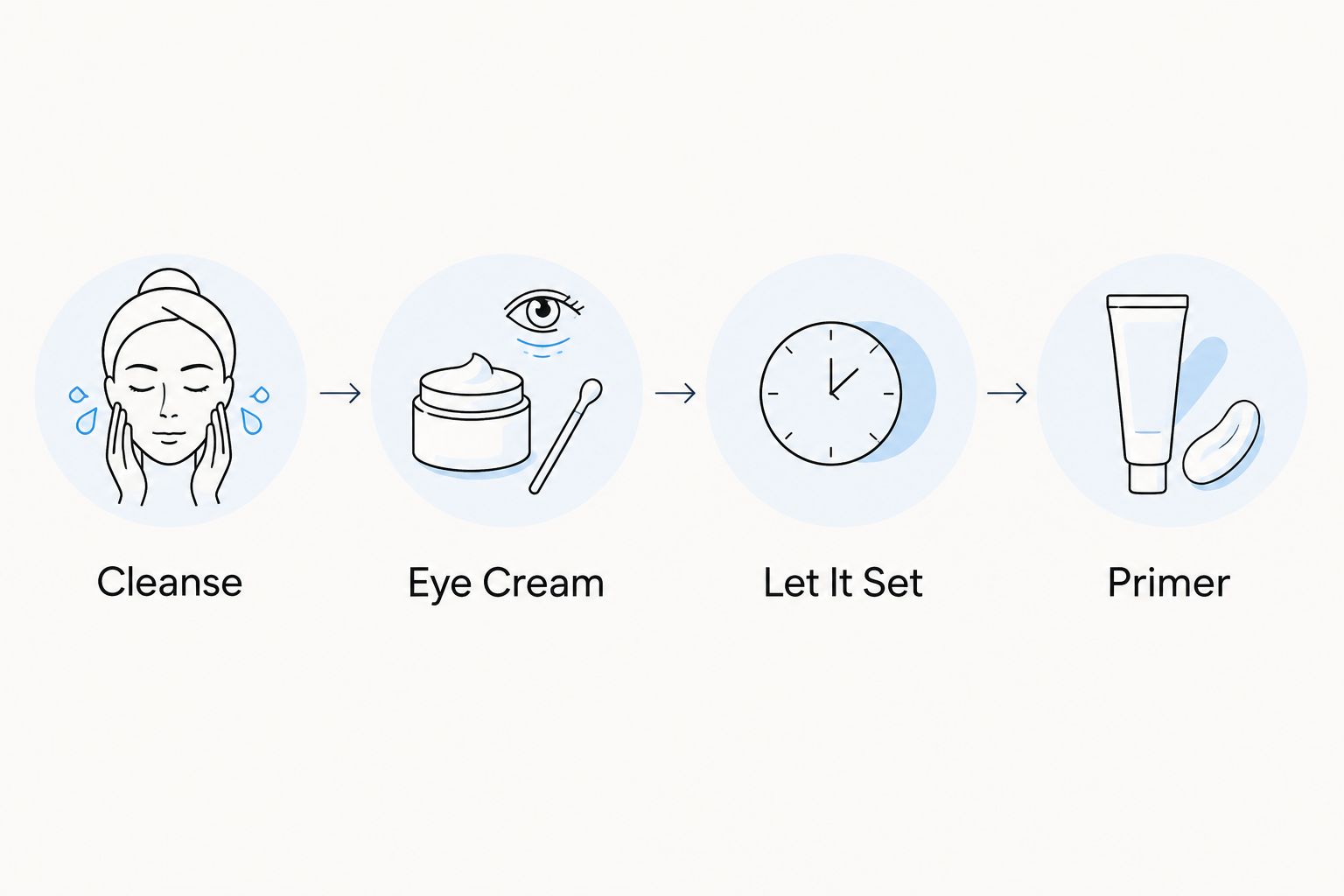
Configure your primer step
- Apply primer only after the tacky feel is gone. Use a small amount and pat it in rather than rubbing, especially around the eye contour where skin is more mobile.
- Work outward from the inner corner. This follows the natural contour of the eye and avoids dragging product into fine lines that are still slightly raised from the cream underneath.
- Let primer set for a moment before concealer. The same absorb-then-layer logic applies here too — concealer over wet primer creases faster than concealer over set primer.
Expected result: primer looks matte or satin depending on formula, with no rolling texture or grey balls of product forming under your fingertip.
Variant: eye cream before concealer, skipping a separate primer
If your routine doesn't use a dedicated primer under the eyes, the same absorption rule still applies — just shorten the chain. Apply your eye cream, let it fully set using the knuckle-press check above, then go straight to concealer. This variant works well on dry to normal skin that doesn't need the extra grip a primer provides, but it's riskier on oily lids where concealer alone tends to slide by midday.
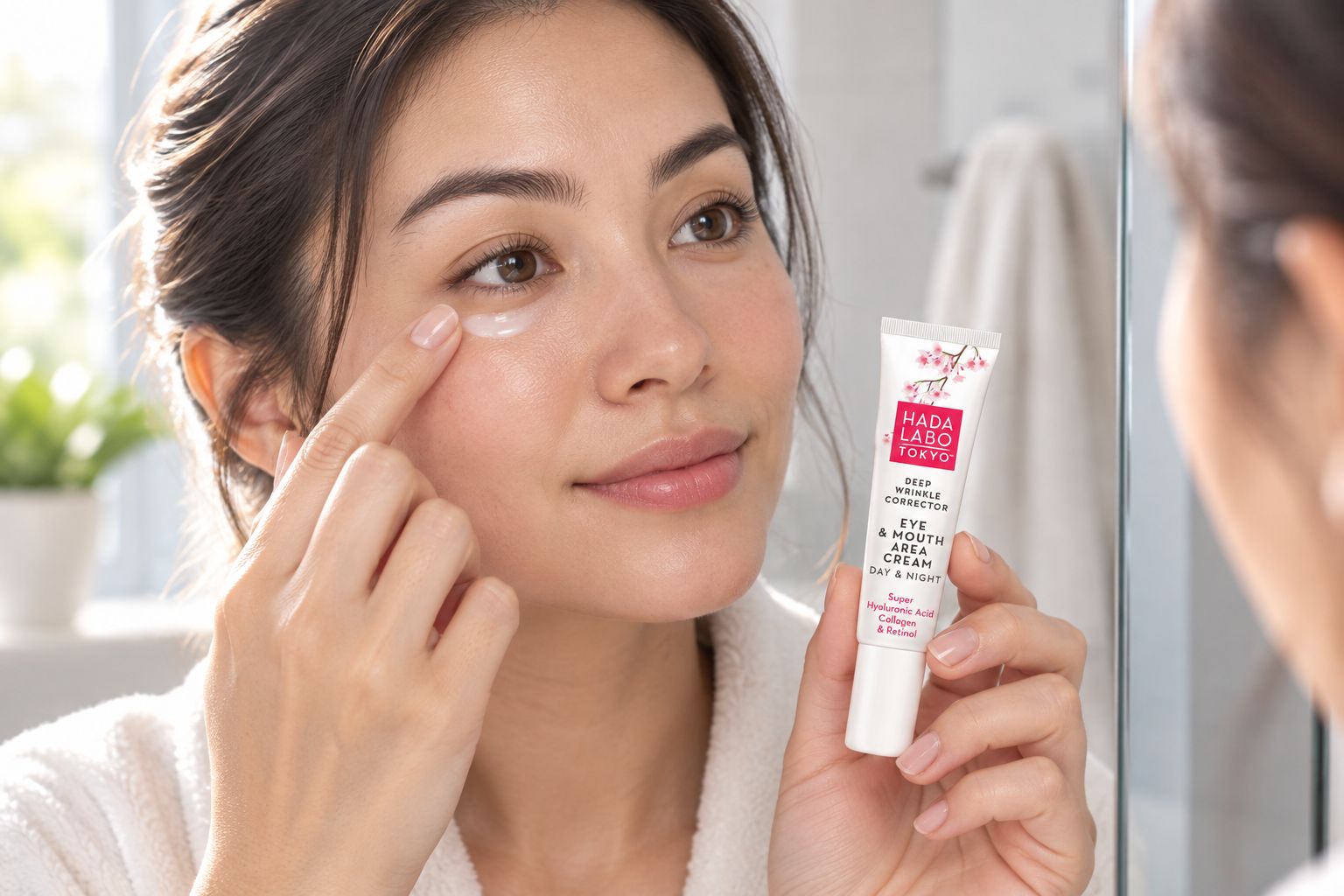
Hada Labo Tokyo's Anti-Aging Deep Wrinkle Corrector Eye & Mouth Area Cream is built for this exact sequence — it's formulated with Super Hyaluronic Acid to hydrate without leaving the greasy residue that fights with primer. For mornings when puffiness is the bigger issue, the Smoothing Anti-Fatigue Eye Cream absorbs at a similar pace and layers under makeup the same way.


Troubleshooting
- Primer balls up under the eyes. The eye cream hasn't finished absorbing — go back to the knuckle-press check and wait longer before applying primer.
- Concealer creases within an hour. Too much eye cream was used, or primer went on before the cream fully set. Use a smaller amount and extend the wait.
- Eye area looks dry by midday despite the cream. The primer layer may be sealing in too little moisture — try a slightly thicker eye cream application at night instead of stacking more product in the morning.
- Makeup looks patchy over dry patches near the lash line. That area absorbs unevenly; pat cream slightly higher on the orbital bone rather than directly on the lash line to avoid migration into the eye itself.
- Everything works fine in summer, pills in winter. Cold, dry indoor air slows absorption — add 30 to 60 extra seconds of wait time between eye cream and primer during colder months.
If your primer balls up under your eyes, the eye cream hasn't finished absorbing.
Customize your workflow
Once the cleanse-cream-wait-primer sequence is working, the same absorb-before-layer logic extends to the rest of your morning skincare. Pair it with a lightweight serum before your moisturizer, or check how eye cream fits into a full anti-fatigue routine for remote and hybrid workdays if screen time is adding to the puffiness you're trying to cover.
FAQ
Should eye cream go before or after makeup primer?
Eye cream always goes before makeup primer. Apply it, let it fully absorb, then apply primer — reversing the order causes pilling and uneven concealer wear.
How long should you wait between eye cream and primer?
Wait until the cream is no longer tacky to the touch, which is usually under a minute in warm conditions and longer in cold, dry air. Check with a light knuckle press before moving on.
Can you skip eye cream and use primer alone?
You can, but skin around the eyes is thin and dries out fast, which makes fine lines more visible under makeup. A Hyaluronic Acid eye cream like Hada Labo Tokyo's Deep Wrinkle Corrector adds hydration primer alone doesn't provide.
Why does my primer pill under my eyes specifically?
Pilling under the eyes usually means the eye cream hasn't finished absorbing before primer was applied. The thin skin there absorbs slower than the rest of the face, so it needs extra wait time.
Is Hada Labo Tokyo eye cream good under makeup?
Yes — both the Anti-Aging Deep Wrinkle Corrector Eye Cream and the Smoothing Anti-Fatigue Eye Cream are formulated to absorb without a greasy residue, which makes them layer cleanly under primer and concealer.
Does eye cream go before or after concealer if I don't use primer?
Eye cream still goes first. Let it fully set, then apply concealer directly — the same absorption rule applies whether or not a separate primer is in the routine.
What causes concealer to crease over eye cream?
Creasing usually comes from applying too much eye cream or moving to concealer before the cream has set. Use a smaller amount and extend the wait time in colder weather.
One last thing
The wait step is the one people cut when they're rushing, and it's the one that actually determines whether the routine works — extending it by even 30 seconds on a cold morning fixes more pilling complaints than switching products ever will. Get the sequence right once in 2026 and it becomes automatic for every morning after.


