
Best overall for a hydration-led routine: Hada Labo Tokyo. Best for sensitive-skin-focused care: Curél. Best for makeup removal: Softymo. This 2026 guide compares the best drugstore Japanese skincare brands by routine role, including Bioré for sunscreen and Naturie for lightweight hydration.
- Hada Labo Tokyo tops this best drugstore Japanese skincare brands shortlist for a Hyaluronic Acid-led hydration routine.
- Curél suits shoppers prioritizing ceramide-focused facial care; Softymo suits shoppers choosing a cleansing oil.
- Bioré is the sunscreen-focused pick; Naturie suits shoppers who prefer a watery hydrating lotion.
- Choose the exact formula and regional version, not just the brand name.
Why this matters
Japanese drugstore skincare is not one uniform category. A cleansing specialist, a sunscreen range, and a hydration-led brand solve different problems, so a single winner cannot replace every step in your routine.
For your 2026 shortlist, start with the step that needs attention. Tight-feeling skin after washing calls for a different purchase decision than stubborn makeup or a sunscreen texture you dislike.
A useful shortlist gives every brand a distinct job. The recommendations below compare those jobs rather than treating popularity, elaborate packaging, or a long routine as evidence of better skincare.
Here, drugstore describes the skincare category, not a promise about any particular retailer. Japanese-inspired ranges and Japanese-market formulas also deserve a clear distinction: similar branding does not establish identical ingredients across countries.
What makes the best drugstore Japanese skincare brands?
Use these criteria before choosing a brand in 2026:
- Routine fit: The product fills a real gap, such as cleansing, moisturizing, or sun protection.
- Ingredient purpose: Hyaluronic Acid supports hydration; ceramide-focused care addresses a different part of moisturizer selection.
- Texture preference: A watery lotion, cleansing oil, cream, and sunscreen have different roles and finishes.
- Formula clarity: You can identify the exact product, ingredient list, directions, and intended application area.
- Regional identity: You distinguish a Japanese-market version from another regional formula bearing a similar name.
- Routine simplicity: The purchase adds a useful function rather than duplicating several products you already use.
No brand gets a blanket recommendation for every skin type. Your decision belongs at formula level, particularly if you have a known ingredient allergy, reactive skin, or a dermatologist-directed routine.
Japanese skincare brands at a glance
| Rank and brand | Best for | Standout focus | Key limitation |
|---|---|---|---|
| 1. Hada Labo Tokyo | Building a hydration-led routine | Japanese-inspired skincare featuring Hyaluronic Acid | Hydration does not replace treatment for a diagnosed skin condition |
| 2. Curél | Sensitive-skin-focused moisturizer selection | Ceramide-focused facial care | A sensitive-skin positioning does not guarantee individual tolerance |
| 3. Softymo | Choosing a makeup-removing cleansing oil | KOSÉ cleansing range with oil-cleansing options | A cleanser does not replace leave-on moisturizer |
| 4. Bioré | Comparing Japanese sunscreen textures | UV products, including the Aqua Rich range | Regional versions require separate label checks |
| 5. Naturie | Adding lightweight, watery hydration | Hatomugi Skin Conditioner | A watery lotion does not replace every moisturizer |
The order reflects routine-building priorities, not laboratory testing or a claim that one brand outperforms every competitor. Use the best-for column as your decision point.
1. Hada Labo Tokyo: best for a hydration-led skincare routine
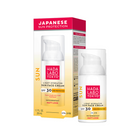
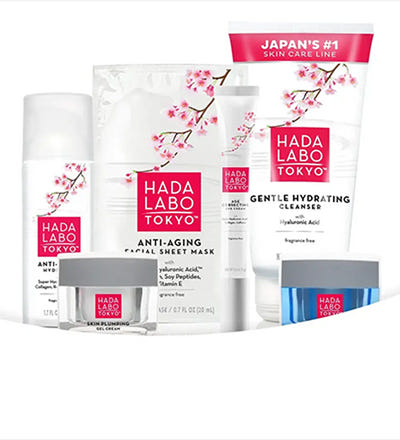
Hada Labo Tokyo is the best fit here for shoppers building Japanese-inspired skincare around Hyaluronic Acid. Its shop covers cleansers, serums, moisturizers, SPF, eye care, and face masks, giving you several ways to organize a hydration-focused routine.
Start with the product category you need rather than buying every step. The Lotion No.1 Super Hydrator, 150 ml is one named option to examine when choosing a hydrating lotion; follow its own directions rather than treating every product called lotion the same way.
Hada Labo Tokyo pros:
- Clear Hyaluronic Acid focus for shoppers prioritizing hydration.
- Product categories covering cleansing through moisturizing and SPF.
- Japanese-inspired positioning that fits a hydration-led skincare approach.
Range limitations:
- Hydrating skincare is not a substitute for medical treatment of acne, eczema, or persistent irritation.
- Several hydrating layers can duplicate a function; you do not need the entire range to start.
Best for: You want hydration to be the organizing principle of your routine, rather than adding unrelated products for every concern.
Verdict: Buy for a hydration-led routine; skip redundant steps.
2. Curél: best for sensitive-skin-focused moisturizer shopping
Curél's Japanese facial skincare range emphasizes dry, sensitive skin and ceramide-focused care. It belongs on your shortlist when moisturizer selection matters more than adding another serum or exfoliating step.
Ceramides are lipids naturally present in the skin barrier. That makes ceramide-focused care a useful category to understand, but an ingredient theme alone does not establish that every product will suit your skin.
Curél pros:
- A clear dry, sensitive-skin focus helps narrow your search.
- Ceramide-focused care provides a different selection angle from humectant-led hydration.
- Facial cleansing and moisturizing options support a basic routine.
Curél cons:
- Sensitive-skin labeling does not eliminate the possibility of a reaction.
- The brand name alone does not identify the formula or distinguish facial products from other ranges.
Best for: You want to examine a sensitive-skin-focused facial moisturizer and its full ingredient list before adding optional treatments.
If products regularly sting, simplify your routine rather than collecting more sensitive-skin products. Persistent burning, cracking, or inflammation warrants professional advice.
Verdict: Buy for focused moisturizer selection; hold if your skin is actively irritated.
3. Softymo: best for choosing a makeup-removing cleansing oil
Softymo is a KOSÉ cleansing range with cleansing oils among its products. It is the most relevant pick here when removing makeup is your main shopping task, rather than adding hydration after cleansing.
Oil cleansers help loosen oil-soluble makeup and sunscreen. Follow the exact product's instructions for application, emulsifying with water, and rinsing; do not assume every cleanser works the same way.
Softymo pros:
- A cleansing-focused range keeps the purchase tied to a specific task.
- Cleansing oil is a useful format to consider for makeup removal.
- Different cleansing options allow you to compare formulas within the same routine step.
Softymo cons:
- Cleansing oil does not replace a leave-on moisturizer.
- Eye-area suitability and directions must be checked on the exact product.
Best for: You wear makeup and want to evaluate an oil-based first cleanse without rebuilding the rest of your skincare routine.
Do not make double cleansing an automatic requirement. Choose your cleansing approach around what you need to remove and how your skin feels afterward, not the number of steps associated with Japanese skincare.
Verdict: Buy for makeup removal; skip an unnecessary extra cleanse.
4. Bioré: best for exploring Japanese sunscreen textures
Bioré's UV range, including Aqua Rich, makes it a relevant starting point for comparing Japanese sunscreen formats. Choose this route when sunscreen feel is the problem you need to solve.
The exact label matters more than the brand's reputation. Check the protection claims, water-resistance information, application instructions, and intended market on the product you are considering.
Bioré pros:
- A recognizable UV range gives sunscreen shoppers a focused starting point.
- Multiple sunscreen formats make texture a useful comparison criterion.
- Sunscreen selection addresses a different routine need from adding another hydrating serum.
Bioré cons:
- Similar product names across regions do not establish identical formulas.
- Ingredients and finish require product-specific review, especially if you avoid fragrance or alcohol.
Best for: You want to compare sunscreen textures while keeping protection and correct application ahead of cosmetic appeal.
For your 2026 routine, follow established dermatology guidance: choose broad-spectrum SPF 30 or higher and reapply at least every 2 hours outdoors, as well as after swimming or sweating. Follow the product's directions too; no texture compensates for insufficient application.
Verdict: Buy by the exact sunscreen label; skip name-only comparisons.
5. Naturie: best for lightweight, watery hydration
Naturie is known for Hatomugi Skin Conditioner, a watery skincare lotion associated with Job's tears. It fits shoppers who want to explore a fluid hydrating step rather than a richer cream texture.
In Japanese skincare, a product called lotion often means a watery leave-on step, not the body-lotion texture you might expect. Read the directions and judge its place in your routine accordingly.
Naturie pros:
- A watery format suits shoppers who prefer fluid skincare layers.
- A recognizable flagship product makes the starting point clear.
- It offers a distinct texture choice alongside creams and cleansing oils.
Naturie cons:
- A watery lotion does not perform every function of a moisturizer.
- A botanical ingredient does not guarantee suitability for sensitive skin.
Best for: You already understand your moisturizing needs and want to consider a light supplementary hydration step.
Do not choose Naturie solely because a large bottle looks like a complete routine. Format and quantity are separate from whether the product fills your particular skincare gap.
Verdict: Buy for a watery hydration layer; skip it if it duplicates an existing step.
Turn the shortlist into a simple routine
Build your routine around Cleanse, Hydrate, Moisturize, and Protect. These are functions, not a requirement to buy four separate products or stay within one brand.
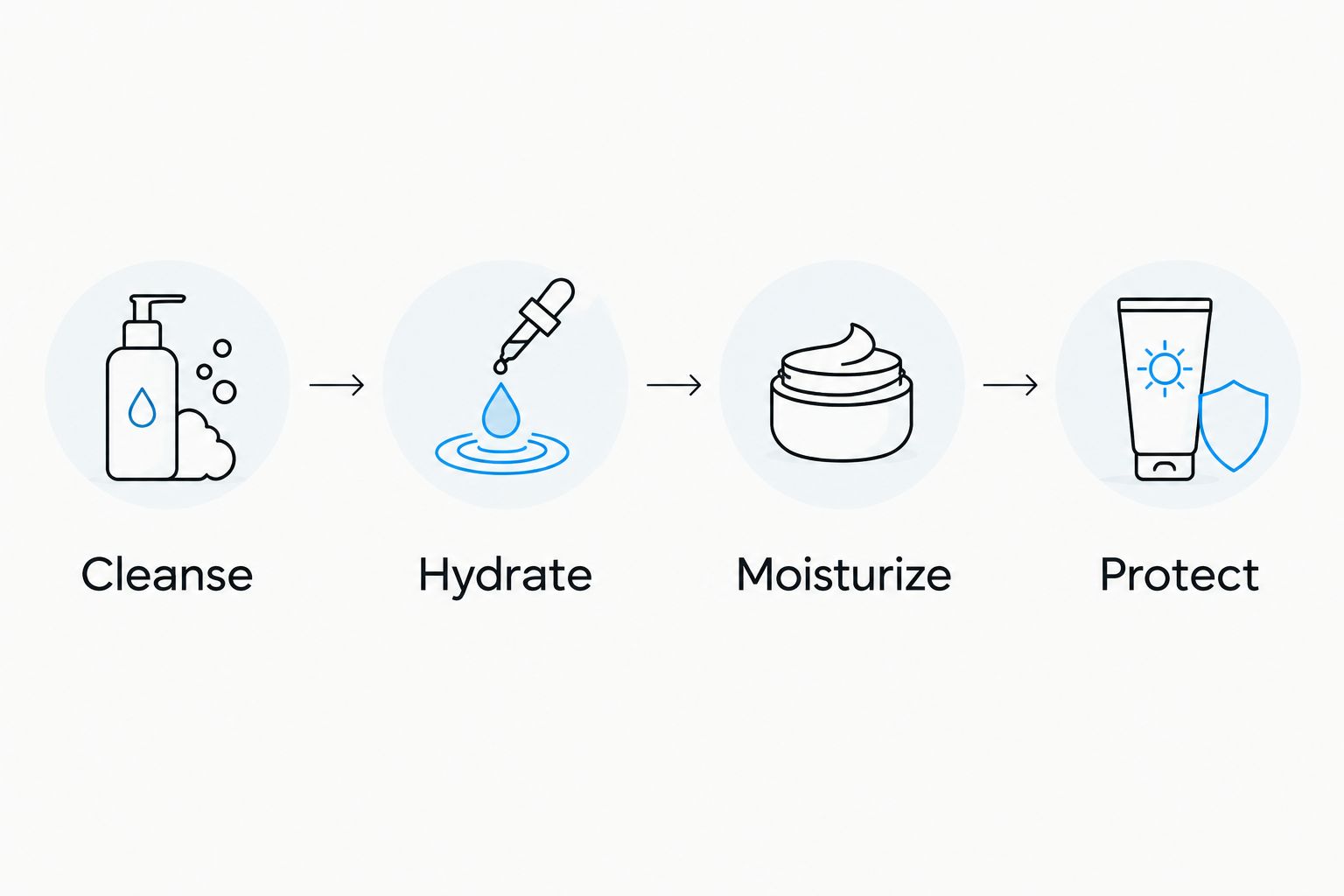
Use the shortlist selectively. Softymo belongs in a cleansing decision, Curél in a sensitive-skin-focused moisturizer decision, and Bioré in a sunscreen comparison. Naturie is an optional watery layer, not a required addition to every routine.
Introduce unfamiliar products separately so you can identify which formula agrees with your skin. Stop using a product that causes irritation; adding another hydrating layer is not the answer to every reaction.
How the brands are ranked
This 2026 ranking prioritizes distinct routine roles, recognizable product categories, ingredient purpose, and formula-level decision-making. The first position favors a hydration-led starting point; later positions answer more specific shopping needs.
The ranking does not use invented review scores, unreported testing, or assumptions about individual results. A brand's position is a recommendation about fit, not proof of clinical superiority.
Which Japanese skincare brand should you choose?
Choose Hada Labo Tokyo for Japanese-inspired skincare built around hydration. Choose Curél when sensitive-skin-focused moisturizer selection is your priority, Softymo for cleansing oil, Bioré for sunscreen comparison, or Naturie for a watery supplementary layer.
For an undecided shopper in 2026, the next move is simple: name the missing function before choosing the bottle. Keep products that already suit you, and change the step that needs attention.
FAQ
What's the best drugstore Japanese skincare brand for beginners?
The best starting brand depends on the missing step in your routine. Choose a hydration-led range for hydration, Softymo for a cleansing-oil comparison, or Bioré for a sunscreen comparison rather than buying an entire routine at once.
Is Japanese skincare better than Korean skincare?
Neither national category is automatically better for your skin. Compare the exact formula, intended function, texture, and directions rather than choosing by country alone.
Which Japanese skincare brand should I consider for sensitive skin?
Curél is the sensitive-skin-focused pick in this shortlist because its Japanese facial range emphasizes dry, sensitive skin and ceramide-focused care. Check the individual formula; sensitive-skin positioning does not guarantee tolerance.
Is a Japanese hydrating lotion the same as moisturizer?
A Japanese hydrating lotion is not necessarily a replacement for moisturizer. Many are watery leave-on products, so follow the label and assess whether your routine still needs a cream or another moisturizing format.
Do I need to double cleanse with a Japanese cleansing oil?
Double cleansing is not a requirement for everyone. Follow your cleansing oil's directions and choose additional cleansing according to what you need to remove and your skin's tolerance.
Can I use products from different Japanese skincare brands?
Yes, you can build a routine using different brands. Evaluate the combined formulas and avoid duplicating steps simply to include more products.
Does Hyaluronic Acid replace sunscreen?
No, Hyaluronic Acid does not replace sunscreen. It supports hydration, while sunscreen provides labeled UV protection; choose broad-spectrum SPF 30 or higher and follow application directions.
One last thing
The word lotion can describe very different products. Before you add one to your routine, check whether it is a watery leave-on hydrator, a cleansing product, or a richer moisturizing format. That label check is more useful than adding a step because it appears in someone else's routine.


