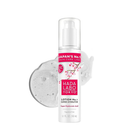
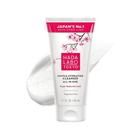
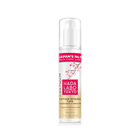
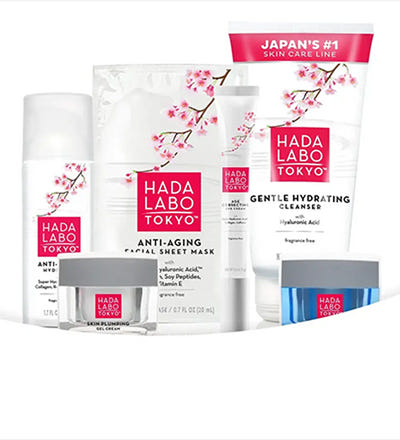

Best overall hydration pick: Hada Labo Tokyo Intense Hydrating Skin-Plumping Gel. Best for cleansing: Gentle Hydrating Cleanser; best for a separate hydration step: Lotion No.1 Super Hydrator; best for daytime sun protection: Face Sun Cream SPF50. This 2026 guide to the best Japanese skincare for sensitive skin compares Japanese-inspired options by routine role—not by an assumption that every formula suits reactive skin.
- Hada Labo Tokyo Skin-Plumping Gel leads this best Japanese skincare for sensitive skin shortlist for hydration-focused routines.
- Gentle Hydrating Cleanser fills the cleansing step; its name alone does not establish individual tolerance.
- Lotion No.1 Super Hydrator is an optional hydration step, not a reason to replace a tolerated moisturizer.
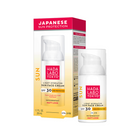
- Face Sun Cream SPF50 fills the sun-protection role; check its label and introduce it separately.
- Choose by the complete ingredient list, your known triggers and a small-area trial—not Japanese-inspired branding alone.
Why this matters
Sensitive skin needs a routine you can tolerate consistently. A hydrating product that repeatedly causes burning is not a good match, regardless of its ingredient story or popularity.
Japanese-inspired skincare often appeals to people seeking hydration-focused routines. But country associations, product names and hyaluronic acid do not establish that a finished formula is suitable for your skin. The complete formula matters more than the headline ingredient.
For your 2026 shortlist, separate essential jobs from optional additions. Cleansing, moisturizing and daytime sun protection have distinct purposes; a hydrating lotion or serum should solve a remaining need rather than make the routine longer by default.
What makes the best Japanese skincare for sensitive skin?
Use these criteria before choosing between the products below:
- Individual tolerance: Reject products containing ingredients you already know cause a reaction. A sensitive-skin label cannot override your history.
- A clear routine role: Know whether you need cleansing, hydration, moisturizing or sun protection before adding another bottle.
- Whole-formula suitability: Read the ingredient list, including fragrance and any ingredients associated with your previous reactions.
- Comfortable use: A product should fit its intended use without persistent burning, itching or worsening redness.
- A manageable introduction: Add products separately so you can identify which change agrees—or disagrees—with your skin.
Do not confuse a lightweight texture with low irritation potential. Likewise, a richer cream is not automatically more protective or more suitable for sensitive skin.
Best Japanese-inspired skincare at a glance
These four picks fill different positions in a routine. They are not interchangeable, and the ranking does not establish comparative irritation rates.
| Product | Best for | Standout feature or role | Key limitation |
|---|---|---|---|
| Intense Hydrating Skin-Plumping Gel, 50 ml | A hydration-focused moisturizer choice | Described as a lightweight cream-and-serum fusion | Texture and hydration positioning do not prove sensitive-skin tolerance |
| Gentle Hydrating Cleanser, 150 ml | The cleansing step | A cleanser positioned around gentle hydration | A gentle name does not rule out individual irritation |
| Lotion No.1 Super Hydrator, 150 ml | A separate hydration step | A lotion positioned specifically for hydration | An additional step is unnecessary if your existing routine is comfortable |
| Face Sun Cream SPF50, 50 ml | Daytime sun protection | Labelled SPF50 facial sunscreen | SPF alone does not establish UVA coverage, water resistance or tolerance |
1. Intense Hydrating Skin-Plumping Gel: best for hydration
Best for: Someone choosing a hydration-focused moisturizer rather than adding several separate treatment steps.
Intense Hydrating Skin-Plumping Gel is described as a lightweight fusion of cream and serum. That makes it the clearest hydration-led starting point in this shortlist, especially when you want to assess one moisturizing product before expanding your routine.
The 50 ml format identifies the product, not how long it will last. Follow its directions rather than copying someone else's application amount or assuming that a thicker layer delivers a better result.
Intense Hydrating Skin-Plumping Gel pros:
- Its stated purpose directly matches a hydration-focused routine.
- The lightweight description helps you identify the texture category to consider.
- Its cream-and-serum positioning offers an alternative to choosing separate products for each role.
Intense Hydrating Skin-Plumping Gel cons:
- Lightweight does not mean non-irritating or suitable for every sensitive complexion.
- Its description does not establish treatment benefits for eczema, rosacea or contact allergy.
- It does not replace a separately labelled sunscreen.
Check the complete ingredient list before introducing the gel. If you already have a moisturizer that leaves your skin comfortable, there is no need to replace it simply to follow a Japanese-inspired routine.
Verdict: Buy for a hydration-focused role after checking ingredients and tolerance—not as a treatment for unexplained redness.
2. Gentle Hydrating Cleanser: best for the cleansing step
Best for: Someone reassessing a cleansing step that leaves skin uncomfortable.
Gentle Hydrating Cleanser is the cleansing option in this shortlist. Its name positions it around gentle cleansing and hydration; it does not establish a particular pH, surfactant system or ability to remove every type of makeup.
For sensitive skin, cleansing technique matters alongside the product. Use lukewarm water, avoid scrubbing and pat rather than rub your face dry. Adding friction to an already uncomfortable routine defeats the purpose of choosing a gentler approach.
Gentle Hydrating Cleanser pros:
- It fills a clear cleansing role rather than adding another leave-on treatment.
- Its hydrating positioning matches the focus of this routine.
- It gives you a specific cleanser to assess without changing your moisturizer simultaneously.
Gentle Hydrating Cleanser cons:
- The product name does not guarantee that your skin will tolerate the formula.
- Do not assume it removes waterproof makeup without checking its directions.
- Persistent tightness or burning after use is a reason to reassess it, not cleanse more thoroughly.
Avoid automatically adding a second cleanser because a routine is described as Japanese-inspired. The right cleansing approach depends on what you need to remove and what your skin tolerates.
Verdict: Buy if you need to reassess your cleansing step; hold if your current cleanser already works comfortably.
3. Lotion No.1 Super Hydrator: best for an optional hydration layer
Best for: Someone with a tolerated basic routine who wants to evaluate an additional hydration step.
Lotion No.1 Super Hydrator is positioned as a hydrating lotion. Treat it as a separate option to consider, not an essential companion to every gel, cream or serum.
The useful question is whether another hydration layer improves your routine without causing discomfort or unnecessary complexity. If your existing moisturizer already meets your needs, an extra bottle has no automatic advantage.
Lotion No.1 Super Hydrator pros:
- Its stated purpose is hydration rather than a separate brightening or firming goal.
- It occupies a distinct optional role in the routine.
- You can assess it independently while keeping familiar products unchanged.
Lotion No.1 Super Hydrator cons:
- It adds another formula to monitor for tolerance.
- The name does not establish that it replaces your moisturizer.
- Layering it with several new products makes reactions harder to trace.
For your 2026 routine, introduce the lotion only after your basic steps feel settled. Follow the product's directions for application order rather than assuming every product called a lotion has the same texture or instructions.
Verdict: Hold until your basic routine is comfortable; buy only when a separate hydration step serves a clear purpose.
4. Face Sun Cream SPF50: best for daytime sun protection
Best for: Someone choosing the sunscreen component of a daytime routine.
Face Sun Cream SPF50 is the sun-protection option in this shortlist. Its SPF50 label distinguishes its role from the moisturizing gel and hydrating lotion, neither of which should be treated as sunscreen.
SPF describes protection against sunburn, primarily from UVB. Check the packaging for UVA protection information and the directions for application and reapplication; do not infer those details from SPF alone.
Face Sun Cream SPF50 pros:
- It fills the daytime sun-protection role rather than another optional hydration role.
- Its SPF50 designation identifies a labelled protection level.
- Its facial sunscreen positioning gives you a relevant option to assess for everyday use.
Face Sun Cream SPF50 cons:
- SPF50 does not guarantee compatibility with sensitive skin or sensitive eyes.
- Do not assume water resistance without a corresponding label claim.
- Its name does not establish whether it leaves a white cast or how it layers under makeup.
In 2026, choose sunscreen by its complete labelling and your ability to use it as directed. If this formula causes discomfort, select another suitable sunscreen rather than abandoning sun protection.
Verdict: Buy for the sun-protection role after checking the label and tolerance; skip this formula if it repeatedly irritates.
How these picks are ranked
Hada Labo Tokyo skincare takes the shortlist because its Japanese-inspired, hydration-focused positioning matches the topic. The order prioritizes a moisturizing choice, then distinguishes cleansing, optional hydration and sun protection so you can select by need.
The criteria are routine role, stated product purpose and sensible introduction—not a claim that these formulas have outperformed alternatives in sensitive-skin testing. A category fit is a reason to investigate a product, not proof that it will suit you.
No budget winner is assigned. For sensitive skin, buying a product you cannot comfortably use is not a useful saving.
How to introduce a sensitive-skin routine in 2026
Keep familiar products steady while assessing a new addition. Changing the cleanser, moisturizer and sunscreen together makes it difficult to identify the source of a reaction.
Use this sequence for each new product:
- Check ingredients: Compare the complete list with your known triggers and any advice from your dermatologist.
- Try locally: Follow the label and test a small area before wider use. A home trial does not diagnose or rule out an allergy.
- Introduce separately: Keep the rest of your routine unchanged while assessing the new formula.
- Review comfort: Stop if the product causes persistent burning, itching, swelling or worsening redness.

A small-area trial lowers uncertainty but does not guarantee that wider or repeated application will be comfortable. Seek medical advice for persistent symptoms, recurring rashes or suspected allergy instead of repeatedly switching cosmetic products.
Which Japanese-inspired skincare should you choose?
Hada Labo Tokyo Skin-Plumping Gel is the best fit in this shortlist for someone seeking a hydration-focused moisturizer rather than another targeted serum. Start there only if moisturizing is the gap in your routine.
Choose Gentle Hydrating Cleanser when cleansing is the step you need to reassess. Consider Lotion No.1 Super Hydrator only when an optional hydration layer has a purpose, and assess Face Sun Cream SPF50 separately for daytime protection.
Your best 2026 routine is not necessarily the one containing all four picks. Keep products that work, replace only what needs replacing, and resist adding treatments simply because they share a brand name.
FAQ
What's the best Japanese skincare for sensitive skin in 2026?
The best choice is a formula that fills a clear routine need without triggering your skin. This shortlist puts Intense Hydrating Skin-Plumping Gel first for a hydration-focused moisturizer role, but individual suitability depends on the complete formula and your tolerance.
Is Japanese skincare automatically gentler than other skincare?
No. Japanese origin or Japanese-inspired positioning does not establish that a finished product is gentler. Compare ingredients, directions and your previous reactions rather than choosing by country association.
Is hyaluronic acid suitable for sensitive skin?
Hyaluronic acid is a humectant used to help skin retain moisture, but that does not guarantee tolerance of every formula containing it. Assess the entire product and stop using it if it causes persistent irritation.
Should I choose the hydrating lotion or the skin-plumping gel?
Choose according to the role you need: the gel is described as a cream-and-serum fusion, while the lotion is positioned as a separate hydrator. Do not add both automatically if your existing moisturizer keeps your skin comfortable.
Does sensitive skin need double cleansing?
Sensitive skin does not automatically need double cleansing. Match cleansing to what you need to remove, follow product directions and avoid adding a second cleansing step when it leaves your skin uncomfortable.
Does SPF50 mean a sunscreen will suit sensitive skin?
No. SPF50 identifies a sun-protection level, not sensitive-skin compatibility. Check the full label, UVA information and ingredients, then assess tolerance separately from other new products.
Should I keep using skincare if it stings?
Do not push through persistent burning or worsening irritation. Stop the suspected product and seek medical advice for ongoing symptoms, swelling or a recurring rash; discomfort is not evidence that a hydrating product is working.
One last thing
Write down what changed before buying something else. Record the product name, when you introduced it and what you noticed; that simple record is more useful than trying to remember several overlapping changes.
If your skin is comfortable today, keeping the routine unchanged is a valid choice. Hydration should support a routine you can live with—not create a constant search for another product.


