


Yes, eye cream can contribute to milia, particularly when a heavy formula is unsuitable for your skin, but not every under-eye bump is milia. A new bump after starting a cream does not prove that the cream caused it. Pause the suspected product, avoid squeezing the bump, and get persistent or uncertain eyelid lesions checked rather than treating them as acne.
- Can eye cream cause milia? Yes, some heavy formulas can contribute, but timing alone does not prove causation.
- Milia are keratin-filled cysts; itchy, red under-eye bumps need a different assessment.
- Hada Labo Tokyo eye care belongs in cosmetic skincare routines, not milia-removal treatment.
- Avoid squeezing, needles, scrubs, and unsupervised exfoliating acids around your eyes.
Can eye cream cause milia or under-eye bumps?
Eye cream can be a contributing factor, not an automatic explanation. Heavy skincare products are a recognized association with milia, while other formulas can cause irritation or allergic contact dermatitis that looks quite different. Your next step depends on the type of bump, not simply on the product category.
Milia contain trapped keratin beneath the skin surface. They are not pockets of moisturizer, and they are not the same as clogged pores. DermNet's patient information on milia describes small keratin cysts that commonly occur on the eyelids and cheeks; Cleveland Clinic's milia guidance also identifies heavy creams among possible contributing factors.
Placement matters too. Before applying anything across your upper lids, read the guide to using eye cream on your eyelids and follow the directions for the specific formula.
| What you notice | Possible explanation | Safest next move |
|---|---|---|
| Small, firm, white or yellowish bumps without obvious inflammation | Milia | Leave them intact; seek assessment if persistent or uncertain |
| Itching, burning, redness, or flaky skin after application | Irritant or allergic contact dermatitis | Stop the suspected product and seek advice if symptoms persist |
| A painful, red lump at the eyelid margin | A stye or another eyelid condition | Get advice rather than applying acne treatments |
| A persistent, skin-colored cluster beneath the eyes | Other benign lesions, including syringomas | Ask a dermatologist to identify the lesions |
These clues help you choose a safe response; they do not establish a diagnosis. Eye pain, changes in vision, marked swelling, or rapidly worsening redness need prompt medical attention.
Why this matters
Treating every under-eye bump as a breakout creates an avoidable problem: the treatment itself can irritate delicate eyelid skin. Scrubbing harder does not remove a keratin cyst. Applying strong acids close to the eye adds risk without confirming what you are treating.
For your 2026 skincare routine, separate hydration from lesion treatment. A moisturizer can improve dryness and skin comfort, but that does not make it a treatment for an established cyst. Likewise, stopping a cream can help you investigate a possible trigger without making existing milia disappear immediately.
The practical goal is simple: keep comfortable skin comfortable, remove a suspected irritant, and leave diagnosis and removal to a qualified clinician when needed.
What do milia under the eyes look like?
Milia typically look like tiny, pearly-white or yellowish bumps beneath the skin. They are often about 1–2 mm in diameter, feel firm, and usually lack the redness associated with inflamed acne. The surface does not have the obvious opening you would expect to drain by squeezing.
Location alone is not enough to identify them. Milia commonly occur around the eyes, but several unrelated conditions occur there too. Itching and scaling point toward a different assessment than a stable, painless white bump.
Look at the area in ordinary daylight without stretching or pressing the skin. Record whether the bumps are new, whether they hurt or itch, and whether your routine changed before they appeared. A clear photograph can help you describe changes during a consultation, but a photograph does not replace an examination.
Do not test the diagnosis by trying to pop a bump. Failure to express it tells you little, while pressure can damage the skin.
Why the relationship between eye cream and bumps varies
There is no universal list of ingredients that predicts milia for everyone. The full formula, your skin's response, and the type of lesion all matter. These factors help explain why blaming one ingredient often misses the problem:
- Formula richness: Heavy creams are associated with milia in some people. A richer texture is not automatically harmful, but it is a reason to review a newly introduced product.
- Individual skin history: Milia can arise without a new cosmetic product. Previous bumps make your own history more useful than someone else's product recommendation.
- Skin injury or healing: Secondary milia can develop after skin damage, including blistering conditions or certain procedures. Tell your clinician about recent treatments or injuries.
- Irritation or allergy: A formula can produce an itchy eyelid rash rather than milia. The distinction changes both the advice and the treatment.
- Multiple routine changes: A new eye cream introduced alongside makeup, cleanser, and other skincare makes attribution difficult. Identify everything that changed, not just the most obvious product.
Hyaluronic Acid is a moisture-binding skincare ingredient, not a milia-removal ingredient. Its presence does not establish that a product caused the bumps, and it does not guarantee that the complete formula will suit you.
In 2026, judge an eye cream by its current directions, ingredient list, and your response—not by a blanket claim that a particular texture or ingredient is safe for every eyelid.
What should you do if bumps appear after starting eye cream?
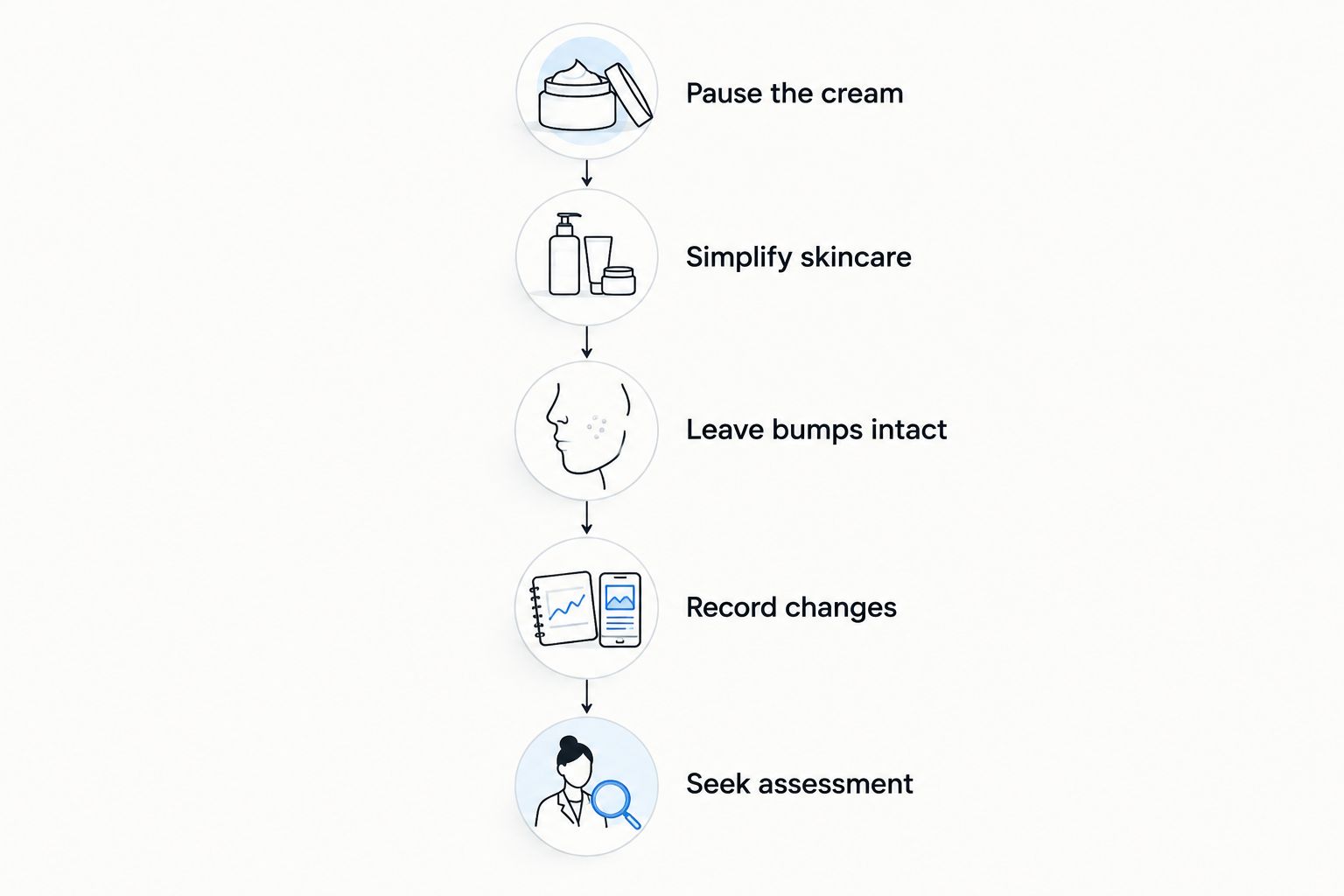
Stop the suspected eye cream and simplify the area before adding another treatment. This is a useful first response to a possible product reaction, but it does not diagnose milia or promise that established cysts will clear.
- Pause the cream. Stop applying the newly introduced product around the affected area. If it causes burning or swelling, do not keep using it to see whether your skin adjusts.
- Simplify skincare. Avoid introducing replacement eye creams, exfoliants, or multiple serums while investigating the change. Keep cleansing gentle and follow directions for anything you continue using.
- Leave bumps intact. Do not squeeze, scrape, pierce, or brush them. Keep home extraction tools away from the eyelids.
- Record changes. Note the product name, when use started, where you applied it, and whether the symptoms include itching, pain, or redness. Keep the packaging or ingredient list.
- Seek assessment. Arrange professional advice for persistent, recurrent, or uncertain bumps. Seek prompt care for eye symptoms or a rapidly worsening reaction.
Bring your observations to the appointment rather than trying to prove a cause at home. A clinician can distinguish milia from eyelid dermatitis and other lesions, then recommend an appropriate next step.
Keep this response plan separate from your normal 2026 skincare goals. Wrinkle care, hydration, and makeup preparation can wait while an uncomfortable or unexplained reaction is assessed.
Should you switch to a lighter eye cream?
A less heavy formula is a reasonable option to discuss if bumps repeatedly appear alongside rich skincare, but lighter does not mean milia-proof. Texture alone cannot establish whether a product will suit you. Fragrance, preservatives, and other components can also matter when the actual problem is contact dermatitis.
| Approach | Best for | Advantage | Limitation |
|---|---|---|---|
| Pause the suspected cream | A new reaction after a routine change | Removes one possible trigger | Does not diagnose or remove existing milia |
| Consider a less heavy formula after assessment | Comfortable skin with a history of problems around richer products | Offers a different texture | Does not guarantee freedom from milia or irritation |
| Keep a tolerated routine unchanged | Skin without new symptoms or bumps | Avoids unnecessary product changes | Does not treat established lesions |
| Arrange a clinical assessment | Persistent or uncertain bumps | Establishes what you are treating | Requires an appointment rather than a cosmetic substitution |
A separate eye cream is not mandatory for every routine. If the area is comfortable without one, you do not need to replace a paused product immediately. If dryness remains a concern, ask for advice on a suitable moisturizer and where to apply it.
Choose the simplest tolerated routine, not the largest collection of products labelled for eyes.
Where hydrating eye care fits—and where it does not
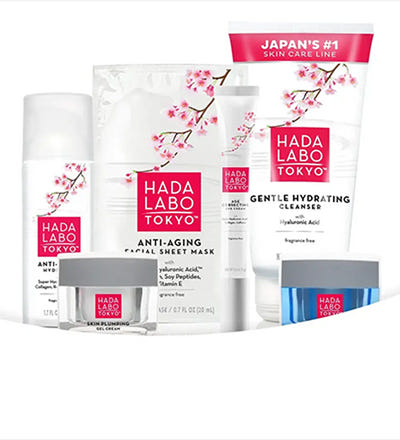
Hada Labo Tokyo eye care is best considered for cosmetic skincare, not milia removal. The brand's Japanese-inspired skincare focus includes hydration, but hydration and cyst treatment are different tasks.
These two eye-care options have different stated cosmetic purposes. Neither should be chosen as a way to extract, dissolve, or prevent diagnosed milia.
| Eye-care option | Best for | Stated cosmetic purpose | Important limit |
|---|---|---|---|
| Hada Labo Tokyo Anti-Aging Deep Wrinkle Corrector Eye & Mouth Area Cream 15ml | Shoppers considering targeted eye-and-mouth wrinkle care | Designed to target fine and deep wrinkles around the eyes and mouth | A wrinkle-care purpose does not establish suitability for milia-prone skin |
| Hada Labo Tokyo Smoothing Anti-Fatigue Eye Cream 15ml | Shoppers considering cosmetic care for tired-looking eyes | Described as eye care containing Super Hyaluronic Acid, Collagen, and Pink Silk Tree Extract | Those ingredients do not establish that the formula prevents milia or irritation |
Check the current directions before using either product near your eyes. Do not assume that an eye-care label permits application along the lash line, inside the eye, or across irritated skin.
If a Hada Labo Tokyo eye cream is the product you suspect, apply the same rule as for any other brand: pause it and assess the reaction. No brand name overrides a new symptom.
Will stopping eye cream get rid of milia?
Stopping eye cream does not reliably remove established milia. Removing a suspected contributing product is different from removing the keratin already enclosed beneath the skin.
Some milia resolve without treatment; others persist. There is no dependable countdown that applies to every adult under-eye lesion, so avoid judging success against a promised clearance date.
Persistent milia can be assessed and, when appropriate, removed by a trained clinician. Do not copy a professional extraction procedure with a needle at home, particularly beside the eye.
Is it milia or an allergic reaction to eye cream?
Itchy, red, burning, or flaky eyelid skin is more consistent with dermatitis than with uncomplicated milia. An allergic reaction can occur even after a product has previously been tolerated; a familiar product is not automatically excluded.
Stop the suspected product and seek advice if the reaction persists or worsens. Do not apply steroid creams around the eyes unless a clinician directs you to do so.
For a 2026 routine review, include makeup, nail products, hair products, and cleansers in your history. Eyelid contact dermatitis can involve substances transferred to the area, not only products deliberately applied beneath the eyes.
Can you use retinol or exfoliating acids to remove under-eye milia?
Do not start retinol or exfoliating acids close to your eyes to treat unidentified bumps. Clinicians sometimes use topical treatments for selected cases of milia, but that does not make every facial acne product appropriate for eyelid skin.
The location, diagnosis, and formulation determine what is suitable. Keep scrubs, home peels, and extraction tools away from the bumps, and ask a dermatologist about treatment rather than increasing strength or frequency yourself.
Continue sensible sun protection as part of your wider routine. General dermatology guidance recommends broad-spectrum SPF 30 or higher, reapplied at least every 2 hours outdoors; follow the sunscreen's directions and avoid getting it into your eyes. Sunscreen protects against ultraviolet exposure—it is not a milia treatment.
FAQ
Can eye cream cause milia even if I have dry skin?
Yes, dry skin does not rule out milia or a reaction to eye cream. Heavy creams can contribute in some people, but a clinician should assess persistent or uncertain bumps.
How can I tell whether under-eye bumps are milia?
Milia typically appear as small, firm, white or yellowish bumps without obvious inflammation. Itching, pain, redness, or scaling calls for a different assessment; appearance alone does not confirm the diagnosis.
Does Hyaluronic Acid cause milia?
Hyaluronic Acid on an ingredient list does not establish that a product caused milia. Assess the complete formula and the type of bump rather than blaming one moisture-binding ingredient.
Will my milia disappear when I stop using eye cream?
Stopping eye cream does not reliably clear established milia. It removes a suspected contributing product, while persistent cysts can require professional assessment or removal.
Is a lightweight eye gel better than a rich cream for milia?
A lightweight gel is not guaranteed to prevent milia. A less heavy formula is an option to discuss, but your skin's response and the full formulation matter more than the texture label.
Can I pop a tiny white bump under my eye?
Do not pop or pierce an under-eye bump. Home extraction can injure delicate skin, and the bump might not be milia.
When should I see a doctor about bumps after eye cream?
See a clinician for persistent, recurrent, painful, or uncertain bumps. Eye pain, vision changes, marked swelling, or rapidly worsening redness need prompt medical attention.
One last thing
A bump appearing after a product change is useful information, not proof of cause. The most helpful record separates what you applied from what your skin did: product, placement, timing, and symptoms.
Make that your final 2026 routine check before buying a replacement. Identify the bump first; choose cosmetic skincare second. A carefully chosen hydrating routine supports skin comfort, while an accurate diagnosis prevents you from treating the wrong problem.


