


Yes, you can use some eye creams on the skin around your mouth, provided the formula suits your skin and the label does not restrict that use. Keep eye cream off your lips, inside your mouth, and away from cracked or irritated corners; a product explicitly designed for both eye and mouth areas is the clearest choice.
- Can you use eye cream around your mouth? Yes, on intact surrounding skin when the formula and directions allow.
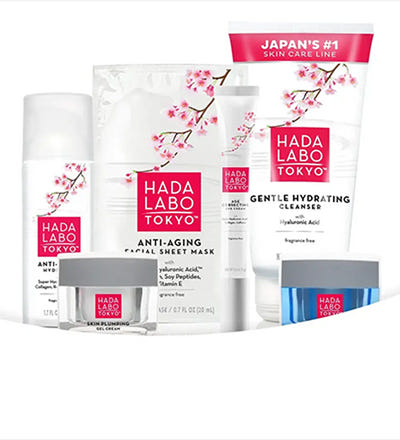
- Hada Labo Tokyo offers an eye-and-mouth cream for shoppers seeking targeted hydration and wrinkle care.
- Eye cream is not lip balm, and hydration does not erase deep smile lines.
- Check ingredients, test a small area, and stop if redness, burning, or a rash develops.
Can you use eye cream around your mouth?
You can use a suitable eye cream on intact facial skin surrounding the mouth. The important distinction is around the mouth, not on the lips: permission to apply a cosmetic near your eyes does not automatically make it suitable for your lips or oral tissue.
That same boundary matters when considering hyaluronic acid serum on your lips. An ingredient's hydrating role does not replace the finished product's directions.
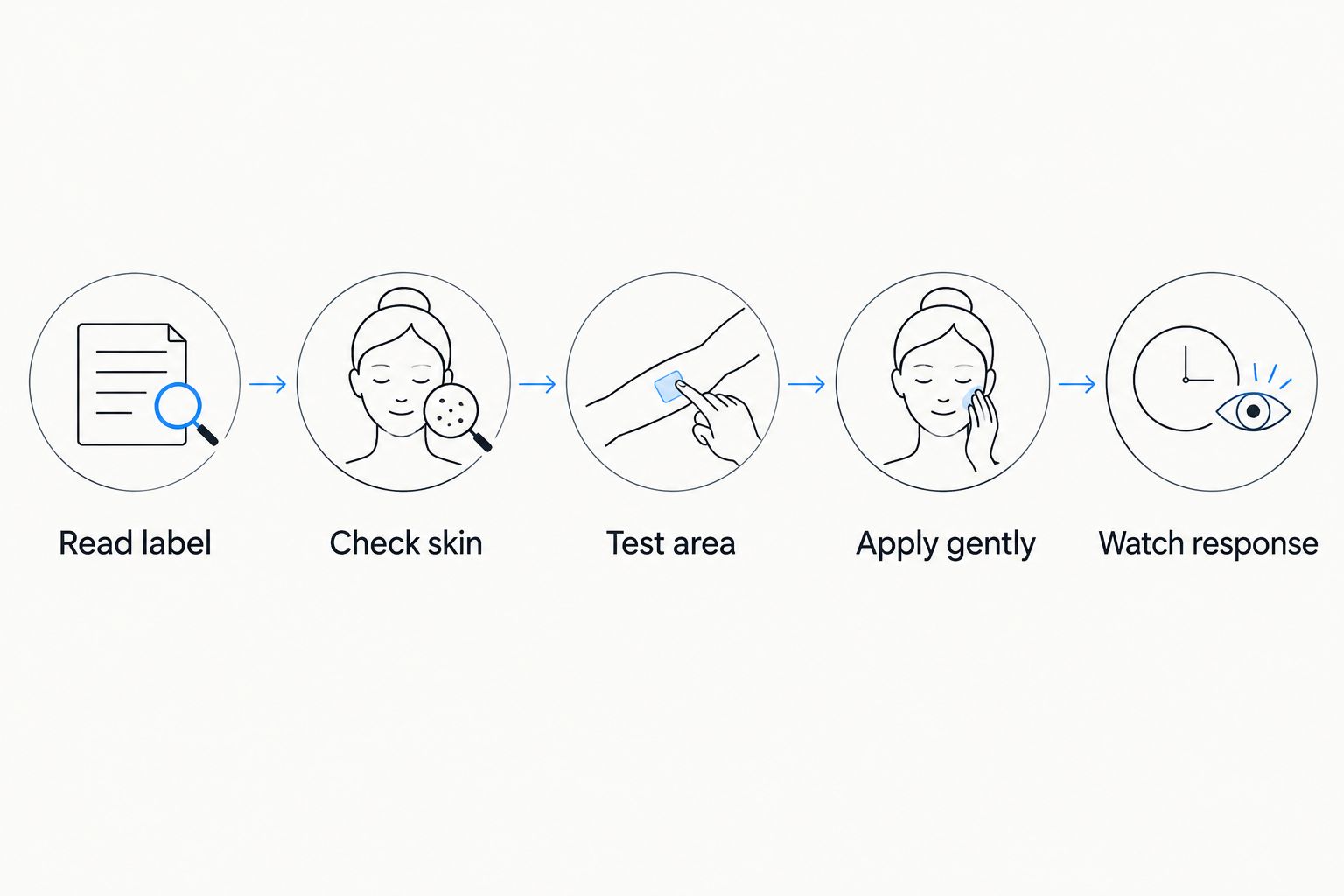
Use this sequence before adding an eye cream to your mouth-area routine in 2026:
- Read the label. Check the intended application areas, warnings, and ingredient list. Follow any instruction to avoid the mouth area.
- Check your skin. Do not experiment over a rash, open cracks, cold sores, or actively irritated skin.
- Test a small area. Try the product on a limited patch of intact skin before wider use. A home test does not rule out every reaction.
- Apply a thin layer. Follow the product's amount and frequency instructions rather than borrowing a dose from another cream.
- Watch the response. Stop if the area develops burning, persistent redness, itching, or new bumps.
A comfortable formula matters more than an eye-care label. If your usual facial moisturizer already hydrates this area without irritation, you do not need a separate eye cream simply because fine lines are visible.
Why this matters
The skin around your mouth moves when you speak, eat, and smile. Dryness can make surface lines look more noticeable, but those lines are not the same as deeper folds or persistent wrinkles.
A hydrating cream addresses dryness and helps skin look smoother. It does not stop facial movement, replace lost facial volume, or permanently remove lines. Keeping those expectations separate helps you choose skincare for the concern you actually have.
For your 2026 routine, start with the condition of your skin rather than the strongest-sounding product name. Comfortable, intact skin is a better starting point than an irritated area covered with several treatments.
Which type of cream makes sense around your mouth?
There is no automatic winner between eye cream and facial moisturizer. Choose according to the intended application area, ingredients, and how your skin responds.
| Option | Best for | Main benefit | Main limitation |
|---|---|---|---|
| Hydrating eye cream | Reusing a tolerated formula on a small area, where directions allow | Adds moisture to dry surrounding skin | Eye-area use does not establish suitability for lips |
| Eye-and-mouth cream | Targeted care explicitly intended for both areas | Matches the intended application site | Still requires an ingredient and tolerance check |
| Facial moisturizer | Keeping an uncomplicated hydration routine | Covers the surrounding facial skin without another specialist step | Not every texture or formula suits every person |
| Lip balm | Dryness on the lips themselves | Is intended for lip application | Does not replace facial care for surrounding skin |
The practical advantage of an eye-and-mouth product is its stated purpose, not proof that it outperforms every moisturizer. Likewise, a thicker texture is not evidence that a cream treats deeper wrinkles.
If your skin feels comfortable with your existing moisturizer, keep that routine. Adding another layer should solve a specific problem, not create a more complicated application sequence.
Why suitability varies between eye creams
The words on the front of a jar do not tell you everything about the formula. These factors determine whether repurposing an eye cream makes sense:
- Intended use: A product labeled for the eye and mouth areas gives clearer application guidance than an eye-only product.
- Hydrating ingredients: Humectants such as hyaluronic acid attract and hold water; the full formula determines how the product feels and performs.
- Treatment ingredients: Retinoids and exfoliating acids can irritate skin, particularly when introduced alongside other active treatments.
- Fragrance and personal sensitivities: An ingredient you tolerate elsewhere can still cause a reaction in a new application area.
- Skin condition: Cracks, inflammation, and an existing rash change the decision. Treating those concerns takes priority over cosmetic wrinkle care.
- The rest of your routine: Layering several treatment products makes it harder to identify the cause if irritation develops.
Do not assume that an eye cream is automatically milder than a face cream. Compare the actual formulas and instructions, not just the category names.
How should you apply eye cream around your mouth?
Cleanse gently, then apply according to the product directions. Spread a thin layer over the surrounding facial skin without dragging it onto the lips or pushing it into the mouth corners.
These are the useful checkpoints: Read label, Check skin, Test area, Apply gently, and Watch response. They keep the decision focused on suitability rather than an invented universal dose.
Avoid rubbing repeatedly to force a product to absorb. If the cream pills under makeup, simplify the layers or adjust the amount within its directions rather than scrubbing the area.
Keep the routine consistent enough to judge comfort. Introducing a new eye cream, exfoliant, and retinoid together makes it difficult to work out which product caused a reaction.
During the day, include broad-spectrum sunscreen with SPF 30 or higher on exposed facial skin, following its label. Hydrating cream does not replace sun protection, even when it makes the skin feel soft.
Two formulas with different roles
For a targeted approach, distinguish a product intended for the eye-and-mouth area from a moisturizer intended for the face. The stated purpose is the useful difference; neither category guarantees that every person will tolerate the formula.
Hada Labo Tokyo eye-and-mouth skincare is best for shoppers who want a cream explicitly intended for both areas. That is a product-selection verdict, not a promise to erase wrinkles.
| Product | Best for | What the product description states | Limitation |
|---|---|---|---|
| Hada Labo Tokyo Anti-Aging Deep Wrinkle Corrector Eye & Mouth Area Cream 15ml | Targeted eye-and-mouth care | A 15 ml cream designed to target fine and deep wrinkles around the eyes and mouth | Intended for surrounding skin, not a substitute for lip balm; follow the label |
| Hada Labo Tokyo Absolute Smoothing & Moisturising Cream 50ml | General facial hydration | A light, airy 50 ml day-and-night cream enriched with hyaluronic acid | A general moisturizer, not a treatment for a mouth-area rash or cracked corners |
The 15 ml and 50 ml sizes describe the containers, not application amounts or treatment strength. Choose the intended role first, then check whether the texture and ingredients fit your routine.


Will eye cream smooth smile lines or marionette lines?
Hydration can soften the appearance of fine lines associated with dryness. It does not erase deeper smile folds or marionette lines, which involve more than the surface's moisture level.
Discussions of red light therapy for lines around the mouth concern a different treatment category from topical hydration. Eye cream and light-based devices are not interchangeable, and interest in either does not establish that it will correct your particular lines.
For your 2026 skincare decisions, separate three questions: does the skin feel dry, does it look irritated, or are you concerned about an established fold? Those concerns need different responses. More cream is not a universal answer.
If deeper lines are your main concern, a dermatologist can assess the skin and discuss appropriate options. Do not keep escalating cosmetic treatments on irritated skin while waiting for a fold to disappear.
Can you put eye cream directly on your lips?
No—not unless the product specifically permits lip use. The skin surrounding the mouth and the lips are different application sites, and an eye cream's instructions should not be extended by assumption.
Use a lip product for dry lips. Keep facial treatment products away from the inner lip and mouth, and avoid repeatedly licking the area: saliva and repeated wetting can aggravate dryness.
For a simple 2026 routine, keep the boundaries clear: facial cream on suitable surrounding skin, lip balm on the lips, and treatment products only where their labels direct.
What if the corners of your mouth are cracked or sore?
Do not apply a new eye cream over cracked, painful, or inflamed corners. Repeated cracking can have several causes, and a cosmetic cream does not identify or treat all of them.
Pause new treatment products near the affected area and seek advice from a pharmacist or clinician if the problem persists, recurs, or becomes painful. A spreading rash, crusting, or other signs of infection also deserve assessment.
Small bumps around the mouth are another reason to stop experimenting. They are not proof that a cream is working or that your skin needs a stronger treatment.
FAQ
Can I use my eye cream around my mouth every day?
Use it daily only if its directions permit that application and frequency, and your skin tolerates it. Stop if burning, redness, itching, or a rash develops.
Is eye cream better than face cream for lines around my mouth?
Eye cream is not automatically better than face cream for mouth-area lines. Choose a suitable formula for hydration and remember that neither category guarantees removal of deep folds.
Can I put an eye cream containing retinol near my mouth?
Follow the specific product's directions before applying a retinol eye cream near your mouth. Retinol can irritate skin, so keep it off the lips, cracked corners, and inflamed areas.
Will hyaluronic acid eye cream get rid of smile lines?
Hyaluronic acid eye cream can hydrate skin and soften the appearance of dryness-related fine lines, but it does not erase deep smile folds. Judge hydration and structural lines as different concerns.
Should I apply eye cream before or after moisturizer around my mouth?
Follow the products' directions rather than assuming every eye cream needs the same order. If both serve the same moisturizing role, a separate layer is not automatically necessary.
What should I do if eye cream stings around my mouth?
Stop using the eye cream on that area and gently rinse it off if it is causing irritation. Seek medical advice for a persistent or worsening reaction, and urgent care for breathing difficulty or significant swelling.
Do I still need sunscreen if I use eye cream around my mouth?
Yes, use broad-spectrum SPF 30 or higher on exposed surrounding facial skin, following the sunscreen label. Eye cream without a labeled sun-protection role does not replace sunscreen.
One last thing
The product that already keeps your skin comfortable can be the right mouth-area moisturizer. You do not need a specialist cream simply because the concern sits close to your lips.
Before adding another product in 2026, check whether you are treating dryness, chasing a deep fold, or covering irritation. That distinction is more useful than adding another layer.


