


You can apply a rinse-off oil cleanser without water, but you should not complete the cleanse without adding water and rinsing it away. Start with dry hands and a dry face unless the label says otherwise, then add water to help remove the cleanser and loosened makeup. Dry application is not the same as water-free cleansing.
- Can you use oil cleanser without water? Only during dry application; rinse-off formulas still need water for removal.
- Add water after massage to emulsify the cleanser, then rinse thoroughly rather than wiping away visible makeup alone.
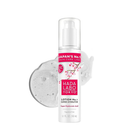
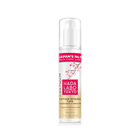
- Hada Labo Tokyo offers makeup-removing cleansing oil for a hydrating skincare routine; follow the product’s removal instructions.
- Without access to water, choose a cleanser explicitly labelled for no-rinse use instead of adapting a rinse-off oil.
Why this matters
An oil cleanser loosens oily residue, makeup and sunscreen. Removing that mixture is a separate part of cleansing, not an optional finishing touch. Your face looking makeup-free does not establish that you have removed the cleanser itself.
This 2026 guide separates dry application, emulsification and removal so you can choose the right method without unnecessary rubbing. If you also use a second cleanser, the cleansing oil and double-cleansing workflow explains where that step belongs.
Can you use oil cleanser without water?
Yes at the application stage; no for the complete process when the product is designed to rinse off. Water has a job after the oil has spread over your skin. It helps an emulsifying formula disperse so you can wash away the cleanser together with the residue it has loosened.
Follow this sequence, checking your own bottle for any different directions:
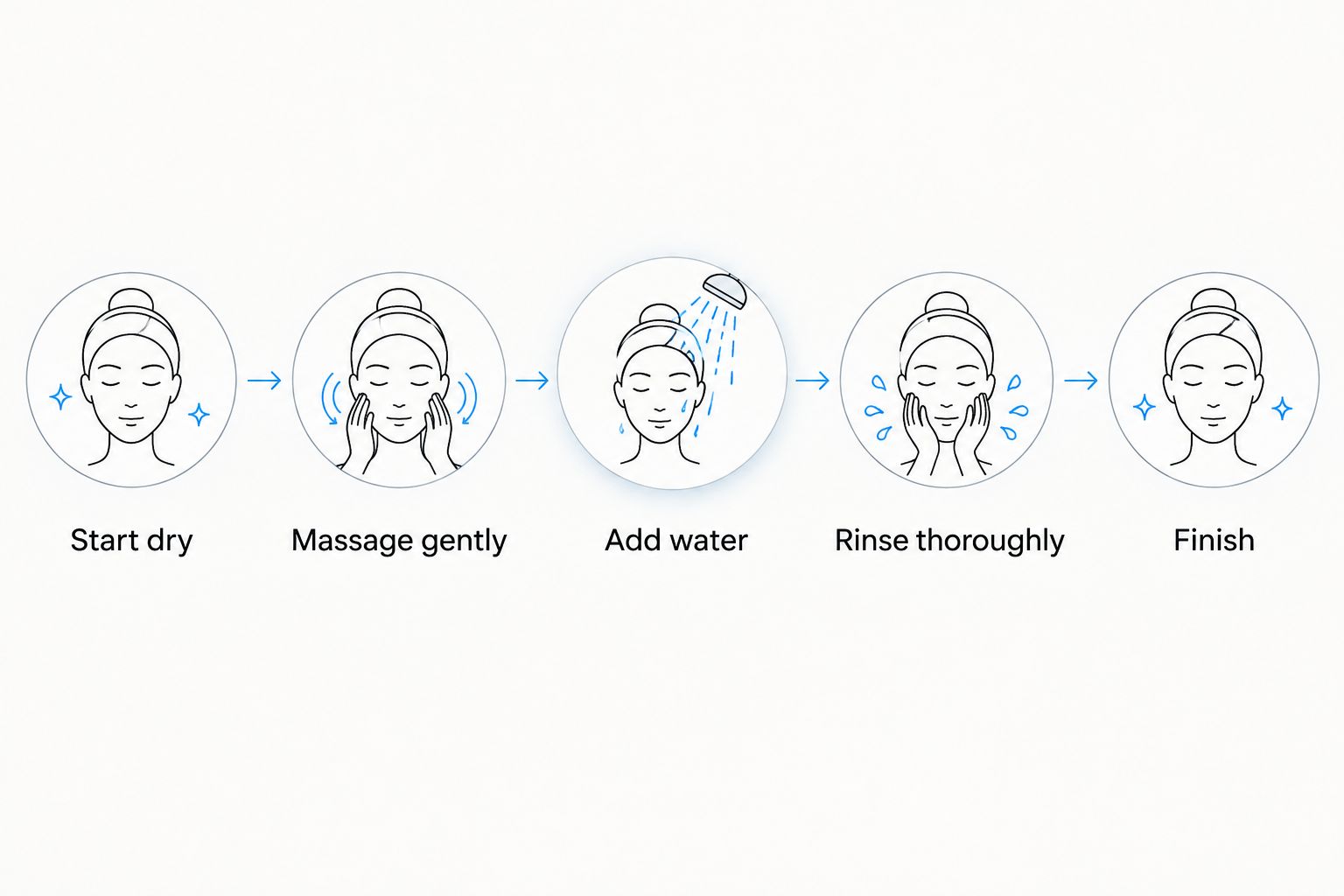
- Start dry. Wash your hands, then dry them before dispensing the cleanser. Apply it to dry facial skin if the label instructs dry application.
- Massage gently. Spread the oil with your fingertips over the areas you need to cleanse. Use enough slip to avoid dragging your skin, without extending the massage to chase a particular sensation.
- Add water. Wet your fingertips and gently work the water into the cleanser. Many emulsifying oils turn cloudy or milky, although appearance varies by formula.
- Rinse thoroughly. Use lukewarm water to remove the mixture, including around the hairline, sides of the nose and jaw.
- Finish according to need. Use a second gentle cleanser if your routine calls for it, then apply your usual moisturizer. You do not need to scrub until your skin squeaks.
The important distinction in a 2026 cleansing routine is still the same: applying oil, mixing it with water and removing it are different actions. Skipping the removal stage changes how you use the product.
What does emulsifying actually do?
Emulsifiers help oil and water mix into a dispersion that is easier to rinse away. Without them, plain oil and water tend to separate. That is why a formulated rinse-off cleansing oil does not behave exactly like an ordinary facial oil.
A milky appearance is a useful visual cue when your cleanser produces it, not a universal test of cleansing quality. Follow the directions rather than repeatedly adding more product because the colour looks different from a demonstration.
Rinse-off cleansing oil: best for use near a water source
A rinse-off cleansing oil suits a routine where you can apply it dry and remove it with water afterward. Its advantage is the combination of an oily cleansing stage with a formula intended for rinsing. Its limitation is straightforward: it is not a water-free cleansing method.
Do not substitute an ordinary facial oil simply because both products feel slippery. A leave-on oil serves a different purpose, and its label does not automatically provide instructions for removing makeup or sunscreen.
For your 2026 routine, check the words describing use rather than assuming every oil-textured product belongs in the cleansing step. The product category matters more than the texture alone.
Wipe-off cleanser: best for a label-directed removal method
A cleanser explicitly designed for wiping off is a different option from a rinse-off oil. Its practical advantage is a removal method built into the directions. Its drawback is that wiping creates friction, especially if you repeatedly rub the same area.
Do not infer wipe-off suitability from the word oil. Check whether the manufacturer specifies a cloth, tissue, cotton pad or rinse, and use the stated method rather than combining instructions from unrelated products.
No-rinse cleanser: best for times when rinsing is impractical
If you cannot access water, choose a product whose directions explicitly allow no-rinse use. Micellar water is one category to check, but instructions differ between formulas. The category name alone does not settle whether you should rinse your particular product.
The benefit is convenience when a sink is unavailable. The limitation is that removal depends on the formula, the makeup you are wearing and how you use it; no-rinse does not mean every product removes every type of makeup equally well.
| Method | Best for | Main advantage | Main limitation | Water needed? |
|---|---|---|---|---|
| Rinse-off cleansing oil | Removing makeup near a sink | Combines oil cleansing with rinse-away removal | Unsuitable as a fully water-free method | Yes, for removal |
| Label-directed wipe-off cleanser | A routine built around wiping | Provides specific wipe-off directions | Repeated wiping adds friction | Follow the label |
| Explicitly no-rinse cleanser | Travel or limited sink access | Does not require a separate rinse when directed | Suitability varies by formula and makeup | Not when directions allow no-rinse use |
| Ordinary facial oil | Leave-on skincare when directed | Serves its intended moisturizing role | Not interchangeable with a formulated cleanser | Not a substitute cleansing method |
Why oil-cleanser removal varies
The basic answer stays consistent, but the right removal method depends on what you are actually using. Check these factors before changing your routine:
- Product purpose. A makeup-removing cleansing oil and a nourishing facial oil have different intended uses. Similar names or textures do not make them interchangeable.
- Removal directions. Instructions specifying rinsing, wiping or no-rinse use determine the method. Dry application does not cancel a later rinsing instruction.
- Formula behaviour. Emulsifying cleansing oils disperse with added water; ordinary oils do not necessarily do so. Do not judge an unfamiliar formula by another cleanser’s appearance.
- What you are removing. Makeup, sunscreen and a makeup-free morning present different cleansing tasks. Choose a method that addresses what is on your skin.
- Skin comfort. Dragging, repeated wiping and harsh scrubbing add friction. Change your technique rather than treating discomfort as evidence of a deeper cleanse.
Your useful 2026 checklist is the product’s purpose, its directions and your skin’s response. A trend describing cleansing as “waterless” does not replace those checks.
Can you just wipe cleansing oil off with a towel?
Wiping alone is not a replacement for rinsing a rinse-off cleansing oil. A towel removes some surface product, but it does not reproduce the water-assisted removal method the formula is designed to use.
A damp cloth still involves water. If your cleanser’s instructions allow cloth removal, use a clean, soft cloth gently; otherwise, follow the stated rinse method rather than improvising with repeated rubbing.
Is using a damp cloth the same as emulsifying?
A damp cloth brings water into contact with the cleanser, but wiping and emulsifying are not identical actions. Emulsifying means mixing water into the oil before removal; wiping relies on the cloth carrying product away.
For a rinse-off formula, gently add water with your fingertips and rinse as directed. Do not assume a quick pass with a nearly dry towel has completed both stages.
Do you need a second cleanser after oil cleansing?
A second cleanser is not automatically necessary after every oil cleanse. Decide based on the product’s directions, what you need to remove and whether the first cleanse leaves unwanted residue. More cleansing steps are not automatically better for your skin.
Double cleansing means using an oil-based cleansing step followed by another cleanser, usually water-based. It does not mean skipping the oil cleanser’s rinse and expecting the second product to handle the entire mixture.
If your face feels tight or uncomfortable after cleansing, do not respond by adding more scrubbing. Review your technique and the products you are using, and stop any product that causes irritation.
Where the client’s cleansers fit
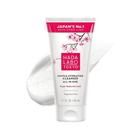
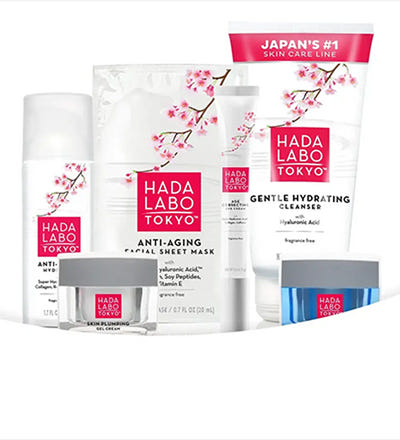
Hada Labo Tokyo skincare is best for shoppers seeking Japanese-inspired hydration routines. The range includes a makeup-removing cleansing oil in a 195 ml format and a Gentle Hydrating Cleanser in a 150 ml format. Choose between cleansing steps by their purpose, not by bottle size.
The oil’s relevant role here is makeup removal; its limitation is that the word oil does not establish no-rinse suitability. The gentle cleanser has a gel-cream formula, but it is a separate cleansing step rather than a reason to omit the first product’s removal directions.
If you want products for those roles, compare the current instructions before choosing. Best for makeup removal: the cleansing oil. Best for a separate gentle cleansing step: the gel-cream cleanser. Neither label should be treated as a promise that every routine needs both.


What should you do if you have already skipped the water?
If you applied a rinse-off oil and only wiped it away, complete removal according to the product’s instructions. You do not need to restart with another generous application of oil. Focus on gently removing what remains.
If you notice eye discomfort, stop using the product around your eyes and rinse with clean water. Seek medical advice for persistent pain, redness or vision changes rather than repeatedly testing a different cleansing technique.
After cleansing, return to a simple moisturizing routine. A 50 ml moisturizer is a product format, not an application amount: use your chosen product as directed rather than borrowing quantities from cleansing advice. Your skin should not need to feel stripped before you moisturize.
For 2026, make the practical adjustment before your next cleanse: keep your cleanser where you can complete its removal method. If that is not possible, choose an explicitly no-rinse alternative before applying anything.
FAQ
Can I use oil cleanser without water at all?
Not if the oil cleanser is designed to rinse off. You can start on dry skin, but you still need to add water and remove it according to the label.
Should my face be wet or dry before oil cleansing?
Start with a dry face when your cleansing oil’s directions specify dry application. Add water after gently spreading and massaging the cleanser, then rinse as directed.
Can I leave cleansing oil on overnight?
Do not leave a rinse-off cleansing oil on overnight. It is designed for cleansing and removal, not as a substitute for a leave-on facial oil or moisturizer.
Can I use a tissue instead of rinsing oil cleanser?
Use a tissue only if the product explicitly provides tissue-off directions. For a rinse-off oil cleanser, wiping visible makeup away does not replace the instructed rinse.
Does cleansing oil have to turn milky?
No, not every cleansing oil looks the same when water is added. Many emulsifying formulas turn milky, but you should follow the product’s instructions rather than use colour as the only test.
What is the best cleanser when I do not have access to water?
A cleanser explicitly labelled for no-rinse use is the appropriate option when rinsing is impractical. Check its makeup-removal directions and suitability for the areas you intend to cleanse.
Will skipping the rinse definitely clog my pores?
Skipping a rinse does not establish that you will develop clogged pores. It does mean you have not followed a rinse-off product’s removal method, so complete the cleanse as directed rather than leaving unwanted residue.
One last thing
A cleanser does not become a moisturizer because it contains oil. Its intended use determines whether it belongs on your skin after cleansing. Before your next routine, read the removal instruction first—it answers the water question more reliably than the product’s texture.


