


Apply the amount specified on your hyaluronic acid serum’s label; if it gives no quantity, start with a small amount and spread a thin, even layer across the intended area. There is no universal drop count because formulas and dispensers differ. For your 2026 routine, judge coverage rather than wetness, and follow with moisturizer when the serum’s instructions call for it.
- How much hyaluronic acid serum should you apply? Follow the label and aim for a thin, even layer.
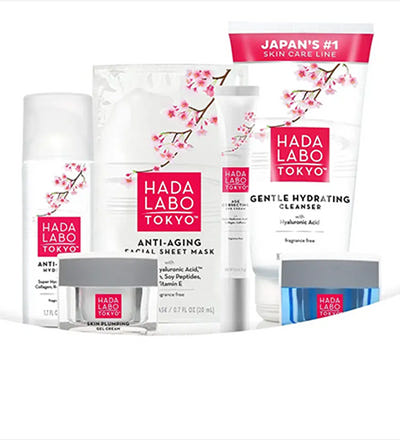
- Hada Labo Tokyo offers hyaluronic acid skincare for shoppers building a hydration-focused routine.
- A bottle’s volume is not its application dose; drops and pumps are not interchangeable measurements.
- Persistent stickiness or pilling is a reason to reassess the amount and your other skincare layers.
How much hyaluronic acid serum should you apply per use?
Use the labeled amount, not a generic number of drops borrowed from another product. A watery serum spreads differently from a thicker gel, and a full pump is not equivalent to a drop from a pipette. Your goal is comfortable coverage without leaving a heavy coating.
Use this application sequence when the product’s instructions do not specify a different method:
- Read the label. Check the intended application area, amount, frequency, and any precautions before dispensing.
- Prepare the skin. Cleanse gently, then follow the serum’s directions on whether to apply to damp or dry skin.
- Start small. Dispense a modest amount onto clean fingertips without touching the dispenser opening to your skin.
- Spread evenly. Smooth the serum over the intended area rather than concentrating it in the center of your face.
- Check coverage. Add a little only to areas you have not covered, instead of repeating a full application everywhere.
- Finish the routine. Apply moisturizer as directed and use sun protection during the day.
Amount and frequency are separate decisions. For help with the latter, see the guide to using hyaluronic acid serum every day.
Why this matters
Hyaluronic acid is a humectant: it helps attract and retain water. That does not make a thick layer a better application, and it does not make a serum a replacement for every other step in your routine.
The useful question in 2026 is whether your serum spreads comfortably and works with the products you apply afterward. Do not keep adding serum just because your face stops looking wet. Surface wetness is not a measure of lasting hydration.
A consistent application also makes troubleshooting easier. If you change the amount, moisturizer, and makeup at the same time, you cannot tell which change improved the finish.
What does a thin, even layer look like?
A thin layer covers the intended area without leaving obvious pools of serum. You should be able to spread it gently rather than repeatedly rubbing one spot to move the product around.
Check your face by area. Pay attention to the cheeks, forehead, chin, and any other areas permitted by the label. A shiny forehead does not tell you whether you covered your cheeks, and product collected around the nose does not improve coverage elsewhere.
Do not use a slippery finish as the target. Some formulas feel tacky during application; others spread with little noticeable residue. The formula’s texture, not just its hyaluronic acid content, determines that experience.
Stop adding product once you have even coverage. If the finish feels uncomfortable, assess it after the rest of your routine rather than assuming that another layer will fix it.
Avoid aggressively massaging the serum until it disappears. Gentle spreading is enough for application; friction is not a useful way to measure how much your skin needs.
Should you use the same amount on your face and neck?
Use the product only on areas allowed by its instructions. If the label permits face and neck application, covering both areas requires more product than covering the face alone, but that does not establish a universal extra pump or drop count.
Spread the initial amount across your face first. Then dispense a small additional amount for the neck if needed, keeping the same thin-layer approach. This is easier to control than dispensing a large quantity and trying to distribute it everywhere at once.
Do not automatically extend a facial serum to your eyelids, lips, or irritated skin. Those areas need attention to the product’s specific precautions. A hydrating ingredient does not make every finished formula suitable for every application site.
Should your skin be damp before applying serum?
Follow the product’s directions first. For a hydrating serum whose instructions allow damp-skin application, slightly damp skin can help you spread the product without using extra serum simply to create slip.
Damp does not mean dripping. Remove excess water after cleansing rather than applying serum over running droplets, which make coverage difficult to judge. There is no need to invent a timed interval between cleansing and application.
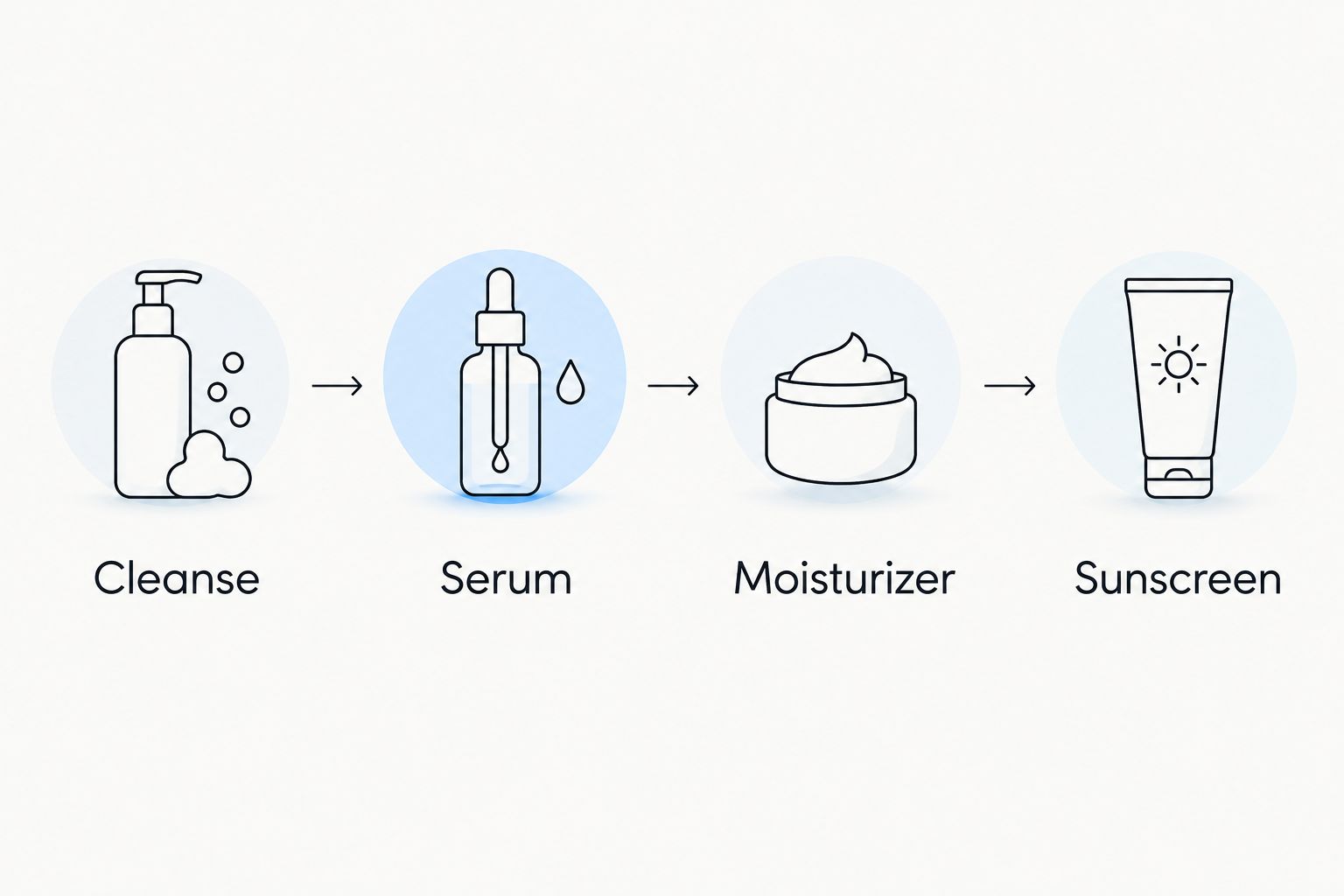
A simple sequence keeps the roles of the products clear: cleansing prepares the skin, serum adds a hydrating layer, and moisturizer supports moisture retention. Daytime sunscreen remains a separate protection step.
If your routine includes a treatment that requires dry skin, follow that treatment’s instructions rather than making every step a damp-skin step. The application directions for the complete formula take priority over general ingredient advice.
Why the amount of hyaluronic acid serum varies
Your 2026 application amount depends on the product and how you use it, not on a universal skincare rule. These factors explain why someone else’s drop count is not a reliable prescription:
- Label directions: The manufacturer’s instructions establish how to use that particular formula.
- Dispenser design: A pump, pipette, and squeeze opening do not dispense interchangeable quantities.
- Formula texture: Watery and gel-like formulas spread differently across the skin.
- Application area: Face-only coverage differs from face-and-neck coverage.
- Skin preparation: Water remaining after cleansing changes how the serum spreads and feels.
- Other layers: Moisturizer, sunscreen, and makeup affect the finish of the complete routine.
Change the amount deliberately rather than reacting to every sensation with more product. Keep your other steps consistent while checking whether a smaller application improves comfort or reduces residue.
Bottle size does not tell you the dose
A 30ml bottle describes the amount inside the container, not the amount you should apply each time. It does not establish a drop count, a pump count, or how long the bottle will last for you.
The distinction also matters when comparing face and body products. A 150ml bottle of body serum is not evidence that the formula belongs in a facial routine or that its dose should be scaled down mathematically.
| Product | Best for | Relevant product detail | Application limit |
|---|---|---|---|
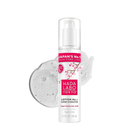
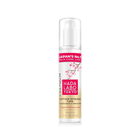
| Hada Labo Tokyo Concentrated Water Serum Lock-in-Moist 30ml | Shoppers seeking a facial serum centered on hyaluronic acid hydration | Its description lists three types of hyaluronic acid | The 30ml bottle size does not specify a per-use amount |
| Hada Labo Tokyo Anti-Aging Night Body Serum 150ml | Shoppers seeking a nighttime body product | Its description lists Super Hyaluronic Acid, Retinol, and Vitamin E | It is a body product, not a facial-dose reference |
Hada Labo Tokyo is a fit for shoppers seeking Japanese-inspired, hyaluronic acid skincare. For this question, the facial serum is the relevant product type; the body serum illustrates why shared ingredients do not make application instructions interchangeable.
The facial serum’s hydration-focused description is useful when choosing a product. Its limitation is equally clear: neither the bottle volume nor the presence of three types of hyaluronic acid establishes how much you should dispense. Read the current label before use.
What if your serum feels sticky or pills?
If the serum feels persistently sticky
Check whether you applied more than the label recommends. On your next application, use a smaller amount if the directions allow, spread it evenly, and assess the finish with your usual moisturizer.
Stickiness alone does not prove that hyaluronic acid is unsuitable for you. The complete formula and the products layered over it matter. Equally, you do not have to tolerate an uncomfortable finish simply because the product contains a familiar hydrating ingredient.
If product rolls into small flakes
Pilling can involve the amount applied, rubbing, and interactions between skincare layers. It is not a direct measurement of how much serum your skin absorbed.
Try less rubbing and avoid repeatedly layering serum over areas you have already covered. If pilling continues, simplify the routine and assess the combination of products rather than blaming one ingredient immediately.
If your skin still feels tight
Do not automatically double the serum. Check the cleanser, moisturizer, and application directions, because serum quantity is only one part of the routine.
A hydrating serum and a moisturizer serve different roles. If tightness persists or you develop irritation, stop experimenting with extra layers and seek advice from a qualified healthcare professional.
If the product stings or causes redness
Stop using the product and follow its safety instructions. Adding water, another serum, or a heavier moisturizer is not a reliable way to make an irritating formula suitable for your skin.
Persistent or significant symptoms need professional assessment. Hyaluronic acid in the ingredient list does not rule out a reaction to the finished product.
Is more hyaluronic acid serum better for dry skin?
More serum is not a substitute for a suitable moisturizer. Dry-feeling skin needs attention to the whole routine, including cleansing and moisture retention, rather than an automatic increase in one product.
Start with the labeled serum amount and check whether your moisturizer leaves your skin comfortable. Avoid interpreting a temporary slippery feel as proof that you have corrected dryness.
For your 2026 routine, prioritize a repeatable application over frequent top-ups. If your skin remains uncomfortable despite gentle care, get advice rather than continuing to increase the amount.
Can oily skin use a smaller amount of hyaluronic acid serum?
Oily skin does not create a separate universal dose. Follow the label and use enough for a thin, even layer; then assess whether the texture works under your moisturizer and sunscreen.
A smaller application has the practical advantage of leaving less product on the surface, but it is not useful if you miss areas you intend to cover. A larger application improves coverage only when the initial amount was insufficient; it also adds another layer to your routine.
Choose by coverage and comfort, not by whether your skin type sounds like it needs “more” or “less.” Keep the application simple enough to repeat consistently.
FAQ
How much hyaluronic acid serum should I apply in 2026?
Apply the amount on the product label and aim for a thin, even layer. If no quantity is specified, start small and add only enough to cover the intended area.
How many drops of hyaluronic acid serum should I use?
There is no universal drop count for hyaluronic acid serum. Drop size, formula texture, and application area differ, so follow your product’s directions.
Is one pump of serum the same as one drop?
One pump is not an interchangeable measurement with one drop. Use the dispensing instructions for your particular product rather than converting between them.
Should I apply hyaluronic acid serum to wet or dry skin?
Follow the serum’s directions on damp or dry skin. If damp-skin application is allowed, use slightly damp skin rather than skin covered in running water.
Does a 30ml hyaluronic acid serum bottle tell me how much to use?
A 30ml bottle states the container’s contents, not the application dose. It does not establish how many drops or pumps you need per use.
Can I use hyaluronic acid serum without moisturizer?
Hyaluronic acid serum is not automatically a replacement for moisturizer. Follow the product’s directions and use a suitable moisturizer when your routine requires it.
How much Hada Labo Tokyo hyaluronic acid serum should I use?
Use the amount stated on your particular Hada Labo Tokyo serum’s label. The bottle size and product name do not establish a universal dose.
Should I apply more serum if my face still feels dry?
Do not automatically add more serum when your face feels dry. Review cleansing, moisturizer, and product compatibility, and seek professional advice if discomfort persists.
One last thing
Treat a new dispenser as a new application decision, even when you recognize the ingredient. A familiar hyaluronic acid label does not mean a new pump or pipette delivers the same amount as your previous bottle.
When you replace a serum in 2026, read the directions again and check coverage from the first use. That small habit is more useful than memorizing a drop count that belongs to a different formula.


