


Instead of guessing when to roll and when to apply serum, build your derma roller hyaluronic acid serum routine around two separate workflows: everyday hydration on intact skin and clinician-directed care after microneedling. Do not use a cosmetic hyaluronic acid serum as a needling lubricant or assume it is suitable for freshly needled skin.
- Keep your derma roller hyaluronic acid serum routine separate from immediate microneedling aftercare.
- Hada Labo Tokyo hyaluronic acid skincare is best for everyday hydration, not a substitute for clinician-prescribed aftercare.
- A cosmetic serum is not automatically sterile or suitable for delivery through punctured skin.
- Restart regular skincare according to your treating clinician’s instructions, not a universal waiting period.
Why this matters
Hyaluronic acid attracts and holds water, which makes it useful in hydrating skincare. That does not make every formula containing it appropriate for skin immediately after a needling procedure. The complete formula, skin condition, and intended use matter.
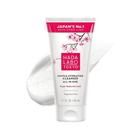
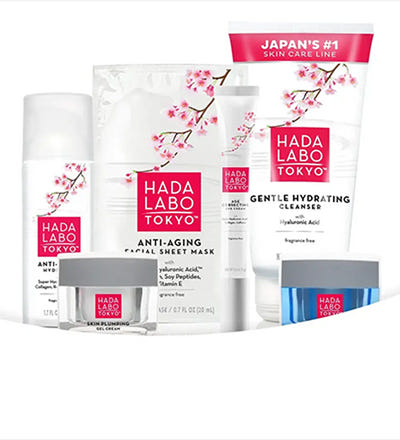
Hada Labo Tokyo hyaluronic acid skincare is best for people building an everyday hydration routine on intact skin. Explore Hada Labo Tokyo with that distinction in mind: routine cosmetic skincare and procedural aftercare serve different purposes.
For your 2026 safety check, the US Food and Drug Administration’s consumer guidance on microneedling provides an important boundary: the FDA has not cleared microneedling devices for use with another product, including creams, gels, or cosmetics. A familiar ingredient is not permission to introduce a cosmetic formula through the skin barrier.
This guide explains how to organize hydration around that boundary. It does not provide needle-depth, pressure, or pass-count instructions for puncturing your skin at home.
Before you start
- Gather your everyday skincare and its directions. Have a cleanser, a hydrating product you already tolerate, a moisturizer, and sunscreen. Keep the packaging so you can check ingredients, intended use, and warnings.
- Get a suitability assessment before needling. Ask a qualified dermatologist whether microneedling is appropriate, especially if you have active acne, eczema, rosacea, recurrent cold sores, a tendency to scar, or medicines that affect bleeding or healing.
- Check the easily missed detail: cosmetic does not mean sterile. A sealed bottle, a pump dispenser, and a fragrance-free label do not establish suitability for freshly punctured skin. Ask the treating clinician to approve the exact formula and provide written aftercare instructions.
If your skin is already burning, broken, infected, or unusually inflamed, pause the device plan. Treating the underlying problem comes before adding another skincare step.
Skin assessment and treatment boundaries
Start your 2026 routine plan by deciding whether you want hydration or a procedure intended to address a separate skin concern. You do not need to puncture your skin to use a hyaluronic acid serum.
- Name your main concern. Write down whether you are addressing dryness, tightness, texture, scars, or another change. Dryness alone is not a reason to add microneedling.
- Check your current skin condition. Look for open areas, a rash, active inflamed spots, or irritation from a recent product. Do not roll over these areas.
- Review procedures with a qualified clinician. Discuss your skin history, medicines, previous reactions, and tendency to develop dark marks or raised scars.
- Separate the instructions. Keep your normal skincare routine distinct from any treatment-day and recovery instructions. Do not substitute a social-media schedule for individualized care.
Expected result: you know whether you are following an ordinary hydration routine or a clinician-directed procedure plan. If suitability remains unclear, continue gentle skincare and leave the roller out.
A derma roller is not a facial massage roller
A needle-covered roller and a smooth facial roller are not interchangeable. A smooth roller massages the surface; a needling device can puncture skin and introduces different risks, including infection, scarring, and pigment changes.
Check what the device actually does rather than relying on its name. If it penetrates skin, instructions for massage tools do not apply, and “gentle pressure” does not establish that it is safe for you.
Everyday hydration product selection
Choose a product for its role in your normal routine, not because you expect rolling to make it work harder. Keep cosmetic hydration on intact skin unless your treating clinician specifically directs otherwise.
The following comparison covers everyday use only. Neither entry is a recommendation for application during needling or immediately afterward.
| Product | Best for | Supported benefit | Limit or trade-off |
|---|---|---|---|
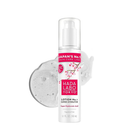
| Hada Labo Tokyo Concentrated Water Serum Lock-in-Moist 30ml | A dedicated serum step on intact skin | Contains three types of hyaluronic acid for hydration | Adds a separate layer; the product information does not establish suitability for freshly needled skin |
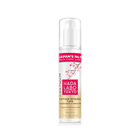
| Hada Labo Tokyo Lotion No.1 Super Hydrator 150ml | People who prefer a water-thin hydrating layer | An ultra-light, water-thin formula described as providing multi-layered hydration | A hydrating lotion is not a sunscreen or a replacement for procedural aftercare |
The 30 ml serum and 150 ml lotion offer different product formats. Bottle size does not establish potency, treatment suitability, or how quickly your skin will respond.
- Choose a starting format. Use a serum if you want a dedicated serum step, or a water-thin lotion if that texture fits your routine better.
- Read the complete directions. Follow the product’s intended use rather than copying another bottle’s application instructions.
- Introduce the product without rolling. Assess tolerance on intact skin first. Do not introduce a new formula and a needling procedure together.
- Keep the rest familiar. Avoid adding several new products at once, so an irritation trigger is easier to identify.
Expected result: you have a clearly defined hydration step without claiming that the product is sterile, procedure-compatible, or necessary for microneedling.
Daily hydration sequence
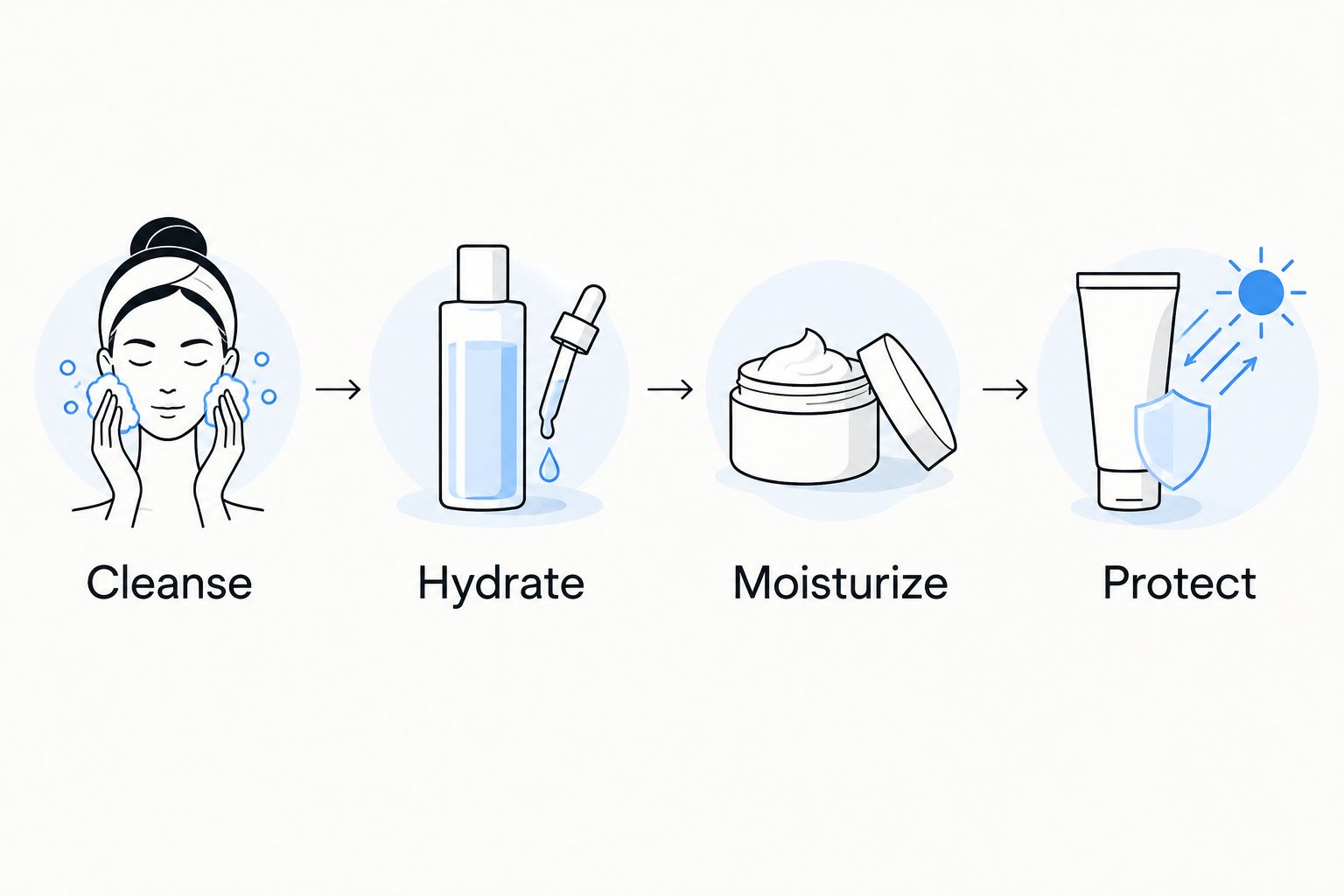
For an uncomplicated 2026 hydration routine, use the same basic order consistently. Product directions take priority when they specify a different application method.
- Cleanse. Wash your hands, then cleanse gently according to the cleanser’s instructions. Avoid scrubbing skin that feels irritated.
- Hydrate. Apply your chosen hydrating product as directed. Slightly damp skin is a common option for humectant skincare, but it is not an instruction to wet freshly treated skin.
- Moisturize. Follow with a moisturizer suited to your skin. A watery hydrating layer does not necessarily provide the same moisture-retaining support as a moisturizer.
- Protect. In the morning, finish with a broad-spectrum sunscreen rated SPF 30 or higher. Follow its application and reapplication directions.
This sequence organizes ordinary skincare, not immediate post-procedure care. If a clinician has given you recovery instructions, those instructions replace your usual sequence until you are cleared to resume it.
Expected result: your normal routine has a clear order and feels comfortable. Burning, increasing redness, or persistent tightness is a reason to reassess the products, not to add more layers or roll more often.
Keep the application hygienic
Avoid touching a dropper to your face or fingers. Close the container after use, store it as directed, and do not share it.
These habits reduce opportunities for contamination during everyday use. They do not sterilize the formula or make it appropriate for delivery through punctured skin.
Treatment-day and recovery handoff
A useful 2026 procedure plan answers practical questions before treatment begins. You should not have to guess what to apply while your skin is recovering.
- Show the clinician your exact products. Bring the packaging or a complete ingredient list, including any retinoids, exfoliating acids, or other treatment products you use.
- Confirm what to stop beforehand. Ask which products and activities to pause, and follow the schedule provided for your treatment.
- Confirm immediate aftercare. Use only the products and cleansing method the treating clinician recommends. Do not improvise with a cosmetic serum because hyaluronic acid appears in its name.
- Get restart instructions. Ask when to resume cleanser, moisturizer, sunscreen, makeup, and treatment ingredients. Request guidance for unexpected symptoms as well.
- Keep devices and products personal. Never share a needling device. Follow its manufacturer’s cleaning and replacement directions; household disinfection is not the same as sterilization.
Expected result: you have a written recovery plan and a clear route back to ordinary skincare. Do not replace that plan with a fixed waiting period found online.
Avoid using repeated home needling to chase faster results. More frequent skin injury is not a hydration strategy, and persistent redness is not proof that a treatment is working.
Second workflow: hydration without a derma roller
If your goal is softer-feeling, less tight skin, the simplest adjacent workflow removes the device entirely. You can still build a consistent routine inspired by Japanese skincare rituals without turning daily hydration into a procedure.
- Morning: cleanse as needed, apply your tolerated hydrating product, moisturize, and use sunscreen.
- Evening: cleanse, apply the hydrating product, and moisturize.
- When irritation appears: stop newly introduced products and seek advice if symptoms persist or worsen.
The benefit is a repeatable routine without needle-related injury. The limitation is equally clear: cosmetic hydration is not a substitute for assessment or treatment of acne scars, persistent rashes, or other medical skin concerns.
Judge this workflow by comfort and tolerability rather than a promised transformation date. Do not increase the amount simply because a thin layer feels less dramatic than a treatment session.
Troubleshooting
The serum stings after rolling
Stop applying it. Do not add more serum to counter the sensation, and do not assume stinging means better absorption.
Follow your treating clinician’s aftercare instructions and contact the clinic for advice. Severe pain, blistering, or worsening symptoms need prompt medical assessment.
Redness is spreading or the skin feels increasingly hot
Seek medical advice promptly. Spreading redness, warmth, swelling, pus, or fever can indicate a complication rather than an expected skincare response.
Do not roll again or cover the problem with extra treatment products. Tell the clinician when the needling occurred and what you applied afterward.
The serum pills under moisturizer or sunscreen
Simplify the layers on intact skin. Apply products according to their directions, avoid excessive rubbing, and let each layer settle before adding the next.
Do not reduce sunscreen below its directed amount to prevent pilling. Adjust the underlying skincare instead.
You cannot tell when to restart regular skincare
Ask the treating clinician for a product-specific restart plan. Recovery depends on the procedure and your skin’s response, not just elapsed time.
For your 2026 product notes, record the procedure date, symptoms, and restart instructions. A skin surface that looks calmer does not establish that every active ingredient is appropriate again.
Customize your workflow
Change the daily routine to solve a specific problem, not to add steps for their own sake. If products pill, simplify; if your skin remains uncomfortable, reassess the cleanser and moisturizer before buying another serum.
Keep needling decisions separate from cosmetic product selection. A qualified clinician can assess a treatment concern, while your everyday routine supports cleansing, hydration, and sun protection on intact skin.
Make one routine change at a time. That gives you a clearer basis for deciding what your skin tolerates.
FAQ
Should I apply hyaluronic acid serum before or after using a derma roller?
Do not use an ordinary cosmetic serum as a needling lubricant or assume it is appropriate immediately afterward. Keep everyday serum use separate from the procedure and follow your treating clinician’s product-specific aftercare instructions.
Can I use Hada Labo Tokyo serum immediately after microneedling?
Do not assume it is suitable for immediate post-microneedling use. The product information describes cosmetic hydration, not sterility or suitability for freshly needled skin; ask your treating clinician to approve the exact formula.
How long should I wait before restarting hyaluronic acid serum?
Restart according to your treating clinician’s instructions rather than a universal waiting period. The procedure, your skin’s response, and the complete formula determine the appropriate plan.
Do I need a derma roller for hyaluronic acid serum to work?
No, a hyaluronic acid serum can hydrate intact skin without a derma roller. Use it according to its directions and follow with moisturizer when appropriate.
Can I roll over active acne or irritated skin?
Do not roll over active acne, open areas, infection, or irritated skin. Ask a dermatologist to assess the condition before considering a needling procedure.
Is a fragrance-free hyaluronic acid serum automatically safe after rolling?
No, fragrance-free does not mean sterile or suitable for freshly punctured skin. Immediate aftercare depends on the full formula and your treating clinician’s instructions.
What should I do if my face becomes hot and increasingly red after rolling?
Seek medical advice promptly for increasing heat, spreading redness, swelling, pus, fever, or worsening pain. Stop rolling and do not add new cosmetic products while seeking assessment.
One last thing
The ingredient name is not the safety decision. A formula that feels comfortable on intact skin does not automatically belong on freshly needled skin. Keep that boundary clear, and your daily hydration routine becomes simpler to manage.


