


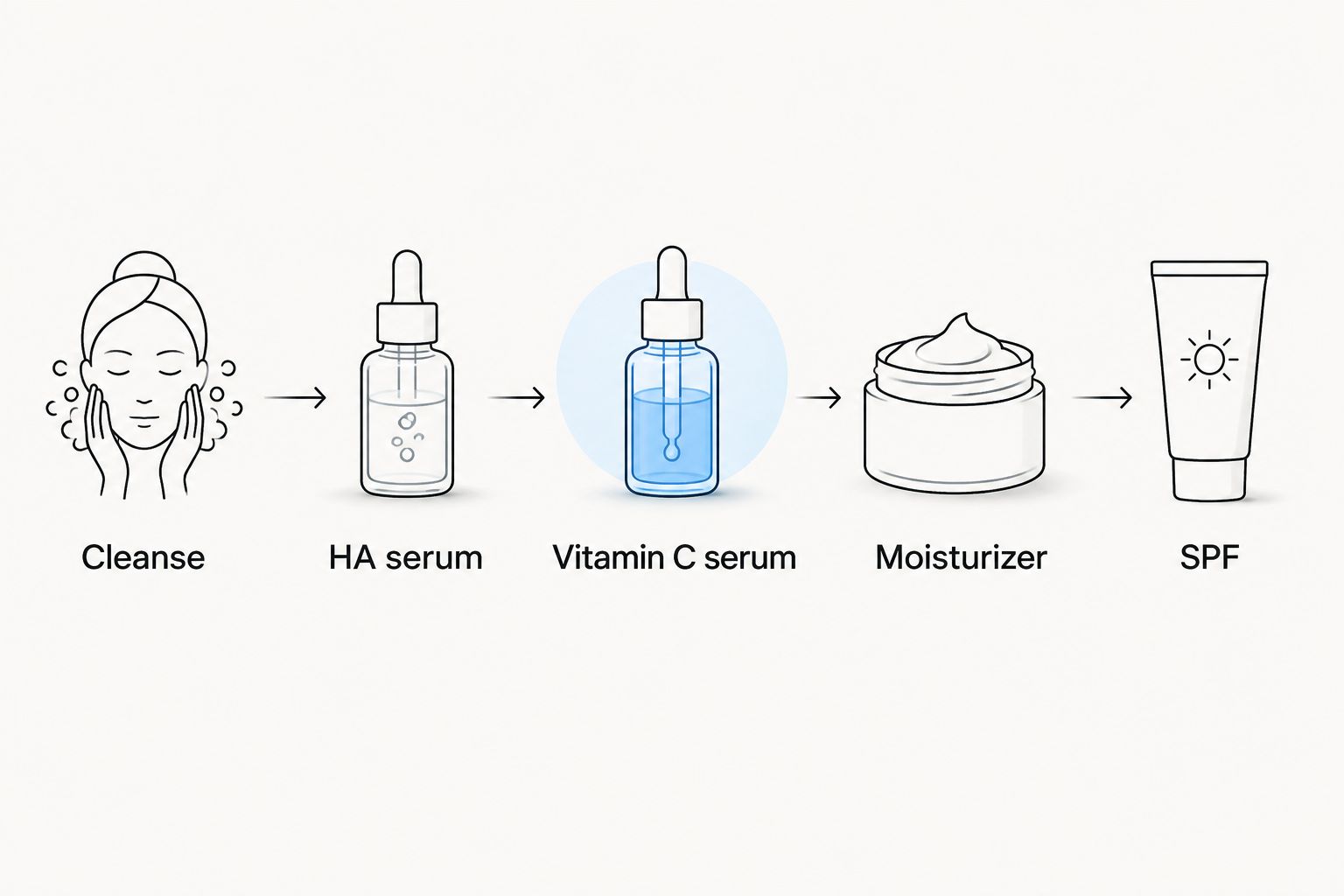
Applying vitamin C and hyaluronic acid serum in the wrong order is the single biggest reason people give up on both ingredients: the serum pills, the skin stings, or the vitamin C oxidizes before it does anything useful. Layer hyaluronic acid serum first, let it absorb, then apply vitamin C serum on slightly damp skin, and both actives work instead of fighting each other on the surface.
- Layering hyaluronic acid serum with vitamin C works best AM, HA first then vitamin C, 60 seconds apart.
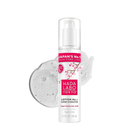
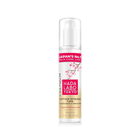
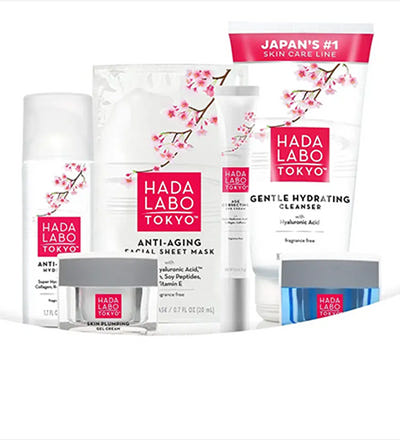
- Hada Labo Tokyo Concentrated Water Serum hydrates first so vitamin C absorbs instead of sitting on dry skin.
- Skip vitamin C at night in 2026 routines — use hyaluronic acid serum alone to avoid pilling under night cream.
- Pilling under makeup usually means too much product, not the wrong combination.
- SPF locks in the pairing; without it, vitamin C's antioxidant benefit drops fast in daylight.
Why this matters
Hyaluronic acid serum pulls water into the skin. Vitamin C serum is an antioxidant that works best on well-hydrated skin and needs a lower pH to stay active. Put them on in the wrong sequence and you get one of two outcomes: the vitamin C serum sits on top of a heavy layer and pills into little rolls, or it stings because it's hitting dry, unbuffered skin.
The fix isn't complicated. Hyaluronic acid serum goes on first, always — it's water-based and thin, so it sinks in fast and gives the vitamin C serum a hydrated surface to work with. Get the Hada Labo Tokyo Concentrated Water Serum into skin, wait roughly a minute, then move to vitamin C. That's the whole workflow — the rest of this guide is timing and troubleshooting.
Before you start
- Patch test any new vitamin C serum for 48 hours on the inner arm before applying it to your face — vitamin C concentration varies by product and reactions show up fast.
- Have your SPF ready before you start the AM routine. Vitamin C without daytime sun protection wastes the antioxidant benefit — it needs SPF to actually reduce UV-related free radical damage.
- The gotcha: don't mix vitamin C serum directly into your hyaluronic acid serum in your palm to "layer them at once." Vitamin C is pH-sensitive; mixing it with another formula before application changes its stability and can cause more irritation than applying them separately, one at a time.
Set up your AM hydration base
- Cleanse with a gentle, low-foam cleanser. Skip anything with exfoliating acids on the same morning you're introducing vitamin C for the first time.
- Apply Hada Labo Tokyo Concentrated Water Serum to damp skin, pressing rather than rubbing it in. This serum carries three molecular weights of hyaluronic acid, so it hydrates at multiple skin depths instead of sitting on the surface.
- Wait 60 seconds. Skin should feel tacky-hydrated, not wet, not tight.
Expected result: skin feels plump and slightly damp, with no white residue or slip left on the surface.

Layer in vitamin C correctly
- Dispense a pea-sized amount of vitamin C serum into your palm.
- Pat it across cheeks, forehead, and chin — avoid the eye area unless the product is formulated for it.
- Let it sit for 60-90 seconds before moving to moisturizer. This gives the vitamin C time to start working at the correct pH instead of getting diluted immediately.
Expected result: no pilling, no white flakes forming under your fingertips, and a slight brightening sensation within a few minutes for most users.
If you're deciding between a straight hydrator and a serum built with brightening actives, the table below breaks down what each layer is actually doing.
| Product type | Primary job | Best layered | Best for |
|---|---|---|---|
| Hyaluronic acid serum (e.g. Concentrated Water Serum) | Deep hydration, plumping | First, on damp skin | Dehydrated, tight-feeling skin |
| Vitamin C serum | Antioxidant, brightening | Second, after HA absorbs | Dullness, uneven tone |
| Firming serum (e.g. 3D Lifting Serum) | Skin renewal, firmness | AM or PM, after HA | Loss of elasticity, fine lines |
Seal with SPF
- Apply moisturizer once the vitamin C serum has absorbed — don't skip this step even in humid weather, since vitamin C formulas can be drying for some skin types.
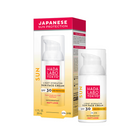
- Finish with the SPF 50 face sun cream as the last step, every morning, regardless of season.
Expected result: a full AM stack that hydrates, brightens, and protects, with no single step canceling out another.
PM variant: hyaluronic acid without vitamin C
Most dermatology guidance in 2026 still points the same direction: save vitamin C for mornings and let hyaluronic acid serum do the overnight work alone. Skin repairs itself at night, and a heavier vitamin C layer on top of night cream is more likely to pill or feel greasy without adding benefit while you sleep.
- Cleanse thoroughly to remove sunscreen and the day's buildup.
- Apply hyaluronic acid serum the same way as the morning — damp skin, 60 seconds to absorb.
- Follow with a night cream or the Wrinkle Corrector Face Serum if your routine targets fine lines specifically.
Expected result: skin wakes up hydrated without the tightness or flaking that comes from over-layering actives overnight.
Troubleshooting
- Serum pills under makeup: you're applying too much product per layer, not combining the wrong ingredients. Cut each layer to a pea-sized amount and give 60 seconds between them.
- Stinging after vitamin C: the concentration may be too high for a first-time user, or you applied it before the hyaluronic acid serum had time to hydrate the skin. Wait longer between layers or alternate vitamin C to every other morning for the first two weeks.
- Skin feels tight by midday: you're skipping moisturizer after the vitamin C step. Hyaluronic acid pulls in moisture but needs an occlusive layer on top to hold it, especially in low-humidity climates.
- No visible brightening after a month: vitamin C serums typically need 8-12 weeks of consistent daily use before tone changes are visible — check you're applying it daily, not just on "skincare days."
- Breakouts along the jaw: switch cleansers before blaming the serums; a residue-heavy cleanser is the more common cause of jawline congestion than a hydrating serum.
Customize your routine
Once the base layering hyaluronic acid serum with vitamin C routine is steady, expand it. Add an eye cream for the under-eye area, since neither the HA serum nor the vitamin C serum is formulated for that thinner skin. Rotate in a firming serum like 3D Lifting Serum on nights when you're not using a retinol-adjacent product, and check the guide on face serums for plumping and firming skin for how to sequence a third active without overloading your skin barrier.


Verdict: for 2026, the Hada Labo Tokyo Concentrated Water Serum paired with a vitamin C booster serum, in that order, every morning, is the layering routine that avoids pilling and gets both ingredients working — hyaluronic acid serum hydrates, vitamin C brightens, and neither cancels the other out when the order is right.
“Hyaluronic acid serum goes on first, always — it gives vitamin C a hydrated surface to work with instead of dry skin to fight.”
FAQ
What's the best order for layering hyaluronic acid serum with vitamin C?
Apply hyaluronic acid serum first on damp skin, wait about 60 seconds, then apply vitamin C serum. Hyaluronic acid hydrates the surface so vitamin C absorbs evenly instead of sitting on dry skin.
Can I use hyaluronic acid serum and vitamin C serum in the same routine every day?
Yes, most people can use both daily in the morning. First-time vitamin C users often start every other day for two weeks to gauge sensitivity before going daily.
Is it better to use vitamin C in the morning or at night?
Morning is standard because vitamin C pairs with SPF to fight UV-related free radical damage during the day. At night, most 2026 routines skip vitamin C and stick to hyaluronic acid serum plus a night cream.
Does layering hyaluronic acid serum with vitamin C cause pilling?
Pilling usually comes from applying too much product per layer, not from combining the two ingredients. Use a pea-sized amount of each and wait 60 seconds between layers.
How long should I wait between hyaluronic acid serum and vitamin C serum?
Around 60 to 90 seconds is enough for the hyaluronic acid serum to absorb before applying vitamin C on top.
Do I still need moisturizer if I'm using both serums?
Yes. Hyaluronic acid pulls in moisture but needs an occlusive moisturizer on top to seal it in, especially in dry or low-humidity conditions.
Can sensitive skin handle vitamin C and hyaluronic acid together?
Most sensitive skin tolerates hyaluronic acid serum well since it's hydrating rather than active. Vitamin C is the ingredient to patch test first, starting at a lower frequency before daily use.
Should SPF go before or after vitamin C in the morning?
SPF always goes last, after moisturizer. Vitamin C works underneath as an antioxidant layer, and SPF is the step that protects the skin from UV exposure on top of it.
One last thing
The order matters more than the brand. Skin that's dehydrated first will make any vitamin C serum sting or pill, regardless of price point — hydrate with a hyaluronic acid serum before you reach for the vitamin C bottle, every single morning in 2026, and the rest of the routine falls into place.


