
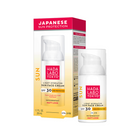


Yes, you can use SPF moisturizer at night if your skin tolerates it, but its UV protection adds no benefit while you sleep in darkness. A moisturizer without SPF is the simpler bedtime choice; applying SPF before bed also does not replace fresh sunscreen before daytime exposure.
- Can you use SPF moisturizer at night? Yes, but sunscreen filters offer no UV-protection benefit in darkness.
- Choose a comfortable moisturizer without SPF for your evening routine; hyaluronic acid supports hydration.
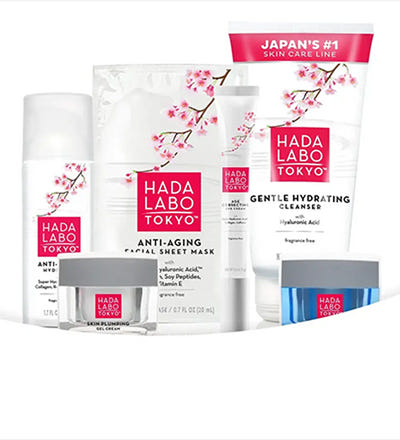
- Hada Labo Tokyo skincare suits hydration-focused routines inspired by Japanese skincare rituals.
- Cleanse away daytime sunscreen before bed and apply fresh sun protection before daytime exposure.
Can you use SPF moisturizer at night?
Using an SPF moisturizer at bedtime is generally acceptable, but unnecessary for sun protection. Its moisturizing ingredients still work at night. The SPF component simply has no sunlight to protect you from in a dark bedroom.
The practical distinction is between applying a clean layer after washing and leaving the day's sunscreen, makeup, and accumulated residue on your face. Those are different habits.
| Evening option | Best for | Main benefit | Main limitation |
|---|---|---|---|
| SPF moisturizer after cleansing | An occasional night when it is your only suitable moisturizer | Provides the formula's moisturizing benefits | UV protection serves no purpose in darkness |
| Moisturizer without SPF | A regular bedtime routine | Lets you choose hydration and texture without sunscreen filters | Does not replace daytime sunscreen |
| Leaving daytime sunscreen on overnight | Not recommended as an evening routine | Avoids an application step | Skips removal of the day's residue |
For daytime layering, see the guide to applying SPF moisturizer over a serum. Bedtime use and daytime protection require different decisions.
Why this matters for your 2026 routine
You do not need to panic if you reach for your daytime cream before bed. The useful question is whether the formula feels comfortable and gives your skin enough moisture—not whether the packaging says day or night.
Separating hydration from sun protection makes your routine easier to manage. At night, choose products for cleansing, comfort, and any specific treatment needs. During daylight exposure, choose sunscreen for its protection and follow its application directions.
Do not turn an unnecessary step into a safety myth. SPF moisturizer is not automatically harmful at night, and a night cream is not automatically a better moisturizer for every person.
Does SPF moisturizer stop working after dark?
The moisturizer does not switch off when the sun goes down. Humectants such as hyaluronic acid help attract and hold water, while other moisturizing ingredients help soften skin or limit moisture loss. Those functions are not restricted to daytime.
Sunscreen filters have a different job: protecting against ultraviolet radiation. In darkness, that protection has nothing to act against. This makes the filters unnecessary at bedtime, not inherently dangerous.
Nor do sunscreen ingredients need to be removed because skin must breathe overnight. That explanation confuses normal skin function with breathing through the lungs. Cleanse to remove sunscreen, makeup, and residue—not to give your pores access to air.
Your skin's response still matters. If any moisturizer causes burning, itching, or a persistent rash, stop using it rather than assuming the reaction is normal because the product includes SPF.
Is SPF 50 different from SPF 30 at bedtime?
Neither SPF 30 nor SPF 50 provides an extra skincare benefit simply because you apply it before sleeping in darkness. A higher SPF rating describes sunburn protection under test conditions; it does not measure moisturizing strength or overnight skin repair.
Do not choose a bedtime cream by comparing SPF numbers. Compare how the complete formula feels on your skin, whether it leaves you comfortable, and whether its other ingredients fit your routine.
The same distinction applies to sunscreen texture. A rich sunscreen is not necessarily more hydrating than every lighter moisturizer, and a fluid sunscreen is not automatically unsuitable for dry skin. SPF and texture describe different characteristics.
When daylight exposure begins, the protection rating becomes relevant again. For outdoor use, the American Academy of Dermatology recommends a broad-spectrum, water-resistant sunscreen with SPF 30 or higher.
Why your experience with SPF moisturizer varies
An SPF label alone cannot tell you whether a cream will feel pleasant overnight. These formula and routine differences explain why one product feels comfortable while another does not:
- Texture: A cream, lotion, or gel leaves a different finish. Choose the texture you enjoy wearing rather than assuming bedtime requires a heavy layer.
- Moisturizing ingredients: Hyaluronic acid supports hydration, but the full formula determines how the product feels and performs on your skin.
- Other active ingredients: Retinol, exfoliating acids, and other treatments have their own directions. SPF does not cancel those instructions.
- Individual tolerance: Fragrance, sunscreen filters, preservatives, or other ingredients can disagree with particular skin. The SPF number does not predict every reaction.
- What is already on your face: A fresh application after cleansing is different from adding cream over makeup, sweat, and sunscreen worn throughout the day.
- Actual light exposure: A dark bedroom and a daytime commute are different situations. Base sun protection on exposure, not the word night on your schedule.
Keep the decision simple: if a formula stings, feels unpleasant, or leaves your skin uncomfortable, choose another suitable moisturizer. You do not need to identify sunscreen filters as the cause before stopping an irritating product.
A simple 2026 evening routine without unnecessary SPF
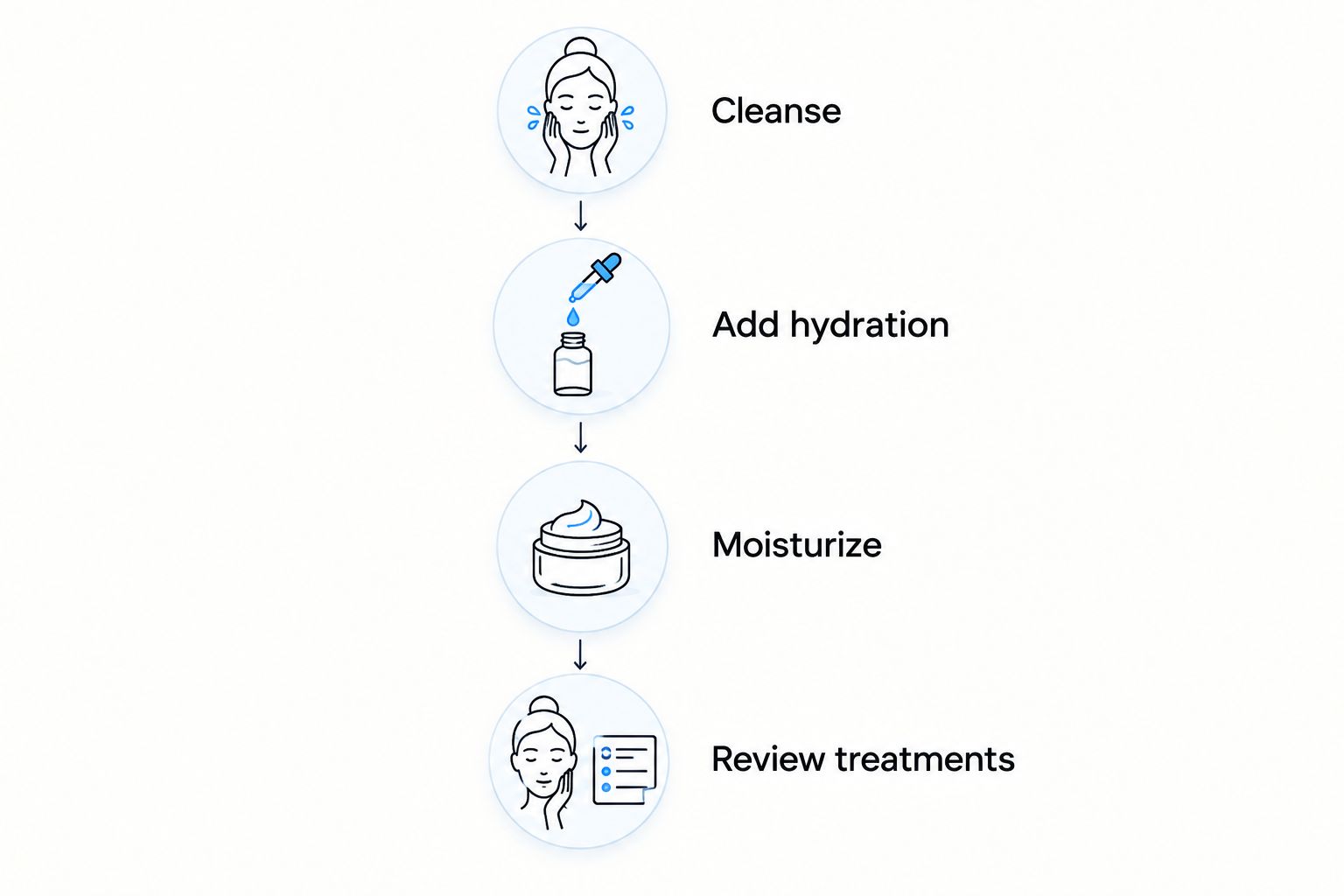
You do not need an elaborate replacement routine. Cleanse, add optional hydration, and moisturize is a useful starting point; include a treatment only when it serves a specific need and fits its directions.
- Cleanse. Remove daytime sunscreen and makeup with a cleanser suited to the products you wore. Follow the cleanser's directions and rinse thoroughly when required.
- Add hydration. If you enjoy a hydrating lotion or hyaluronic acid serum, apply it according to its instructions. This step is optional, not a requirement for every skin type.
- Moisturize. Apply a suitable moisturizer without SPF. Choose comfort over a particular texture or a night label.
- Review treatments. Follow any separate treatment instructions rather than automatically adding another active ingredient. Prescription directions take priority over a general routine.
If your skin feels comfortable after cleansing and moisturizer, stop there. Adding layers solely because it is nighttime makes it harder to identify which product helps and which one irritates.
A gentle routine also means resisting the urge to scrub away every trace of a sunscreen's feel. Use an appropriate cleansing method, not force, hot water, or repeated washing until your skin feels tight.
What should you look for in an evening moisturizer?
Start with what your skin needs after cleansing. If it feels tight, look for a moisturizing formula you find comfortable; if heavier products feel unpleasant, consider a lighter texture. Neither choice requires an anti-aging claim or a complicated ingredient list.
If you are simplifying your 2026 skincare routine, Hada Labo Tokyo Absolute Smoothing & Moisturising Cream 50ml is described as a light, airy day-and-night cream enriched with hyaluronic acid. Best for: readers seeking a lightweight hydrating cream intended for both morning and evening use.
Its relevant strength is that day-and-night use and hydrating texture. Its limitation is equally important: a hydrating cream does not replace a sunscreen carrying an appropriate protection label, and a product description cannot guarantee individual tolerance.
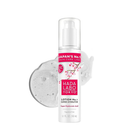
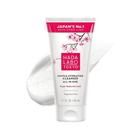
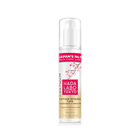
Hada Labo Tokyo is best for readers seeking Japanese-inspired, hydration-focused skincare. Choose the individual formula by its directions and your skin's response, not by expecting every product in a hydration range to serve the same purpose.
Do you need to wash off SPF moisturizer before bed?
Cleanse off the sunscreen you wore during the day before beginning your evening routine. You are removing the day's product film and residue, not neutralizing an ingredient that becomes toxic after sunset.
One suitable cleanser is enough when it removes what you wore without leaving your skin uncomfortable. An additional cleansing step is useful when your makeup or resistant sunscreen requires it, but double cleansing is not compulsory for every face every night.
If you have just washed your face and accidentally applied SPF moisturizer instead of your usual cream, you do not need to wash again solely because it contains SPF. Leave a comfortable formula alone; remove it gently if it irritates your skin.
For persistent burning, swelling, or a recurring rash, stop using the suspected product and seek medical advice. Repeatedly trying it at a different time of day is not a solution to a reaction.
Does nighttime SPF protect you the next morning?
A bedtime application does not replace fresh sunscreen before daytime exposure. Overnight wear is not a reliable way to prepare for a morning walk, commute, or outdoor exercise.
Your 2026 daytime routine should follow the sunscreen's label. The American Academy of Dermatology advises applying sunscreen about 15 minutes before going outdoors and reapplying approximately every 2 hours outdoors, as well as after swimming or sweating.
If you work nights and sleep during the day, think about exposure rather than your work schedule. Sunlight during the journey home still calls for protection; sleeping in a darkened room does not call for a fresh sunscreen layer.
A window-side daytime sleeping area is also different from a dark bedroom because some UVA passes through ordinary window glass. Curtains or blinds reduce exposure without making sunscreen an automatic requirement for every sleeping situation.
FAQ
Can I use SPF moisturizer at night if I have no other cream?
Yes, you can use a tolerated SPF moisturizer at night when it is your only suitable moisturizer. Apply it after cleansing, but do not count that application as sun protection for the next day.
Is it bad if I accidentally sleep in SPF moisturizer?
An occasional night in a tolerated SPF moisturizer is not automatically harmful. If it was worn all day, return to cleansing before bed rather than making overnight wear your routine.
Will SPF moisturizer clog my pores overnight?
SPF moisturizer does not automatically clog pores because you wear it at night. Breakouts depend on the complete formula and your skin's response, so stop using a product that repeatedly causes problems.
Is SPF 50 too strong to wear at night?
SPF 50 is a sun-protection rating, not a measure of overnight harshness. Its UV protection is unnecessary in darkness, while comfort depends on the complete formula.
Can I use the same moisturizer in the morning and evening?
Yes, you can use the same suitable moisturizer in the morning and evening. If it does not provide appropriate sun protection, apply sunscreen separately before daytime exposure.
Can hyaluronic acid replace sunscreen at night or during the day?
Hyaluronic acid cannot replace sunscreen during daytime exposure because hydration and UV protection are different functions. At night in darkness, choose hydration for comfort rather than looking for sun protection.
Which Hada Labo Tokyo skincare should I choose for bedtime?
Choose Hada Labo Tokyo skincare labelled for evening or day-and-night use that suits your hydration needs. Check the individual directions and ingredient list, especially when your routine includes treatments or your skin reacts easily.
Do I need sunscreen at night because I use my phone?
Ordinary phone use at night is not a reason to apply sunscreen for UV protection. Focus on moisturizing comfort at bedtime and appropriate sunscreen use before daylight exposure.
One last thing
Day cream and night cream are usage cues, not guarantees of suitability. A comfortable day-and-night moisturizer can keep your routine simple, while a cream with an impressive name can still be the wrong fit for your skin.
The most useful change to your 2026 routine is separating two decisions: what keeps your skin comfortable after cleansing, and what protects it during daylight exposure. Save SPF for the second job.


