


Reapply SPF moisturizer every 2 hours while you are outdoors, and sooner after swimming, heavy sweating, or towel-drying. The same rule applies to SPF 30 and SPF 50: a higher protection factor does not extend the reapplication interval. For your 2026 routine, treat hydration and sun protection separately—skin that still feels moisturized does not prove that your sunscreen coverage remains intact.
- How often reapply SPF moisturizer? Every 2 hours outdoors, and sooner after swimming, heavy sweating, or towel-drying.
- SPF 50 does not last longer between applications than SPF 30.
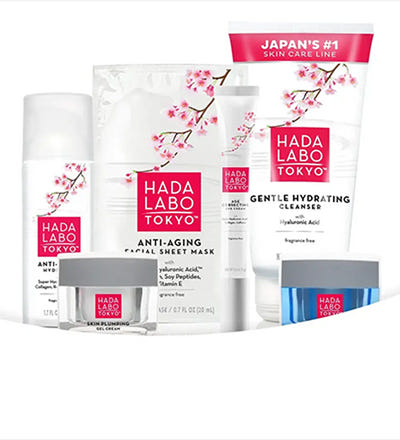
- Hada Labo Tokyo SPF skincare suits readers seeking hyaluronic acid hydration alongside sun protection.
- Indoors, assess daylight exposure; a morning application is not an all-day outdoor protection plan.
How often should you reapply SPF moisturizer during the day?
Reapply every 2 hours during outdoor exposure, regardless of whether your sunscreen also works as a moisturizer. The American Academy of Dermatology recommends this outdoor schedule, together with reapplication after swimming or sweating. Follow the directions on your own product as well.
These face-care options illustrate the distinction between protection level and wear time:
| Face-care option | Best for | What the supplied description establishes | Limitation |
|---|---|---|---|
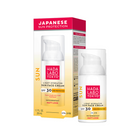
| Hada Labo Tokyo Face Sun Cream SPF 50 50ml | Readers seeking SPF 50 face care with hyaluronic acid hydration | SPF 50 and Super Hyaluronic Acid | SPF 50 does not remove the need to reapply; check the label for water-resistance directions |
| Hada Labo Tokyo Face Sun Cream SPF 30 50ml | Readers seeking SPF 30 face care described as lightweight | SPF 30, Super Hyaluronic Acid, and a lightweight, fast-absorbing formula | SPF 30 still requires sufficient application and regular outdoor reapplication |
Neither SPF number tells you that one application will cover your whole day. Choose the formula you can apply properly, then follow its directions consistently.
Why this matters
An SPF moisturizer combines two jobs, but those jobs do not have the same renewal signal. Dryness tells you something about comfort; it does not measure UV protection. Waiting until your face feels tight is therefore the wrong way to decide when to reapply.
For this 2026 guide, the category guidance comes from the American Academy of Dermatology's sunscreen recommendations and the US Food and Drug Administration's sunscreen-use and labeling guidance. Their relevant advice covers outdoor reapplication, application before exposure, and the limits of water resistance. Your product label remains the source for its specific instructions.
Make reapplication part of your outdoor plan, not a response to visible redness. Sunscreen belongs alongside shade, protective clothing, and sunglasses—not in place of them.
Outdoor wear: every 2 hours
If you spend the day walking, gardening, sightseeing, or sitting outside, use every 2 hours as your reapplication interval. Apply before exposure according to the label; the FDA's general advice is to apply sunscreen 15 minutes before going outdoors. Cover exposed skin evenly rather than relying on a quick dab across your cheeks.
The benefit of an SPF moisturizer is convenience: hydration and protection share one application step. The limitation is the temptation to use only your usual small moisturizer amount. Sunscreen protection depends on adequate coverage, so follow the sunscreen directions rather than your ordinary moisturizing habit.
Set a reminder when you apply. Keep the product accessible rather than leaving it at home while you spend the afternoon outside. A schedule you can follow is more useful than a protection factor you remember only at breakfast.
| Daytime situation | Reapplication decision | What not to assume |
|---|---|---|
| Continuous outdoor exposure | Reapply every 2 hours | A higher SPF buys a longer interval |
| Swimming or heavy sweating | Follow the water-resistance directions and reapply as directed | Every SPF moisturizer is water-resistant |
| Towel-drying | Reapply afterward | Drying leaves the sunscreen layer undisturbed |
| Indoors away from direct daylight | Assess exposure rather than applying an automatic outdoor schedule | Every indoor setting has the same UV exposure |
| Going outside after an indoor morning | Refresh coverage before exposure if the earlier application is old or disturbed | Morning skincare guarantees afternoon protection |
Swimming and sweating: follow the label, not just the clock
Swimming, heavy sweating, and towel-drying change the reapplication decision. Do not wait for the outdoor reminder if the label calls for earlier renewal. Towel-drying can remove sunscreen, so reapply afterward.
Water resistance is a separate claim from SPF. Under FDA labeling rules, water-resistant sunscreens specify either 40 minutes or 80 minutes of tested water resistance. Those periods are not promises of unlimited swimming protection, and they do not mean you can ignore towel-drying instructions.
The advantage of a water-resistant formula is that it is designed and tested for the stated conditions. Its limitation is that protection still requires renewal. Check the actual packaging before choosing a product for swimming or exercise; an SPF number alone does not establish water resistance.
If you exercise outdoors, plan for both events: the regular outdoor interval and the point when sweat, water, or a towel makes another application necessary. Use whichever relevant instruction calls for reapplication sooner.
Indoor wear: assess daylight exposure
You do not need to treat a day away from windows exactly like a day at the beach. Ordinary window glass blocks much UVB, but UVA can pass through. A desk beside a sunny window and an interior workspace are therefore different exposure situations.
For a practical 2026 indoor routine, ask where you sit, whether sunlight reaches your skin, and whether you will go outside later. Do not assume that being indoors eliminates exposure. Equally, do not interpret the outdoor 2-hour recommendation as a universal requirement for every windowless room.
The benefit of an SPF moisturizer indoors is a simple morning routine that prepares you for incidental exposure. Its limitation is that the morning layer should not become your entire plan for a later outdoor afternoon. Refresh your coverage before heading out when the earlier application is old, washed off, or rubbed away.
If you have a photosensitivity condition, take medication that increases sun sensitivity, or follow a dermatologist's sun-protection plan, use that individualized advice. A general lifestyle schedule does not replace it.
Why SPF moisturizer reapplication varies
The outdoor baseline stays the same, but these factors determine whether you need an earlier application or a different plan:
- Time outdoors: Continuous exposure calls for the regular 2-hour schedule. Moving from an indoor morning to an outdoor afternoon calls for a fresh assessment of coverage.
- Swimming and heavy sweating: These make the product's water-resistance instructions relevant. Do not infer those instructions from SPF alone.
- Towel-drying and washing: Both can remove the applied layer. Renew sunscreen after towel-drying and before further exposure after washing.
- Amount and missed areas: A thin or patchy application is not corrected by waiting for the next reminder. Apply evenly from the start.
- Window exposure: Time beside sunlit glass differs from time in an interior room. Consider where daylight reaches your skin.
- Product directions: Application timing and water-resistance instructions belong to the specific formula. Read the package rather than borrowing instructions from another sunscreen.
Your skin type affects which texture feels comfortable, but it does not create a longer sunscreen interval. Oily skin still needs protection, and dry skin feeling comfortable does not prove continued coverage.
How do you reapply SPF moisturizer without restarting skincare?
You do not need to repeat your cleanser, serum, and moisturizer routine every time you renew sunscreen. Reapplication concerns the protective layer. Keep the process focused so that it remains manageable during your day.
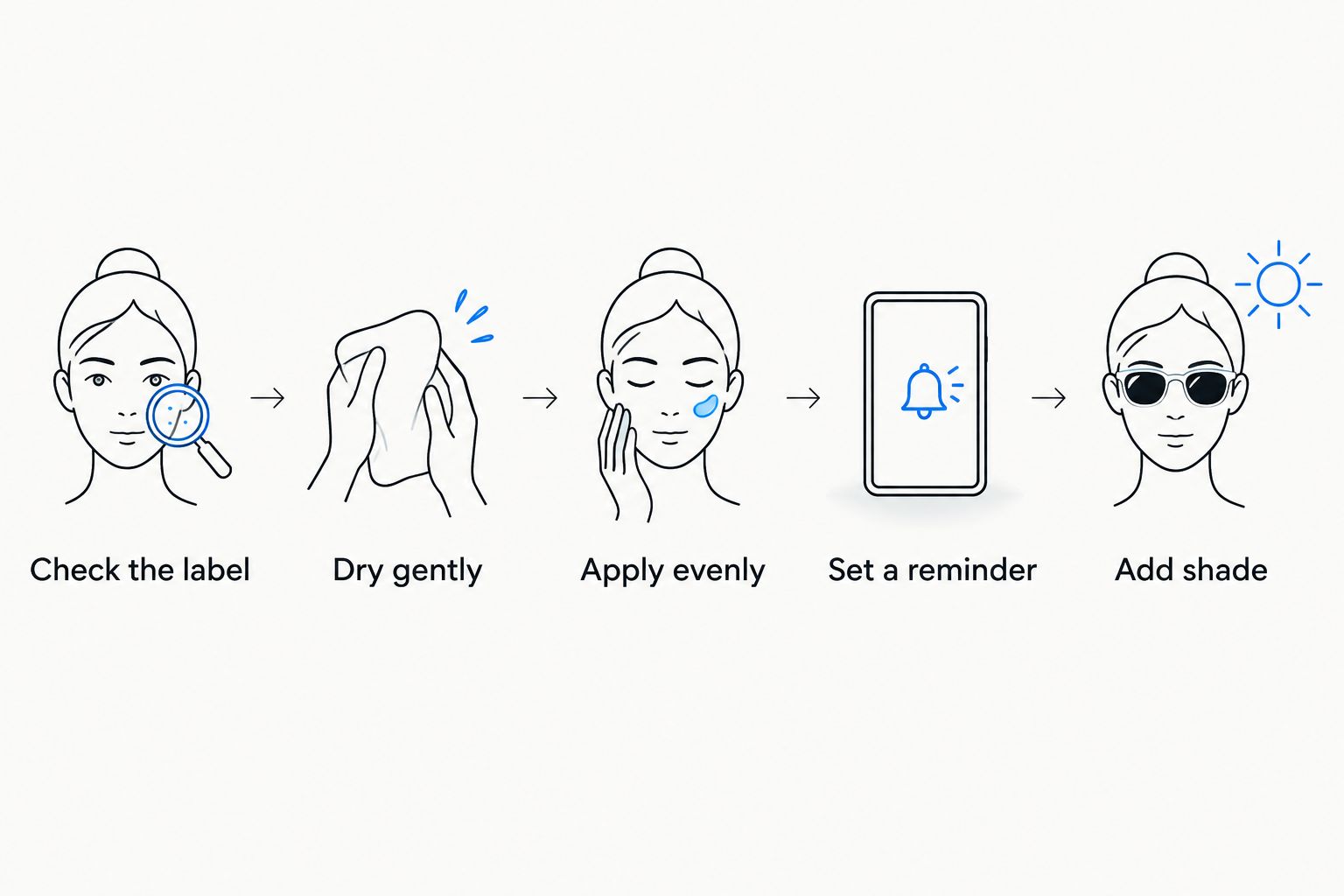
For your 2026 daytime routine, use this sequence:
- Check the label. Confirm the application directions, water-resistance claim, and any precautions before relying on the formula outdoors.
- Dry gently. After swimming or sweating, follow the product's instructions and towel gently rather than scrubbing your face.
- Apply evenly. Use the directed amount across exposed skin. Include the hairline, ears, and neck where appropriate, while following eye-area precautions.
- Set a reminder. During continued outdoor exposure, plan the next application for 2 hours later unless an earlier trigger occurs.
- Add shade. Combine sunscreen with clothing and shade instead of asking the cream to do every part of sun protection.
A hydrating sunscreen can make that repeat step fit naturally into your routine. Hada Labo Tokyo SPF skincare suits readers seeking hyaluronic acid hydration alongside sun protection. The supplied face-cream descriptions establish those features; they do not establish an extended wear interval or a reason to skip reapplication.
Choose between the face creams by the protection level and texture information provided, then check the package for the remaining directions. Neither option is a substitute for shade or protective clothing during prolonged exposure.


Does SPF 50 moisturizer last longer than SPF 30?
Every 2 hours outdoors applies to both SPF 50 and SPF 30. SPF describes a tested level of protection against sunburn-producing UV radiation, not a number of hours you can remain outside. Do not convert the label number into a personal exposure timer.
The useful distinction is protection level, not reapplication frequency. Higher SPF does not cancel missed areas, an inadequate amount, or sunscreen removed by water and towels.
Should you reapply SPF moisturizer over makeup?
Every 2 hours outdoors still applies when you wear makeup. Makeup does not remove the need to renew sunscreen, and SPF in foundation should not be treated as a guarantee of adequate coverage. Use a reapplication method that lets you follow your sunscreen's directions across exposed skin.
The trade-off is practical: renewing cream can disturb your makeup. For prolonged outdoor time, simplify the makeup you wear and prioritize an even sunscreen application over preserving the finish.
Can you mix SPF moisturizer with serum before reapplying?
Every 2 hours outdoors means renewing the sunscreen itself, not a homemade mixture. Do not blend your SPF moisturizer with serum, oil, or another cream in your hand. Mixing changes the formula as applied, so you cannot assume the labeled protection remains the same.
If you want extra hydration, apply your separate skincare first and follow the sunscreen's directions afterward. Keep hydration steps separate from the layer responsible for sun protection.
FAQ
How often should I reapply SPF moisturizer outside?
Reapply SPF moisturizer every 2 hours outdoors, and sooner after swimming, heavy sweating, or towel-drying according to the label. An SPF moisturizer follows sunscreen reapplication rules even if your skin still feels hydrated.
Do I need to reapply SPF moisturizer every 2 hours indoors?
The outdoor 2-hour schedule is not a universal rule for every indoor setting. Assess time near sunlit windows and refresh coverage before later outdoor exposure when your earlier layer is old or disturbed.
Does SPF 50 mean I can wait longer to reapply?
No, SPF 50 does not extend the outdoor reapplication interval beyond every 2 hours. SPF measures protection level, not wear time.
Should I reapply sunscreen after drying my face with a towel?
Yes, reapply sunscreen after towel-drying. A towel can remove sunscreen, so do not wait for the next scheduled outdoor application.
How soon before going outside should I apply SPF moisturizer?
The FDA's general sunscreen advice is to apply 15 minutes before going outdoors. Follow your specific product's directions for application and use.
Can I use ordinary moisturizer when my SPF moisturizer wears off?
Ordinary moisturizer does not replace sunscreen protection unless it carries an appropriate SPF claim and is used according to its directions. Renew sunscreen for UV protection and use separate moisturizer for hydration if needed.
Is a water-resistant SPF moisturizer waterproof?
No, water-resistant sunscreen is not waterproof. FDA water-resistance labeling uses 40-minute or 80-minute periods, and you still need to follow reapplication and towel-drying directions.
One last thing
Your skin can feel hydrated while your sunscreen layer needs renewal. That is the distinction to remember when choosing how often to reapply an SPF moisturizer in 2026. Comfort is useful feedback for moisturizing, but it is not a sunscreen timer.
Keep your sunscreen somewhere you will actually reach it during the day. Before leaving for prolonged outdoor time, check the label, apply evenly, and set a reminder. Reapply sooner when water, heavy sweat, or towel-drying calls for it—and make shade part of the same plan.


