
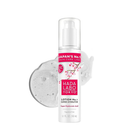
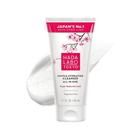
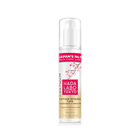


Judge Hada Labo Premium Lotion absorption time by whether the wet layer has settled and the next product spreads evenly, not by a fixed countdown. Slight tackiness is different from an unabsorbed puddle, so you do not need to wait for a completely powder-dry finish. For your 2026 routine, use surface feel to decide when to move on to moisturizer.
- Judge Hada Labo Premium Lotion absorption time by surface feel, not a fixed countdown.
- A slightly tacky finish does not measure how much hyaluronic acid has entered your skin.
- Use a thin, even layer; troubleshoot excess lotion before adding more skincare.
- Wait for visible wetness to settle before layering moisturizer or sunscreen.
How long does Hada Labo Premium Lotion take to absorb?
Move to the next step when the lotion is evenly distributed, no longer visibly pooling, and your moisturizer spreads without pushing the layer around. This is a practical layering check, not a measurement of ingredient penetration.
Check the exact bottle you use. The Premium Lotion Intense Super Hydrator 150ml page identifies the shop's product; instructions for a similarly named lotion are not automatically interchangeable.
Use these steps rather than choosing an arbitrary waiting interval:
- Read the label. Follow the application directions on your own bottle, including any guidance about skin preparation.
- Spread evenly. Apply a thin layer across the intended area instead of leaving concentrated patches.
- Check the surface. Look for pooled liquid and gently assess whether the layer still moves under your fingertips.
- Layer carefully. Apply moisturizer gently once the wet layer settles. If it drags or forms rolls, pause and simplify the application.
The useful endpoint is a workable surface. You are checking whether your skincare layers cooperate, not proving that every ingredient has travelled into the skin.
Why this matters
Waiting for lotion to disappear completely can turn a straightforward hydration routine into a frustrating exercise. A cosmetic formula can leave a film on the surface while still serving its intended moisturizing role. That film is not automatically a fault.
The opposite mistake is layering over obvious excess. If liquid is still collecting around your nose or sitting in streaks, spreading another product over it makes the application harder to judge.
For a practical 2026 skincare routine, separate three questions: is the lotion spread evenly, is the finish comfortable, and does the next layer apply properly? These questions are more useful than treating a stopwatch reading as a universal product specification.
What does absorbed lotion actually feel like?
In everyday skincare language, absorbed usually means that a product has settled enough to stop feeling wet or mobile. Scientifically, surface drying and ingredient penetration are different processes. Touch cannot tell you how much of an ingredient has entered the skin.
Hyaluronic acid is a humectant: it helps bind water. A hydrating formula therefore does not need to leave the same finish as a mattifying product to have a place in your routine.
The following comparison helps you distinguish normal texture from an application problem. These are observations, not timed performance claims about a particular bottle.
| Surface state | What you can observe | Best for | Benefit | Limitation or next move |
|---|---|---|---|---|
| Visibly wet | Liquid moves or collects in patches | Identifying excess before layering | Makes uneven application easy to spot | Spread the layer evenly and let the wetness settle |
| Slightly tacky | Mild grip without liquid pooling | Assessing a comfortable hydrating finish | Distinguishes tackiness from a wet layer | Tackiness alone cannot measure absorption |
| Evenly settled | No pools; the next layer spreads evenly | Moving to moisturizer | Gives you a practical layering endpoint | Does not prove complete ingredient penetration |
| Rolling or pilling | Small rolls form as you rub | Identifying a layering problem | Shows that the application needs adjustment | Does not identify the responsible ingredient |
| Stinging or burning | Discomfort rather than simple grip | Recognizing when to stop | Separates a safety concern from texture | Stop using the product rather than waiting longer |
A smooth application is helpful, but it is not a laboratory test. Likewise, a tacky finish is not proof that a lotion is ineffective. Judge comfort and layer compatibility separately from the word absorption.
Why lotion settling time varies
There is no useful single waiting rule for every application. The conditions on your face and the amount of product sitting on it change the surface you are assessing.
These general skincare factors explain why repeating exactly the same routine can still feel different:
- Amount applied. A thicker layer leaves more material on the surface. Start with the label's guidance instead of adding repeated layers simply because the skin still feels tacky.
- Water on the skin. Visible water mixes with the product you spread and makes it harder to distinguish lotion from surface moisture. Follow the bottle's instructions about damp or dry application.
- Products underneath. Existing skincare changes the surface onto which you apply lotion. Troubleshoot the lotion on a simpler routine before judging an entire stack.
- Distribution. Product concentrated in small areas feels different from the same application spread evenly. Check around facial contours for collecting liquid.
- Rubbing and later layers. Repeated rubbing can disturb a cosmetic film. If rolling appears only after moisturizer or makeup, examine that combination rather than assuming the lotion never absorbed.
For troubleshooting in 2026, change one application variable at a time. Otherwise, a better finish will not tell you whether the improvement came from using less lotion, changing the layer beneath it, or applying moisturizer more gently.
How should you apply lotion before moisturizer?
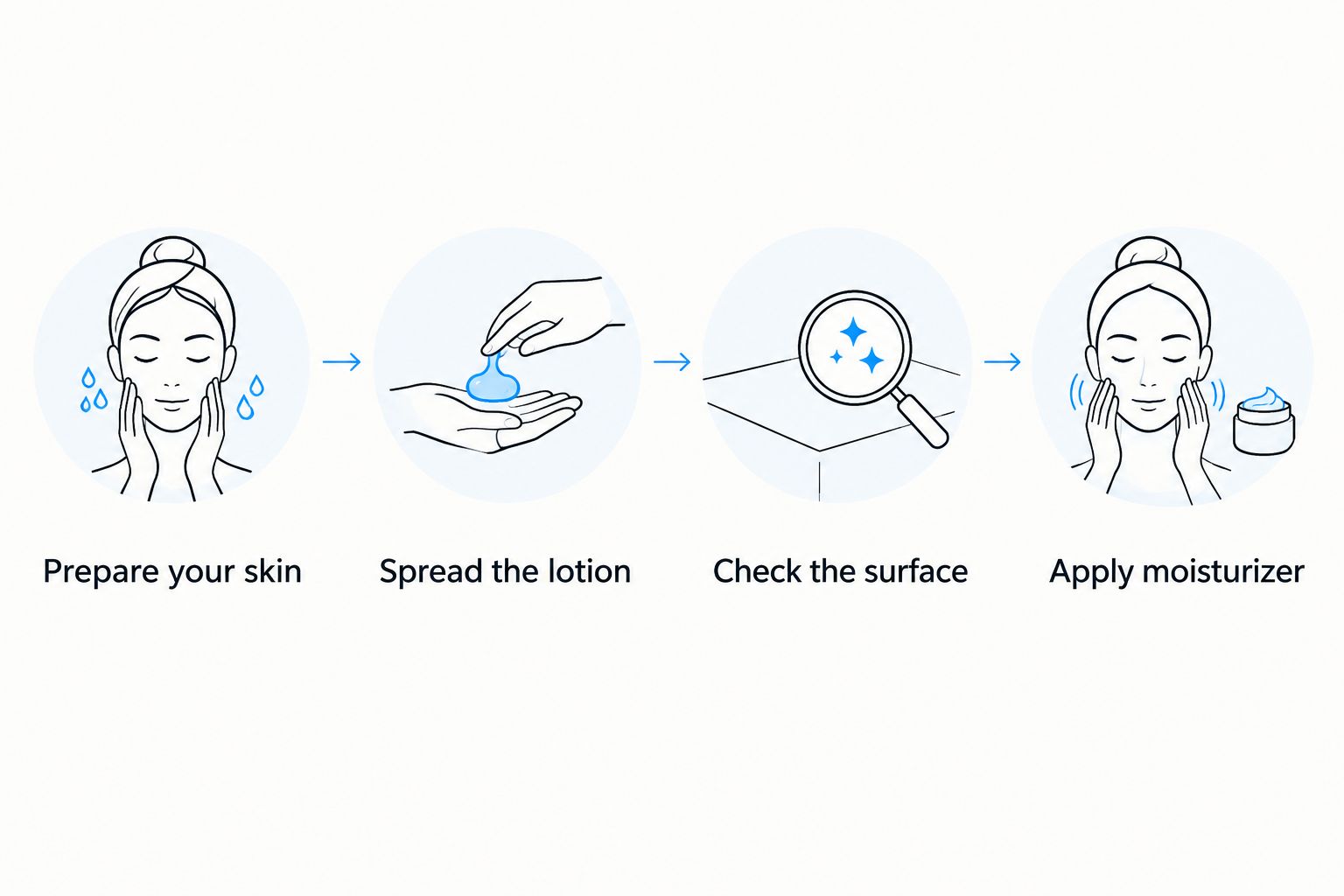
Keep the hydration step simple: prepare your skin, spread the lotion evenly, assess the surface, then apply moisturizer. Follow any more specific directions on the product packaging. Do not replace those directions with a routine copied from another formulation.
Prepare your skin
Cleanse as appropriate for your routine and remove cleanser according to its instructions. Avoid leaving cleanser residue and then interpreting the resulting feel as lotion stickiness. If your lotion directions specify damp skin, aim for that condition rather than visible droplets.
You do not need to scrub the skin dry to prove that a hydrating layer works. The goal is an application surface that matches the instructions and lets you see what the lotion itself is doing.
Spread the lotion
Use gentle movements to distribute the product across the intended area. Check for streaks and concentrated patches before adding anything else. More product is not automatically a better hydration routine.
If dose is the recurring problem, the guide to how much hyaluronic acid serum to apply per use addresses application amount. Keep the distinction clear: serum guidance does not override your lotion's label.
Check the surface
Look first, then use a light touch if needed. Visible pooling is easier to assess than an attempt to decide whether your skin has absorbed every component. Avoid repeatedly rubbing the same area until it feels completely dry.
Apply moisturizer
Once the wet layer has settled, spread moisturizer gently. Watch whether it applies evenly or gathers into rolls. A comfortable finish and cooperative layers are the practical goals.
What should you do if the lotion stays sticky?
First check for excess product, then check the routine around it. A little grip and an uncomfortable coating are different experiences. Do not keep adding lotion in an attempt to make the existing layer disappear.
On your next application, follow the label and use only enough to distribute the product as directed. Keep the other products and application conditions consistent. This gives you a clearer comparison than changing cleanser, lotion, moisturizer and makeup together.
If the lotion feels comfortable on its own but becomes troublesome after another layer, examine the combination. Try gentler spreading and a simpler routine. Do not conclude that a specific ingredient is responsible solely because rolls appear.
The benefit of a hydrating lotion is an additional hydration step; the trade-off is another layer whose finish must suit your preferences and routine. Hada Labo Tokyo hydration skincare is best for shoppers seeking Japanese-inspired routines built around hyaluronic acid. That positioning does not promise a particular absorption speed or guarantee a matte finish.
For your 2026 routine, comfort takes priority over completing every planned step. Persistent burning, itching, swelling or a rash is not something to solve by extending the wait. Stop the product and seek medical advice if symptoms persist or are significant.
Do you need to wait until lotion is completely dry?
No: complete dryness is not a universal requirement before moisturizer. Follow the product directions and use an evenly settled surface as your practical check. A slight tacky feel without pooled liquid is different from applying cream over an obviously wet layer.
Waiting longer also does not prove that more hyaluronic acid has penetrated your skin. Surface feel can change through water evaporation and changes in the cosmetic film. Those changes are not a direct measurement of ingredient delivery.
If your moisturizer applies well over a lightly tacky finish, do not add a waiting ritual simply to reach a powder-dry texture. If the layers slide or roll, address the application rather than insisting on the same sequence unchanged.
Does sticky lotion mean it is not working?
No: stickiness alone does not establish whether a hydrating lotion is working. Assess whether the finish is comfortable and whether the product fits the rest of your routine. Texture is useful feedback, but it does not substitute for an assessment of skin condition.
A finish you dislike is still a valid reason to reconsider how you use a product. You do not need to tolerate an unpleasant coating because someone describes it as evidence of hydration. Equally, a perfectly dry finish does not prove better moisturizing performance.
For a useful 2026 comparison, keep your application conditions consistent and note what actually bothers you: wetness, grip, rolling or irritation. Naming the problem helps you choose the next move without treating all four as slow absorption.
When can you apply sunscreen or makeup afterward?
Apply the next layer when the skincare underneath is evenly settled and lets you spread it properly. Follow sunscreen directions for amount, application before exposure and reapplication. The lotion's finish does not replace those instructions.
Do not mix sunscreen with lotion to make the routine feel faster. Apply sunscreen as its own layer according to its label. Sunscreen performance depends on correct use, not on whether the earlier hydrating step feels completely invisible.
Before makeup, check for obvious wetness and avoid repeatedly working over areas that begin to roll. If the same combination keeps pilling, simplify the skincare underneath rather than adding another product to conceal the problem.
A successful morning routine does not require every layer to have an identical finish. It requires each layer to spread properly without undermining the directions for the next.
FAQ
How long should I wait after applying Hada Labo Premium Lotion?
Wait until visible wetness has settled and the next product spreads evenly, rather than following a universal countdown. Follow the directions on your exact bottle; a slight tacky finish is not the same as pooled lotion.
Is Hada Labo Premium Lotion supposed to feel sticky?
A sticky feel alone cannot establish whether the lotion is behaving correctly for your skin. Check the application amount, follow the label and distinguish mild grip from an uncomfortable coating or irritation.
Should I apply moisturizer while my lotion is still tacky?
You can use an evenly settled, slightly tacky surface as a practical layering check unless your product directions specify otherwise. If moisturizer slides, gathers or rolls, simplify the application and reassess.
Does patting lotion make it absorb faster?
Patting is an application technique, not proof of faster ingredient penetration. Use gentle movements to distribute the product and follow the bottle's directions rather than repeatedly working the skin.
Why does my lotion roll up under sunscreen?
Rolling indicates a layering or application problem, not proof that the lotion failed to absorb. Review the amount of skincare underneath, reduce repeated rubbing and keep sunscreen application consistent with its label.
Should I put lotion on wet or dry skin?
Follow the damp-or-dry application instructions on your own lotion bottle. Visible droplets make it harder to distinguish surface water from unsettled product.
Does a 150ml bottle tell me how quickly the lotion absorbs?
A 150ml bottle size tells you the product volume, not its absorption speed. Application amount, surface conditions and the surrounding routine are separate considerations.
Should I wait longer if lotion burns my skin?
No: burning is a reason to stop using the product, not extend the absorption wait. Seek medical advice for persistent or significant irritation, swelling or a rash.
One last thing
The next layer can be a more useful practical check than the clock. A lotion that still feels slightly tacky can sit comfortably under moisturizer; a surface that seems dry can still pill when rubbed. Neither observation measures ingredient penetration.
Your final check is simple: no pooled liquid, comfortable skin and an evenly applied next layer. Let those observations guide the routine instead of chasing a finish the product directions never require.


