


Teachers’ niacinamide skincare is the use of a vitamin B3 serum within a simple routine, with the aim of supporting comfortable, balanced-looking skin through the school day. This 2026 guide explains how to choose a niacinamide serum for teachers, introduce it without disrupting your routine, and fit hydration and sun protection around lessons, commuting and playground duty.
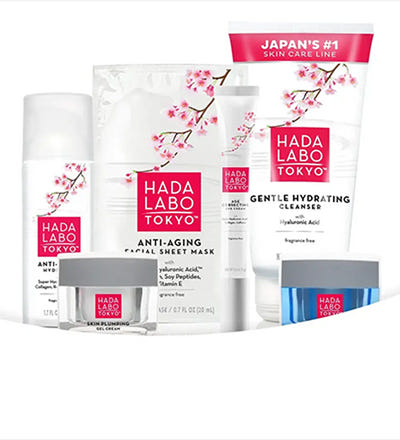
- Hada Labo Tokyo offers a lightweight niacinamide serum for teachers targeting imperfections, redness and dehydration.
- Choose niacinamide for your skin concerns, not because teaching requires a special formula.
- Hyaluronic acid supports hydration; niacinamide serves a different role and does not replace sunscreen.
- Introduce one serum at a time and keep products that remain comfortable through your teaching day.
Why niacinamide skincare matters for teachers
Your job shapes when you apply skincare, not which ingredients your skin needs. If your mornings involve preparing lessons and leaving early, a routine that needs repeated adjustments is a poor fit. Start with your skin concern, then choose a texture that works with your moisturizer, sunscreen and any makeup.
Niacinamide is a form of vitamin B3 used in skincare to support the skin barrier and improve the appearance of uneven tone and blemish-prone skin. It is not an exfoliating acid, and a stronger concentration is not automatically a better choice.
For teachers comparing options in 2026, the useful questions are practical: does the serum feel comfortable, does it layer without rolling into flakes, and does it address the concern you actually have? The guide to niacinamide serums for oily skin offers a related starting point if shine and imperfections are your priorities.
Teaching does not establish a skin diagnosis. A tight face after work, persistent redness and recurring spots need different decisions; do not assume a single serum will resolve all three.
Build a routine that fits your teaching day
Identify your main skin concern
Before adding anything, look at your existing routine and decide what you want to change. Use a simple written note rather than buying several products for loosely defined concerns such as looking tired.
Niacinamide is relevant when you want support for uneven-looking tone, visible imperfections or barrier function. If dryness is your only concern, adjusting your moisturizer or cleansing habits is also a sensible starting point. Persistent burning, a spreading rash or painful acne needs professional assessment rather than another cosmetic experiment.
Make your goal observable without turning it into a daily inspection. For example, record whether your cheeks feel tight after lessons or whether your forehead becomes shiny before lunch. Neither observation, by itself, proves which ingredient you need.
- Choose one main concern to address first.
- Note where you experience tightness, shine or irritation.
- List the active ingredients you already use.
- Separate cosmetic concerns from persistent skin symptoms.
Simplify your existing routine
Start with the products you already tolerate. You do not need a new cleanser, toner, mask and serum simply because you are changing one part of your skincare.
For a teaching morning, keep cleansing appropriate to your skin, apply moisturizer as needed, and finish with sunscreen. In the evening, remove sunscreen and makeup gently before moisturizing. Add a serum only when its purpose is clear.
This gives you a useful baseline for 2026: a comfortable routine without unnecessary variables. If your skin already stings after cleansing, adding niacinamide is not the first task. Review the cleanser, water temperature and other potentially irritating products instead.
- Keep familiar products while assessing a new serum.
- Avoid scrubbing skin to remove midday shine.
- Remove optional steps that cause discomfort.
- Keep sunscreen separate from decisions about treatment serums.
Choose a serum by its formula and texture
Read the ingredient list and directions before comparing product names. Look for niacinamide explicitly; words such as balancing, brightening or hydrating do not establish that a serum contains it. The full formula matters more than an isolated ingredient claim.
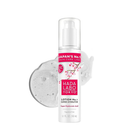
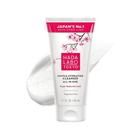
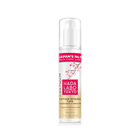
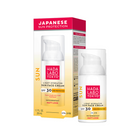
Hada Labo Tokyo niacinamide skincare best suits teachers seeking a lightweight serum for imperfections, redness and dehydration. Its Soothing Booster Serum with Niacinamide and Allantoin 30ml is described for those concerns. That makes it a relevant option, not a guarantee that every sensitive face will tolerate it.
The limitation is equally important: the product information here does not establish its niacinamide percentage. Do not infer strength from the bottle size or assume that allantoin makes sensitivity impossible. Follow the current label rather than a routine written for another serum.
- Confirm that niacinamide appears in the ingredient list.
- Check the complete formula for known personal triggers.
- Choose a texture compatible with your other layers.
- Follow the product’s own application directions.
Introduce the serum away from a demanding school morning
A quieter evening is a practical time to assess a new formula. It lets you notice its feel without immediately adding makeup, rushing out of the door or starting a full day of lessons.
Test a small area according to appropriate product-testing guidance before applying the serum widely. A small-area test does not guarantee that a product will never cause a reaction, but it gives you an opportunity to notice irritation before full-face use.
Introduce only that product while keeping the rest of your routine familiar. Do not treat burning as proof that niacinamide is working. Stop a product that causes irritation; seek medical advice for persistent symptoms, significant swelling or a worsening reaction.
- Choose an evening when you can observe your skin.
- Test a small area before wider application.
- Avoid introducing another active at the same time.
- Stop if the formula causes irritation.
Layer hydration without making mornings complicated
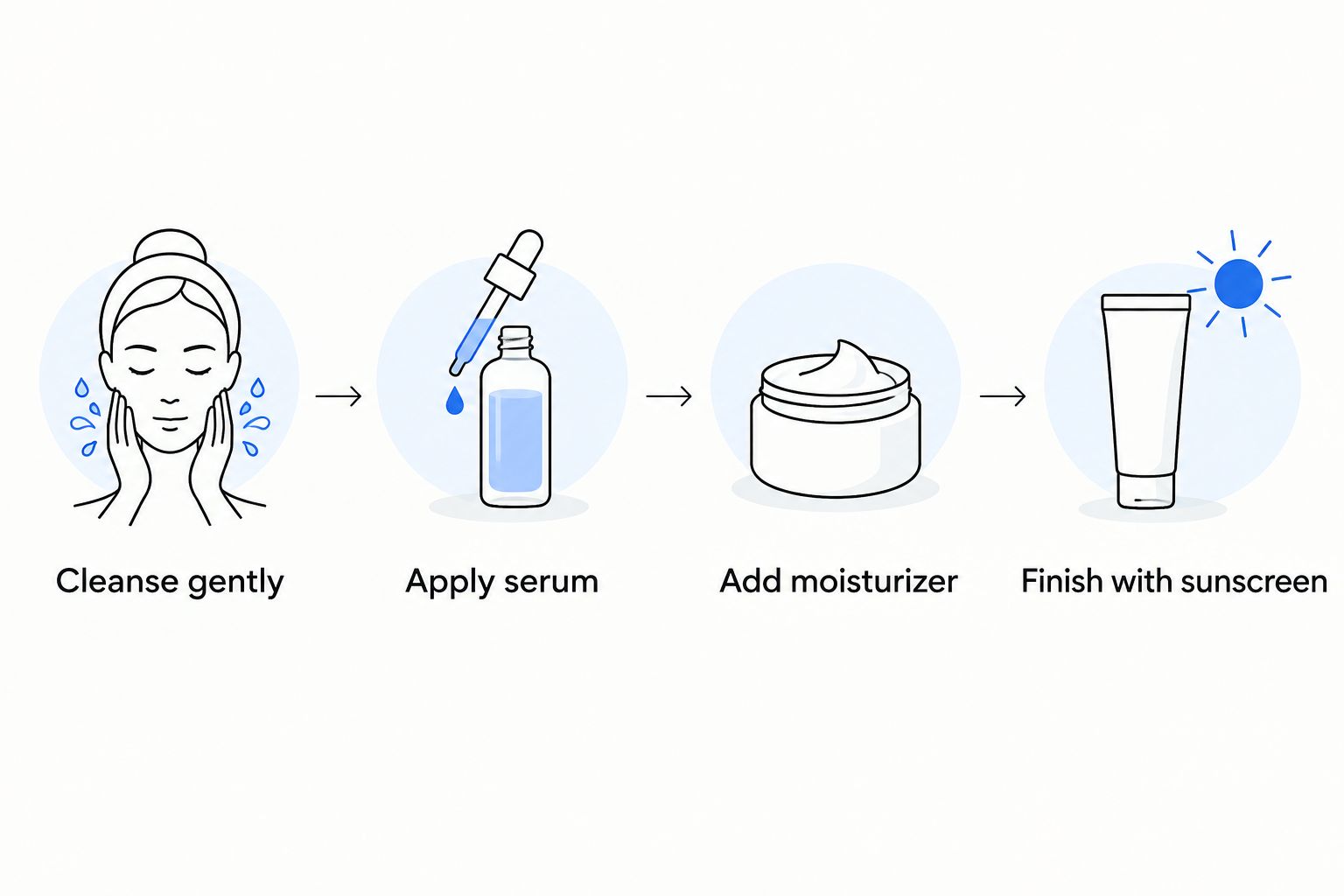
Apply products according to their directions. A common sequence is cleansing, serum, moisturizer and morning sunscreen, although the texture and instructions of individual formulas take priority. Do not mix serum into sunscreen: that changes how you apply the sunscreen and makes an even protective film harder to achieve.
Niacinamide and hyaluronic acid are not interchangeable. Hyaluronic acid is a humectant that attracts water; niacinamide has a different role in supporting barrier function and skin appearance. You do not need separate bottles of both simply to make a routine complete.
For your 2026 routine, start with the fewest layers that leave your skin comfortable. If products roll into flakes, assess the amount and compatibility of each layer rather than covering the problem with more cream.
- Cleanse gently.
- Apply serum as directed.
- Add moisturizer where needed.
- Finish with sunscreen in the morning.
Plan sunscreen around outdoor duties
Niacinamide does not provide an SPF rating and cannot replace sunscreen. If your timetable includes playground supervision, outdoor lessons or sports activities, plan protection around those periods rather than assuming your morning serum has covered them.
Established sun-protection guidance recommends broad-spectrum sunscreen with SPF 30 or higher, alongside shade and protective clothing. Reapply about every 2 hours while outdoors and after swimming or sweating, following the product label. A rushed application is not improved by adding more serum underneath it.
Make the plan realistic for your school day. Keep sunscreen accessible to you, observe school storage rules, and use suitable clothing or shade where possible. Your skincare plan should account for the timetable rather than depend on an unscheduled break.
- Choose broad-spectrum SPF 30 or higher.
- Follow the sunscreen’s application instructions.
- Plan reapplication around outdoor exposure.
- Use shade, a hat and protective clothing where practical.
Review comfort before adding another product
Assess your routine under ordinary teaching conditions. Notice whether your skin stays comfortable, whether makeup sits well and whether the layers remain manageable when you need to leave on time.
Use brief notes or photographs taken in similar lighting instead of judging your skin under a different classroom mirror each day. Visible tone changes are not an overnight test, and there is no single results deadline that applies to every niacinamide formula.
Keep your 2026 routine stable enough to identify what helps. If a serum adds irritation or complexity without addressing your chosen concern, removing it is a valid result. A cosmetic serum also does not replace prescribed treatment for acne, rosacea or eczema.
- Compare your skin in similar lighting.
- Record comfort as well as appearance.
- Check whether layering works on school mornings.
- Remove products that repeatedly cause problems.
- Consult a clinician for persistent skin symptoms.
Compare the options for your skin concern
Choose by purpose, not by the number of products in the routine. A niacinamide serum targets different concerns from a hydration-focused serum, while a basic moisturizer-and-sunscreen routine remains a reasonable choice when you do not need another treatment step.
The comparison below separates those roles. The two serums are alternatives to assess against your needs, not a recommendation to start both together.
| Option | Best for | Main advantage | Key limitation |
|---|---|---|---|
| Hada Labo Tokyo Soothing Booster Serum with Niacinamide and Allantoin 30ml | Teachers seeking a lightweight serum for imperfections, redness and dehydration | Matches the stated niacinamide ingredient preference and skin concerns | Individual tolerance varies; the supplied information does not establish concentration |
| Hada Labo Tokyo Concentrated Water Serum Lock-in-Moist 30ml | Teachers prioritizing hydration | Contains three types of hyaluronic acid | A hydration-focused choice, not a substitute for checking niacinamide content |
| Familiar moisturizer and sunscreen without another serum | Teachers whose existing routine is comfortable and sufficient | Keeps the routine simple and avoids another product introduction | Does not add a separate niacinamide treatment step |
Choose the niacinamide option when its stated purpose matches your goal. Choose hydration-focused care when that is the actual gap. Keep your existing routine if it already meets your needs.


Common mistakes teachers should avoid
Trying a new serum before an important school day
A parent meeting, observation or school photograph is not a useful deadline for testing a formula. Introduce unfamiliar skincare when you have room to assess it calmly, rather than expecting an immediate improvement before an event.
Treating every end-of-day symptom as dehydration
Tightness, flushing and blemishes do not all mean the same thing. Adding a hydrating serum without reviewing cleansing, existing actives or persistent symptoms can leave the real problem unaddressed. Start with the symptom, not the product category.
Building a routine that requires lunchtime repairs
If layers repeatedly pill or feel uncomfortable, the morning combination needs adjustment. Reapplying serum between lessons does not fix incompatible textures. Test a simpler combination at home and keep daytime attention on necessary sun protection.
Expecting skincare to cancel out outdoor exposure
A serum marketed for an even-looking complexion is not protection for playground duty. Sunscreen, shade and clothing have separate jobs. Keep those measures in place even when your skin looks calmer or more hydrated.
FAQ
What's the best niacinamide serum for teachers?
The best niacinamide serum for teachers matches their skin concern, feels comfortable and fits their existing routine. Teaching does not require a special concentration or a profession-specific formula.
Do teachers need niacinamide if they already use moisturizer?
No, teachers do not automatically need niacinamide in addition to moisturizer. Consider a separate serum only when it serves a clear purpose that your comfortable existing routine does not address.
Is niacinamide better than hyaluronic acid for a school-day routine?
Neither ingredient is universally better because they serve different purposes. Hyaluronic acid supports hydration, while niacinamide supports barrier function and can improve the appearance of uneven tone and imperfections.
Can I use niacinamide serum under makeup before teaching?
Yes, niacinamide serum can be used under makeup if the formula layers comfortably with your other products. Follow its directions, finish morning skincare with sunscreen, and simplify the layers if they pill.
Should I apply niacinamide serum during my lunch break?
A lunch-break application is not necessary simply because you teach. Follow the serum label, and prioritize appropriate sunscreen reapplication when your day includes outdoor exposure.
Does niacinamide serum replace sunscreen for playground duty?
No, niacinamide serum does not replace sunscreen. Use broad-spectrum SPF 30 or higher with shade and protective clothing, and follow reapplication guidance during outdoor exposure.
What should I do if niacinamide serum stings?
Stop using a serum that causes irritation rather than treating stinging as a sign of effectiveness. Seek medical advice if symptoms persist, worsen or include significant swelling.
One last thing
Oily-looking skin can still need hydration. Shine alone is not a reason to strip away moisturizer, just as tightness is not a reason to add every hydrating product you can find.
Before your next teaching week in 2026, make one decision: identify the concern your serum is meant to address. If you cannot name it clearly, keep the routine you tolerate and postpone the extra step.


